What Happens When the Sewer Camera Cannot Reach the End of the Line?
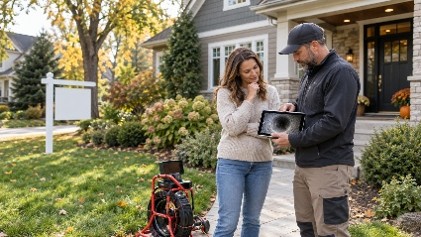
A homebuyer schedules a sewer scope expecting the camera to travel from the house to the municipal sewer connection. Sometimes it does. Sometimes a physical condition, limited access, or poor visibility prevents the inspector from observing the entire intended line.
An incomplete sewer scope can be frustrating, especially during a short inspection contingency period. It does not automatically mean the sewer line is defective. It does mean that the unobserved portion remains unknown.
Understanding why the inspection stopped and what information is still needed can help the buyer decide on a practical next step.
What does a complete sewer scope mean?
During a sewer scope, a camera is advanced through an accessible entry point into the property’s main sewer service line. The inspector observes and records visible interior conditions as the camera travels.
The intended endpoint may be the municipal connection, the edge of private responsibility, a septic component, or another identifiable location, depending on the property and system. The camera’s ability to reach that point depends on access, pipe configuration, line condition, visibility, and the equipment’s physical limits.
Even when the camera reaches an apparent endpoint, a sewer scope remains a visual inspection of accessible areas. It is not a guarantee of future performance and does not reveal conditions outside the pipe.
For an introduction to the service, read What Is a Sewer Scope Inspection—and Does Every Twin Cities Homebuyer Need One?.
Why might the camera stop?
Several different conditions can limit a sewer inspection. The reason matters because it helps determine what may be useful next.
Debris or buildup
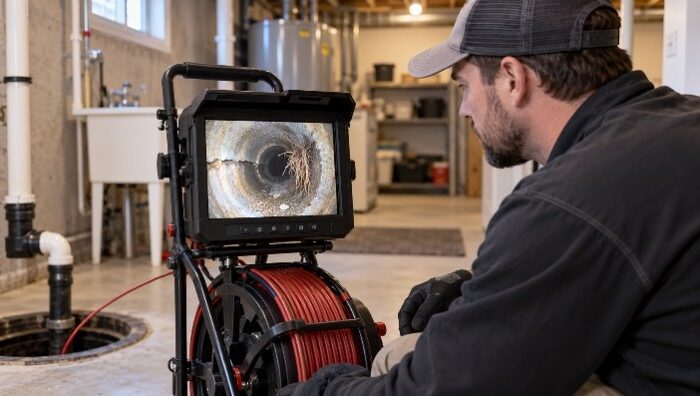
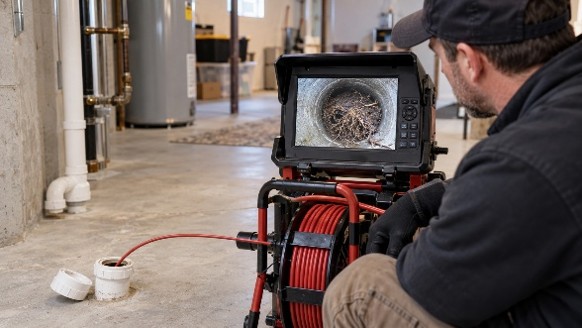
Grease, waste, mineral deposits, construction material, or other debris may restrict the pipe or prevent the camera from traveling farther. Material can also coat the lens or cloud the water, reducing visibility even when the camera continues.
Cleaning the line may improve access and allow a clearer reinspection. Cleaning is not the same as confirming the pipe’s condition; a follow-up camera inspection may still be necessary to observe what was hidden.
Root intrusion
Roots may enter through a crack, loose joint, or damaged connection and continue growing inside the line. Dense root growth can stop the camera or obscure the surrounding pipe.
Removing the roots may allow the inspection to continue, but buyers should also consider the condition that permitted entry. A qualified sewer contractor may need to evaluate the affected area and discuss maintenance or repair options.
Standing water
Water in a low section can partially or completely submerge the camera. When that happens, the bottom and sides of the pipe may not be visible.
The camera may pass through a shallow area, or a deeper section may prevent useful inspection. A camera can document the presence of water but cannot independently confirm the exact slope, depth, or exterior cause of the condition.
Damaged or deformed piping
A broken, collapsed, crushed, or deformed section may narrow the opening enough to stop the camera. Forcing equipment through a restricted area could damage the camera, make retrieval difficult, or worsen an existing condition, so the inspector may appropriately end the attempt.
Locating the stopping point and obtaining a qualified contractor’s evaluation may be recommended.
Tight turns or pipe configuration
Some sewer systems contain sharp changes in direction, multiple fittings, diameter changes, or other configurations that a camera cannot safely navigate. The inability to pass a fitting does not by itself establish that the pipe is damaged.
Another suitable access point may make it possible to inspect the remaining section. Whether an alternate point exists depends on the property.
Limited or unsuitable access
The available cleanout may be inaccessible, too small, improperly located, or configured in a way that limits camera travel. In some homes, the inspection must begin through another plumbing access point, which can affect the direction or portion of line that can be observed.
Creating or modifying an access point is work for an appropriate plumbing or sewer professional. The sewer inspector documents the access available at the time of inspection.
Camera or distance limitations
Sewer-camera equipment has physical limits. A particularly long service line or unusual configuration may exceed the length or capability of the equipment. The report should identify the inspection limitation and the portion observed when that information is available.
What does an incomplete inspection tell the buyer?
An incomplete scope provides two categories of information.
First, it documents the visible portion of the line. That section may contain useful observations about pipe material, connections, roots, debris, standing water, deterioration, previous repairs, or apparent drainage.
Second, it identifies a limitation. The camera stopped or visibility became inadequate before the intended endpoint was confirmed. The portion beyond that point was not evaluated and should not be assumed to be either acceptable or defective.
That distinction is important. An inspection limitation is not a diagnosis. It is an information gap that the buyer may choose to investigate further.
Normal drainage does not complete the missing picture
Sinks, tubs, showers, and toilets may drain normally even when the entire sewer line cannot be viewed.
Normal drainage is encouraging, but it reflects performance under the conditions observed at that time. It does not reveal the interior of the unseen section or establish why the camera stopped.
This is one reason the limitation should be considered together with the inspection report, video, property history, drainage observations, and recommendations not dismissed solely because fixtures appear to function.
Possible next steps
The appropriate response depends on why the camera could not continue. The report may recommend one or more of the following:
- Ask the seller for sewer-cleaning, repair, replacement, or prior inspection records
- Have the line cleaned by a qualified professional
- Reinspect the line after cleaning
- Attempt inspection from another suitable access point
- Locate the stopping point from the surface
- Have a qualified sewer contractor evaluate the visible condition
- Obtain repair options or estimates when warranted
- Confirm private, municipal, utility, or association responsibility
Not every incomplete scope will require every step. The goal is to address the reason for the limitation and obtain enough information for the buyer to make an informed decision.
Why timing matters during a real estate transaction
An incomplete inspection may require coordination among the buyer, seller, real estate professionals, cleaning company, sewer contractor, and inspection provider. That can take time.
Scheduling the initial sewer scope early in the inspection contingency period may leave more opportunity for cleaning, reinspection, locating, estimates, or review of available records. Waiting until the end of the contingency period can make additional evaluation more difficult to arrange.
Inspecta-Homes offers sewer scopes as an add-on to the General Home Inspection, helping buyers coordinate these services during the same appointment when access and scheduling permit.
Questions to ask when the camera cannot continue
Buyers do not need to interpret the video alone. Useful questions include:
- How much of the intended line was observed?
- At approximately what distance did the camera stop?
- Was the stopping point located from the surface?
- What appeared to prevent further travel?
- Did the limitation affect camera movement, visibility, or both?
- Was another access point available?
- Is cleaning recommended before reinspection?
- Should a qualified sewer contractor evaluate the condition?
- Are prior sewer videos, invoices, permits, or warranties available?
- Who is responsible for the unobserved section?
Our guide to understanding sewer-scope results explains how common findings and limitations may influence the next step.
Does an incomplete scope mean the buyer should walk away?
An incomplete sewer scope does not make the decision for the buyer.
The reason the inspection stopped may be correctable through cleaning or different access. In other cases, the visible condition may justify specialist evaluation or repair planning. The buyer should consider the available information, the unresolved portion, the inspection timeline, and advice from appropriate professionals.
A sewer-scope report is one part of that decision. It documents the accessible visible conditions and identifies where information is limited.
Different homes can present different limitations
Older Twin Cities properties may contain aging materials, previous repairs, mature-tree roots, or complicated access. Learn more in Buying an Older Twin Cities Home? Here’s Why You Should Consider a Sewer Scope.
Newer homes may present construction debris, settlement, installation questions, or limited use history. Read Do Newer Twin Cities Homes Need a Sewer Scope? for additional context.
The age of the property may help explain possible concerns, but it does not determine whether the camera will reach the intended endpoint.
Schedule a Twin Cities sewer scope with Inspecta-Homes
Inspecta-Homes has served Minnesota and Western Wisconsin homebuyers, homeowners, sellers, and real estate professionals since 1981. Our sewer-scope service provides a recorded view of accessible portions of the sewer line and a report documenting visible conditions and inspection limitations.
When the camera cannot go farther, the limitation matters. Learn more about our Sewer Inspection Service, Schedule Now, or call 651-641-0641 to add a sewer scope to your General Home Inspection.