Is Your Outdoor Faucet Ready for a Minnesota Freeze?
The patio furniture is put away. The leaves are mostly cleaned up. But there’s still a garden hose connected to the side of the house.
Sound familiar?
For Twin Cities homeowners, outdoor faucets are easy to overlook when preparing for winter. Before freezing weather settles in, a few simple checks can help reduce the risk of damaged plumbing and an unwelcome surprise when watering season returns.
Start with the hose
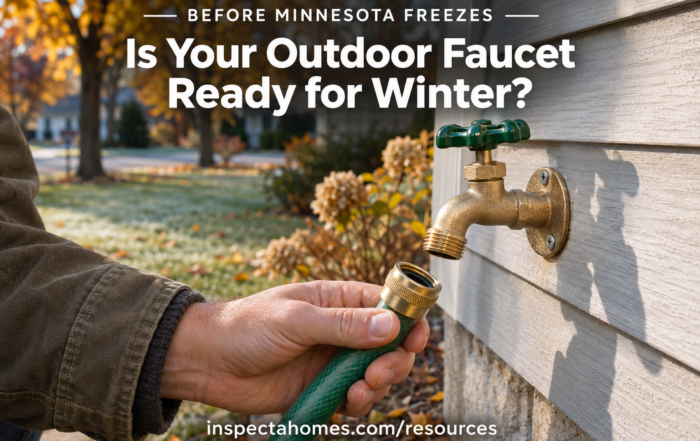
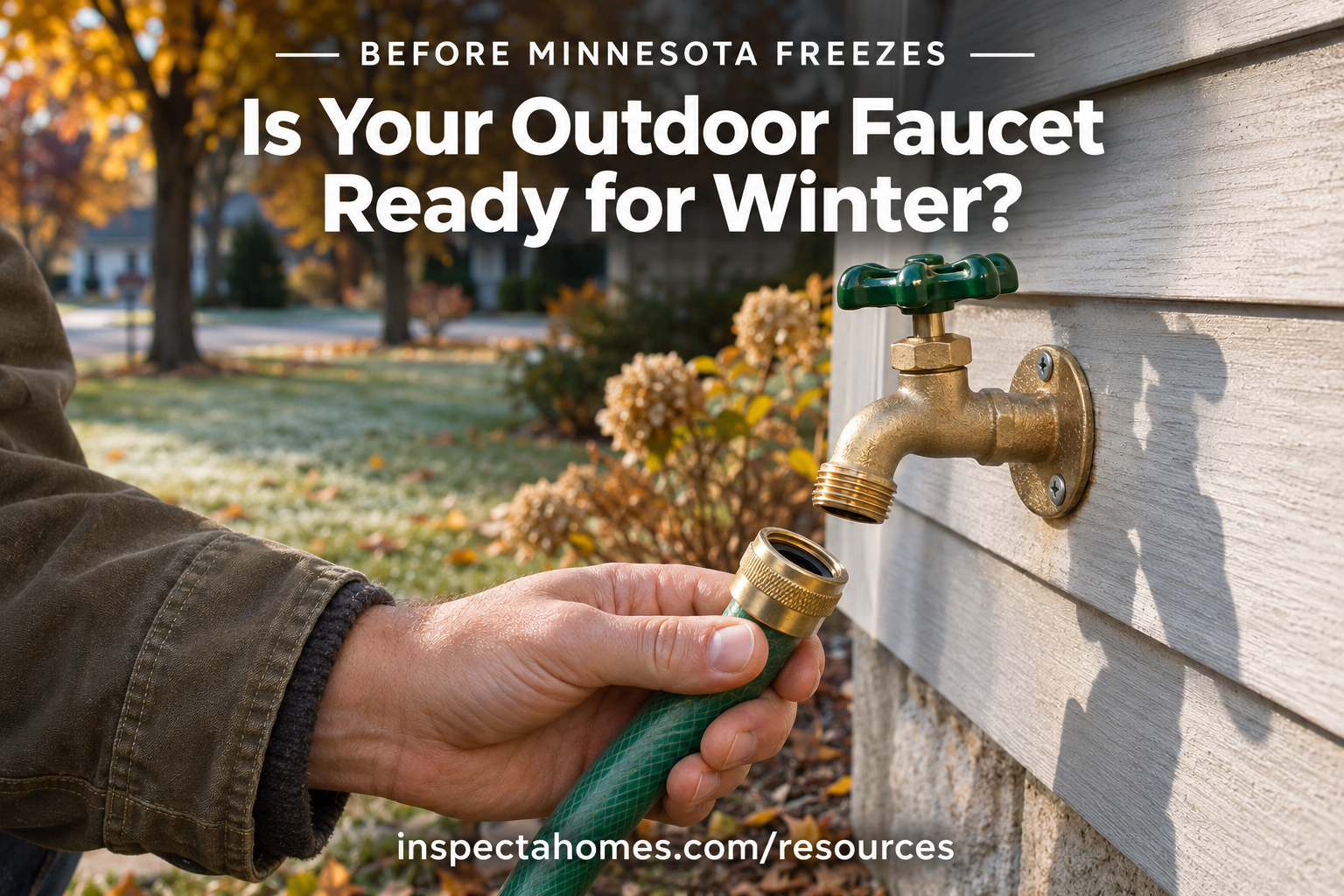
Walk around your home and check every outdoor faucet, including the ones behind landscaping, near the garage, or under the deck.
Disconnect garden hoses, drain them, and put them away. Remove splitters, timers, and other attachments that may interfere with the faucet draining, following the manufacturer’s instructions.
Turning off the handle is not always enough. On many standard frost-free faucets, an attached hose can trap water that needs to drain out before freezing temperatures arrive.
“Frost-free” still requires attention
A frost-free faucet is designed to shut off the water farther inside the home, where the valve is protected by indoor warmth. The remaining water in the faucet’s barrel then drains outside.
That protection depends on proper installation and drainage. A faucet installed at the wrong slope, or left with an attachment that holds water inside, may still freeze and split.
Frost-free describes how the faucet works – not a guarantee against freeze damage. Follow the instructions for your particular model.
Does your faucet have an indoor shutoff?
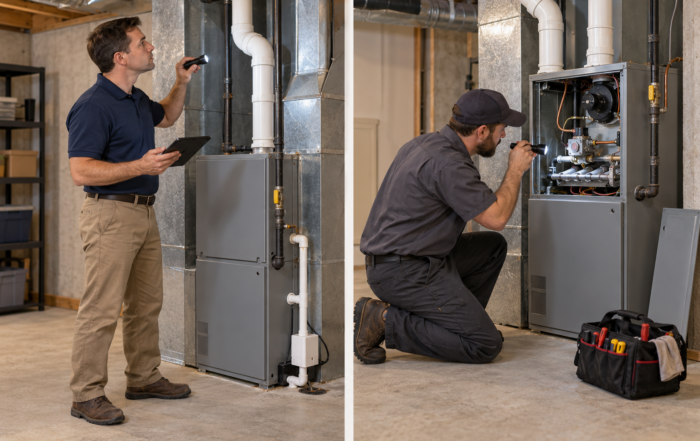
Some outdoor faucets have a separate shutoff valve inside the home, often in a basement, utility room, or accessible ceiling area.
For conventional faucets with an interior shutoff, winter preparation generally includes shutting off that supply and opening the outdoor faucet to allow water to drain. The City of Eagan includes this approach in its winterization guidance.
The exact procedure depends on your plumbing arrangement. Some systems also have a drain or bleeder at the interior valve.
If you cannot identify the correct valve, do not know which type of faucet you have, or find that a valve is stuck or leaking, have a qualified plumber confirm the appropriate steps. Avoid forcing older valves or taking fittings apart to investigate.
A problem may stay hidden until spring
A damaged faucet does not always announce itself with an obvious outdoor leak.
On a standard frost-free faucet, a split can occur in the section extending through the wall, beyond the internal shutoff point. The damage may only become apparent when someone turns the faucet on again.
When you first use an outdoor faucet in spring, check the accessible area inside the home for leakage while the water is running. If water appears indoors, stop using the faucet and arrange repairs.
Your outdoor faucet checklist
Before freezing weather arrives:
- Find every outdoor faucet around your home.
- Disconnect, drain, and store garden hoses.
- Remove attachments as directed by the faucet manufacturer.
- Identify the faucet type and follow its winterization instructions.
- Locate any dedicated indoor shutoff and confirm how that line should be drained.
- Have leaks, stuck valves, or uncertain installations evaluated by a qualified plumber.
One small task before winter settles in
Outdoor faucets rarely get much attention until something goes wrong. Add them to your fall routine now, while they are accessible and you have time to address questions.
At Inspecta-Homes, we help homeowners and buyers better understand their homes, including visible plumbing conditions and maintenance concerns.
Explore more practical advice for Minnesota homeowners at inspectahomes.com/resources.