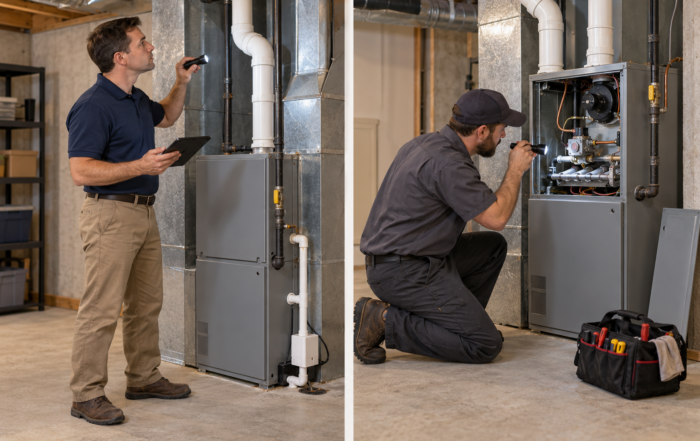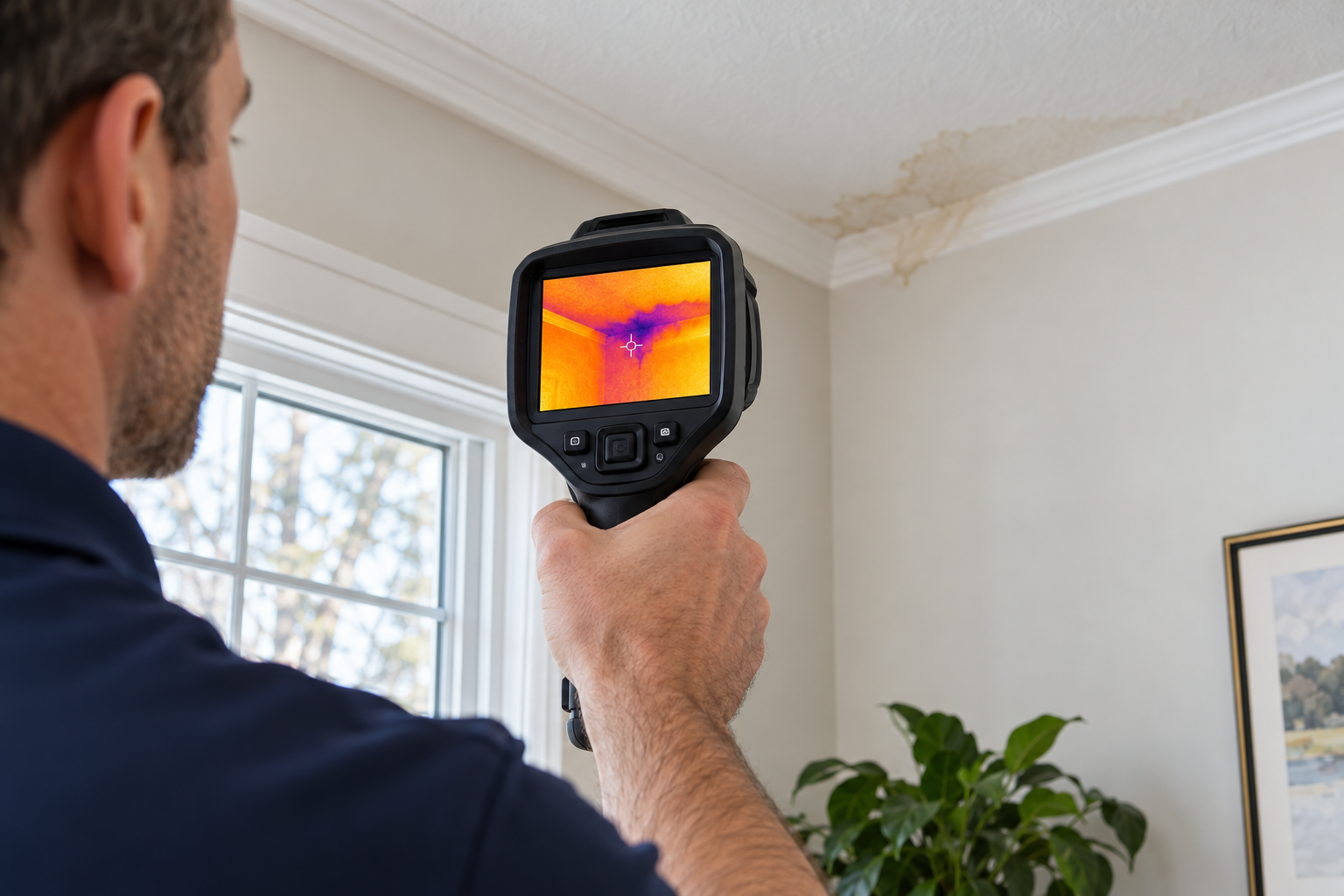
A ceiling stain looks dry today. A basement corner smells musty, but the painted wall looks clean. Can a thermal camera reveal what is happening?
Thermal imaging can help an inspector locate temperature patterns that deserve closer attention. It cannot see through drywall or directly identify water inside a wall. Its value comes from how the image is interpreted and what follow-up checks are performed.
What the camera actually shows
A thermal camera detects infrared energy from visible surfaces and displays apparent temperature differences. The colors represent a temperature scale. A blue or purple area is not automatically wet, and a red or yellow area is not automatically damaged.
Conditions behind a wall sometimes affect its surface temperature. That can create a clue even though the camera is viewing the surface rather than the wall cavity.
Why moisture may create a pattern
Wet materials may respond differently to heating and cooling than nearby dry materials. Evaporation can also cool a damp surface. Under suitable conditions, those differences may help identify an area for further investigation.
However, missing insulation, moving air, framing, and other conditions can also produce temperature differences. An image alone cannot establish the source of a stain or prove that a pipe is leaking.
How an inspector follows the clue
Consider a Minnesota ceiling stain below an upstairs bathroom. A temperature difference near that stain may guide the inspector to a useful location for a moisture measurement. The visual observations, meter readings, plumbing location, and reported history all help shape the next recommendation.
A moisture meter adds information about the tested material at that location. Readings must be interpreted for the material and instrument being used; they do not reveal every layer of a concealed assembly.
Further evaluation may involve a plumber, roofer, or other qualified contractor. Opening a wall is a separate step requiring the property owner’s authorization.
Why a normal image does not settle every concern
A leak may be intermittent, the affected material may have dried, or concealed moisture may not produce a distinct surface temperature pattern. Weather, heating and cooling, access, and coverings can affect the usefulness of the scan.
A normal-looking image cannot rule out past water damage, every hidden leak, or future moisture problems. Thermal imaging also does not identify mold. Persistent odors or visible damage still deserve attention even when a scan shows no obvious anomaly.
What to share before the inspection
Photographs showing the stain or wet area when it first appeared.
Whether the concern follows rain, snowmelt, showers, or use of a particular fixture.
Any changes in size, odor, texture, or location.
Repair invoices and information about previous leaks.
Areas concealed by furniture, stored belongings, or finished surfaces.
Questions to ask about the findings
Ask what the image shows, whether moisture readings support the concern, what could explain the pattern, and what remains uncertain. Also ask which areas were inaccessible and whether specialist evaluation should happen before repairs or a purchase decision.
For example, “Was moisture detected in the tested ceiling area?” is more useful than assuming a colorful image proves that the entire ceiling is wet.
Discuss your moisture concerns with Inspecta Homes
Inspecta-Homes uses thermal imaging selectively to help investigate potential concerns. Contact us to discuss your property and the appropriate inspection scope. Call 651-641-0641 or visit https://inspectahomes.com/.