Your Furnace Runs—but Is Your Home Heating Properly?
Minnesota Home Heating Series — Episode 1
You hear the furnace start, feel air coming from a register, and assume everything is working. But the living room stays chilly, an upstairs bedroom never feels comfortable, or the thermostat struggles to reach the temperature you selected.
A furnace that turns on is doing something. That alone does not tell you whether the heating system is delivering heat effectively throughout your home.
For Minnesota homeowners, paying attention to how the house heats—not just whether the furnace runs—can help identify concerns before colder weather makes them harder to ignore.
What a running furnace actually tells you
In a forced-air heating system, the furnace produces heat and a blower moves air through ductwork to the rooms in your home. Return ducts bring air back to the equipment.
Comfort depends on that entire process. The thermostat, furnace, filter, blower, ductwork, and the home’s ability to retain heat all play a role.
Also, hearing the blower does not necessarily mean the furnace is actively producing heat. With the thermostat’s fan setting on “On,” the blower may circulate air between heating cycles.
Signs your home may not be heating properly
Look for patterns such as:
- The house repeatedly fails to reach the thermostat setting.
- Certain rooms remain noticeably colder than others.
- Airflow feels weak at several registers.
- The furnace repeatedly starts and stops after brief runs.
- New or persistent banging, scraping, or squealing develops.
- Heating performance has changed noticeably from previous winters.
These observations can help guide an investigation, but they do not identify the cause by themselves.
Longer heating cycles during very cold weather are not automatically a problem. Some systems are designed to operate for extended periods at lower output. A change from your system’s usual behavior is often more useful than comparing it with a neighbor’s furnace.
Start with the thermostat
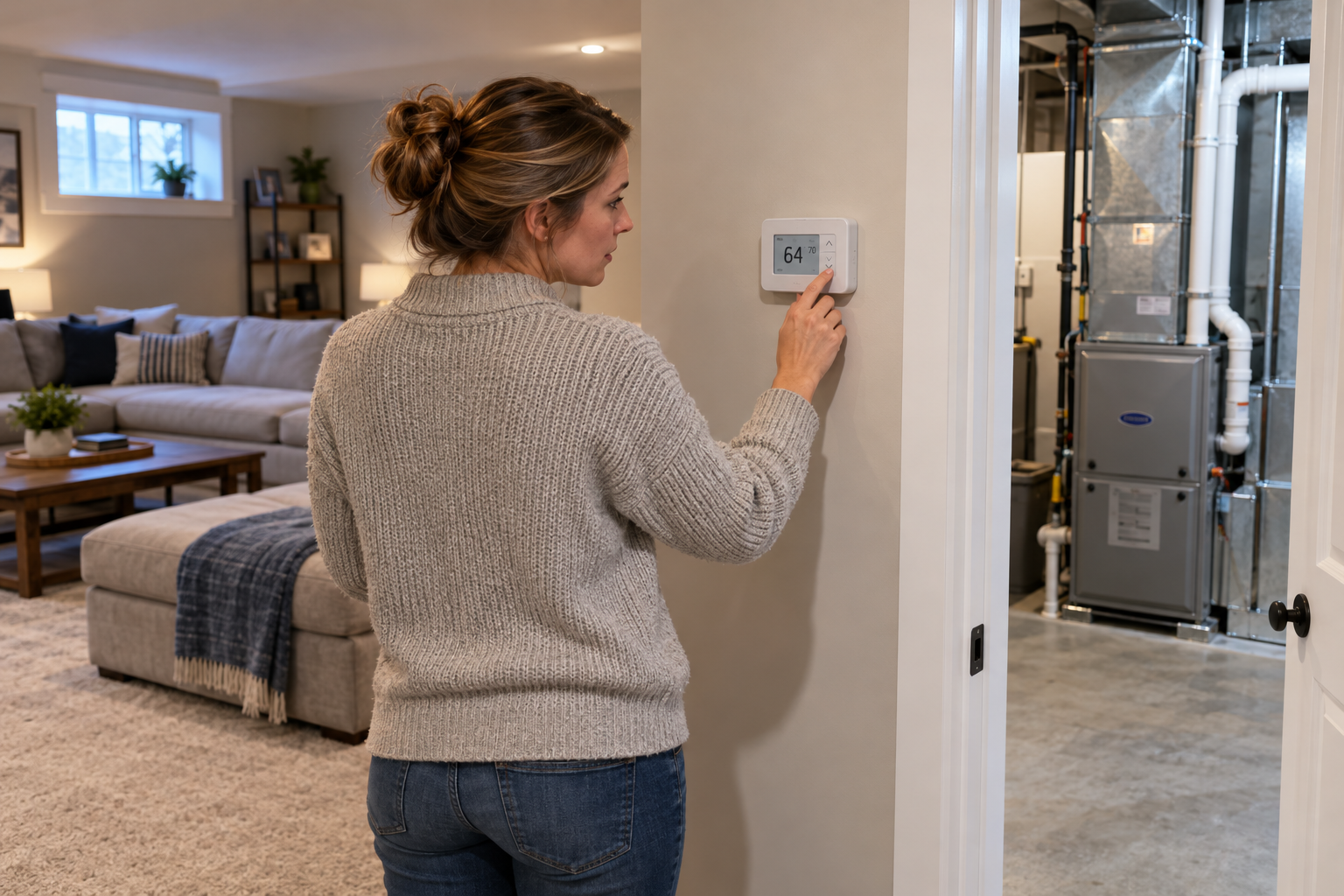
Before assuming the furnace needs repair, review the thermostat settings.
Confirm that it is set to “Heat” and that the target temperature is above the current room temperature. Check whether a programmed schedule, vacation setting, or smart thermostat adjustment is changing the temperature unexpectedly.
If your thermostat uses batteries, follow the manufacturer’s instructions for checking or replacing them.
Record the selected temperature, the displayed room temperature, and when the problem occurs. That information can help an HVAC contractor understand what you are experiencing.
Check the filter and accessible air openings
A dirty or clogged filter can restrict airflow and affect heating performance. Check the filter according to the equipment manufacturer’s instructions, using the recommended size and an appropriate filter type.
A more expensive or more restrictive filter is not automatically a better match for your system.
Walk through the home and look for furniture, rugs, or stored items covering supply registers or return grilles. Keep these openings unobstructed. Avoid closing numerous registers in an attempt to force heat into a colder room without professional guidance.
Limit homeowner checks to accessible areas and routine maintenance described in the owner’s manual. Burner adjustments, electrical repairs, and safety-control troubleshooting belong with a qualified professional.
The furnace may be only part of the problem
A cold room does not necessarily mean the furnace is failing.
Duct leaks, restricted airflow, inadequate insulation, and air leakage can affect how comfortable a room feels. A room over a garage or an exposed addition may have different heating needs than an interior room.
Replacing the furnace without understanding those conditions may leave the original comfort problem unresolved.
An HVAC contractor can evaluate equipment operation and air distribution. An energy assessment may also help identify where the home is losing heat.
Know when to call for service
Arrange professional evaluation if the home cannot maintain temperature, the furnace repeatedly shuts down, airflow remains weak after basic checks, or unusual noises persist.
Seasonal maintenance is also valuable before a breakdown occurs. ENERGY STAR recommends checking heating equipment in the fall and identifies thermostat operation, airflow, and equipment controls as parts of professional maintenance.
Treat a suspected gas leak or carbon monoxide emergency differently from a comfort problem. If you smell gas, leave immediately and call your gas utility’s emergency line from a safe location. If a carbon monoxide alarm sounds or you suspect carbon monoxide, get everyone outside and call 911. Do not stay inside to troubleshoot the furnace.
How a home inspection can help
During a general home inspection, accessible heating equipment and visible distribution components can provide useful information about the home’s condition. Findings may lead to recommendations for maintenance, repairs, or further evaluation.
A home inspection does not replace an HVAC tune-up, an exhaustive equipment diagnosis, or a guarantee of future performance.
For buyers, understanding the heating system before closing can help with planning. For current homeowners, noticing changes early can make the conversation with a service contractor more productive.
Buying or selling a home in the Twin Cities metro area? Inspecta-Homes helps you better understand the home’s systems and visible conditions so you can make informed decisions.
Visit inspectahomes.com to learn more or schedule your home inspection.