Your first fall as a homeowner comes with more than changing leaves and cooler evenings. You are also learning how your house handles rain, freezing temperatures, and the start of heating season. The good news? You do not need to tackle everything in one weekend. Start with the tasks that protect your home from freezing, water damage, and heating problems, then work through the rest before snow arrives.
1. Get to know your home before you get to work
Locate the main water shutoff, electrical panel, thermostat, furnace filter, and any indoor valves serving outdoor faucets. Review your home inspection report for recommended repairs and items that needed further evaluation. Create a simple maintenance folder with equipment manuals, service receipts, photos, and contractor contacts. If you own a condo or townhome, confirm which exterior tasks belong to your association.
2. Prepare outdoor faucets before freezing weather
Disconnect garden hoses, splitters, and watering timers, then drain and store them. Attached hoses can keep water trapped in some frost-free faucets, allowing freeze damage. For conventional outdoor faucets with an indoor isolation valve, shut off that supply and drain the exterior line using the procedure for your plumbing setup. Frost-free faucets also depend on proper installation and drainage; the name does not make them immune to freezing. If you cannot identify your faucet type or shutoff, ask a plumber. Schedule irrigation-system winterization separately if you have an underground sprinkler system.
3. Make sure your heating system is ready
Schedule professional heating-system maintenance before cold weather makes it urgent. Check your furnace filter and replace or clean it according to the equipment instructions. Match the specified size and compatible filter type, and follow the airflow arrow when installing it. Test the thermostat in heating mode and keep supply registers and return-air grilles unobstructed. Leave burner adjustments, electrical repairs, and venting concerns to a qualified HVAC technician.
4. Test smoke and carbon monoxide alarms
Use the test button on each alarm and follow the manufacturer’s maintenance instructions. Repeat testing monthly throughout the year. Check the manufacture or replacement date: smoke alarms generally need replacement at 10 years, while carbon monoxide alarm life varies by model. Replace user-replaceable batteries as directed; sealed-battery alarms require replacement of the unit when indicated. Make sure household members know the escape plan. If a carbon monoxide alarm sounds, move outside to fresh air and call 911.
5. Clean gutters and check where water goes
Have leaves and debris removed from gutters and downspouts, then check that water can flow through them. Look for loose sections, overflowing corners, and disconnected extensions. Downspouts should discharge away from the foundation to a location where water drains away without creating a walkway hazard or a problem for neighbors. Look for low spots beside the house and dampness in the basement after rain. Arrange professional help for high or difficult-to-reach gutters.
6. Look over the roof and exterior from the ground
Walk around your home and look for missing shingles, loose siding, deteriorated trim, gaps around penetrations, and damaged chimney masonry. Photograph concerns and have the appropriate contractor evaluate them. Check steps, handrails, and exterior lighting before slippery weather arrives. Do not climb onto the roof to complete your fall checklist.
7. Address drafts and watch for attic warning signs
Check door weatherstripping and accessible window seals, then repair obvious gaps with suitable materials. Keep drainage openings and required ventilation clear. If you noticed ice dams last winter, arrange an evaluation of attic air leakage, insulation, and ventilation. Clean gutters help drainage, but cleaning alone does not prevent ice dams. Heat escaping into the attic can warm the roof, melt snow, and contribute to refreezing near colder roof edges. Avoid walking on attic insulation or disturbing unfamiliar materials.
8. Prepare the fireplace before your first fire
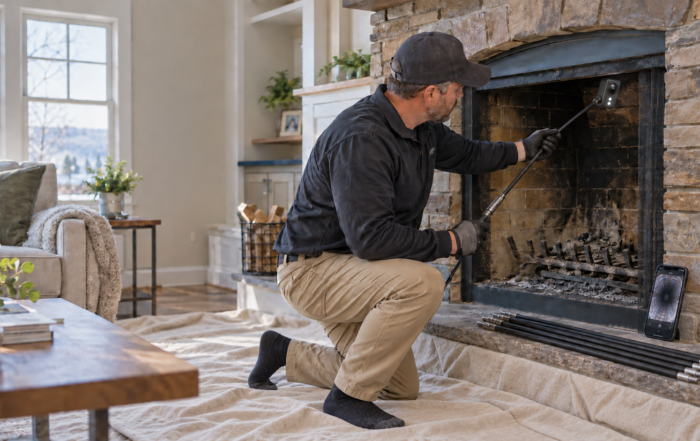
Arrange a professional chimney inspection and any recommended cleaning before using a wood-burning fireplace or stove. If you recently purchased the home, review what chimney evaluation was completed; a general home inspection does not provide the same interior examination as a Level 2 chimney inspection. Ask a qualified chimney professional what inspection level your system needs. Water stains, damaged masonry, smoke entering the room, or an unknown service history deserve attention before use.
9. Check your sump pump and accessible vents
If your home has a sump pump, test it using the manufacturer’s instructions and confirm that the discharge path is open and directed away from the foundation. Plan for freezing conditions with a plumber rather than improvising discharge changes. Check accessible exterior dryer, bathroom-exhaust, and heating-system vent openings for leaves or debris without modifying them. Clean the dryer lint screen regularly and arrange vent cleaning if drying slows or the duct is obstructed. Keep combustion-air and exhaust openings clear of snow during winter.
10. Finish with a simple winter-readiness plan
Clear leaves from window wells and drainage areas. Put away outdoor furniture and prepare snow-removal equipment. Set out a shovel and an ice-control product compatible with your walking surfaces. Keep flashlights and batteries handy, and save your plumber, HVAC contractor, and utility emergency contacts. Record completed work and set reminders for filter checks and monthly alarm tests.
Start with the essentials, then keep the habit
For a manageable first weekend, disconnect hoses, check the furnace filter, test alarms, locate the water shutoff, and book needed heating or chimney appointments. Follow with gutters and exterior checks while conditions allow. Learning your home a little at a time makes seasonal maintenance easier to repeat.
Have questions about what you are seeing?
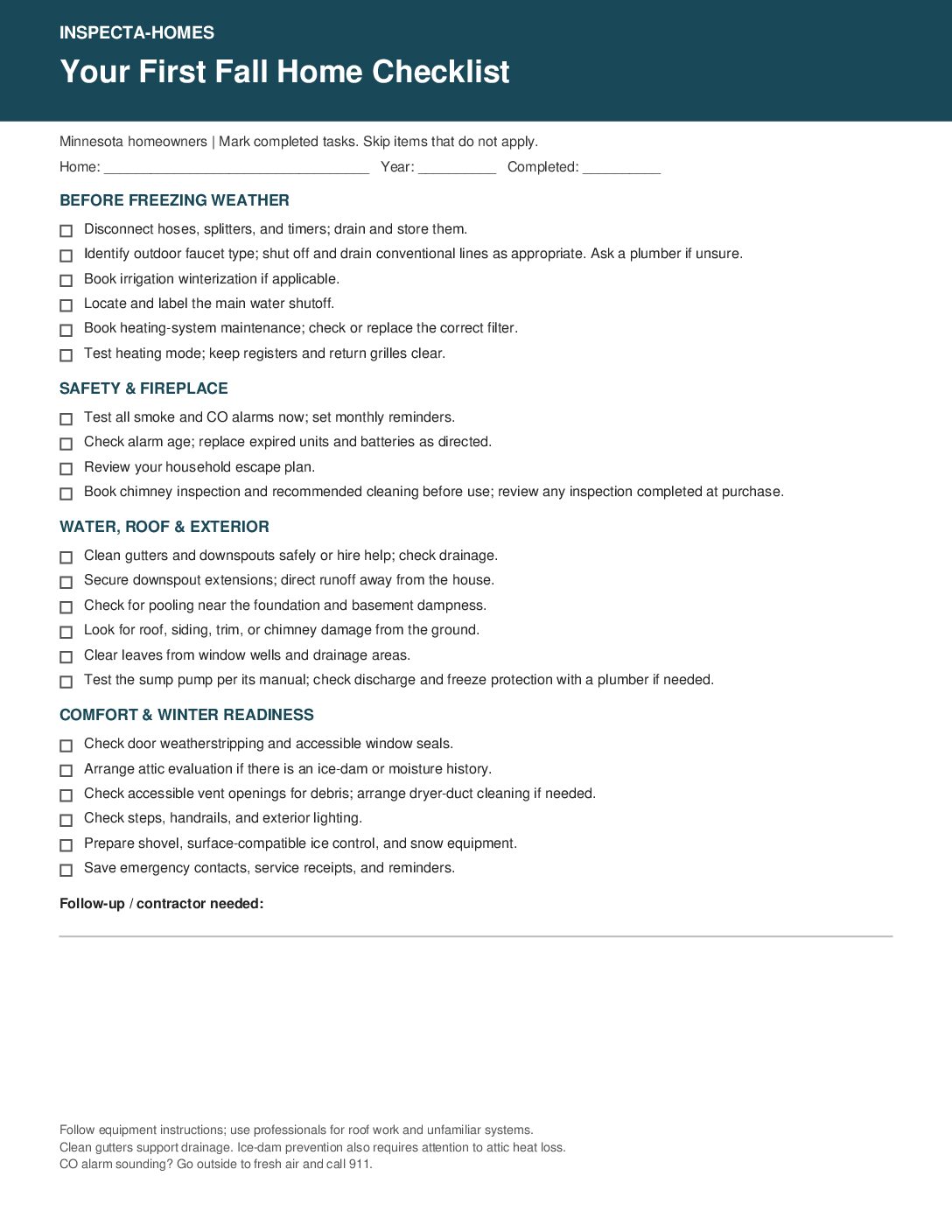
Inspecta-Homes helps Twin Cities homeowners understand their homes and plan their next steps. Contact our team to discuss a home inspection or Level 2 chimney inspection, and use the companion fall checklist to keep your maintenance plan organized.