If you are buying a home with a fireplace, you may wonder whether your general home inspection covers the chimney. It provides an important look at visible, readily accessible conditions, but a standard home inspection and a Level 2 chimney inspection have different scopes.
Understanding that difference can help you decide whether you need a closer evaluation before using the fireplace or connected appliance.
What can a home inspector see?
During a general home inspection, an inspector may observe readily accessible portions of the fireplace and chimney, such as the visible firebox, hearth, mantel, accessible exterior masonry, and signs of staining or deterioration. The exact work depends on the inspection agreement, access, conditions, and applicable standard of practice.
These observations can identify concerns and lead to a recommendation for further evaluation. For example, an inspector may note cracked firebrick, a damaged chimney crown, water stains, or a fireplace that could not be adequately assessed.
What may remain out of view?
Looking into a fireplace does not provide a complete view of the chimney flue. A general home inspection typically does not include running a camera through the flue, opening concealed construction, or determining that the entire fireplace and venting system is suitable for use.
A fireplace can look tidy in the living room while portions of the liner are difficult to see from below. A report describing visible conditions should not be read as a clearance to light a fire.
What does a Level 2 inspection add?
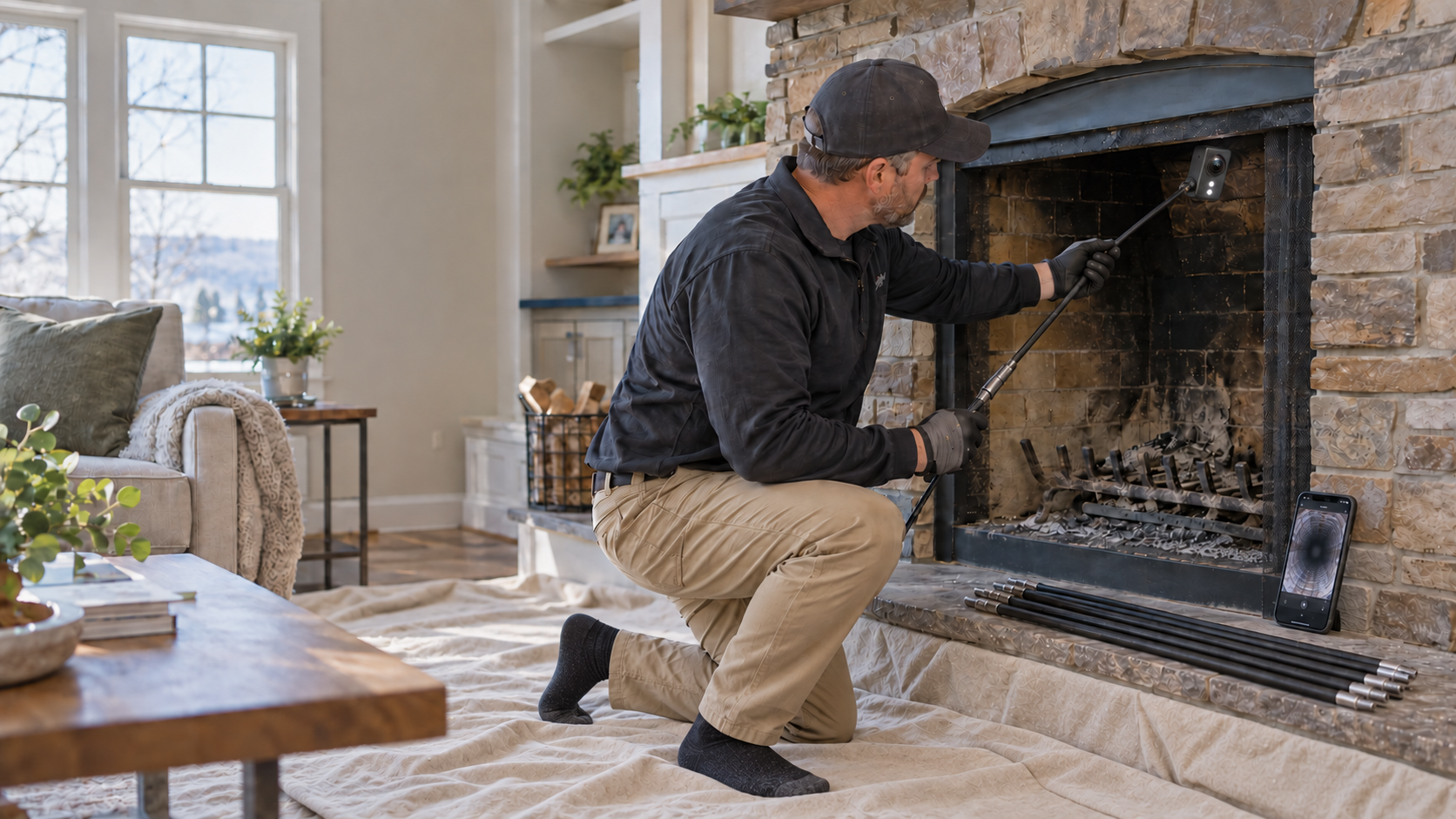
A Level 2 chimney inspection builds on a Level 1 inspection and examines applicable accessible portions of the fireplace, chimney, and connected venting system. It includes an internal video scan or comparable examination of the flue. The inspection also considers accessible areas where the chimney passes through an attic, basement, or crawl space, as well as the chimney from the roof when it can be accessed safely.
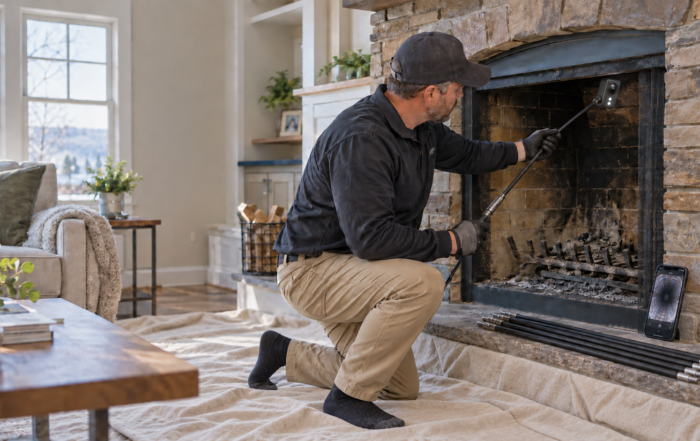
At Inspecta-Homes, we use a camera on inspection rods to view and document visible conditions inside the accessible flue. Cracks, gaps, deposits, and obstructions are among the conditions a scan may reveal.
Neither inspection can see through masonry or guarantee that every concealed component is free of defects. If access, deposits, or an obstruction limit the examination, those limitations should be documented in the report.
When should a buyer consider both?
A general home inspection helps you understand the broader condition of a house. If the home has a fireplace or a fuel-burning appliance vented through a chimney, a separate Level 2 chimney inspection may be appropriate during a real estate transaction, particularly when you intend to use that system. It can also be recommended after a chimney fire, suspected damage, or a change in appliance or fuel type.
Schedule the evaluation early enough to review its findings and arrange any needed follow-up before relying on the fireplace. If a significant concern is found, a qualified chimney professional can advise on cleaning, repair, or additional evaluation.
For an introduction to the service, read What Is a Level 2 Chimney Inspection?.
Buying a Twin Cities home with a fireplace? Contact Inspecta-Homes at 651-641-0641 or visit inspectahomes.com to ask about a general home inspection and a Level 2 chimney inspection.