Ice Dams
Why Clean Gutters May Not Solve the Problem
You cleaned the gutters before winter, but a ridge of ice still forms along the roof edge. A few days later, water appears near an exterior wall or leaves a stain on the ceiling. What happened?
Clean gutters support drainage, but ice dams often begin with uneven roof temperatures. For Minnesota homeowners, understanding what is warming the roof can be the key to reducing recurring problems.
How an ice dam forms
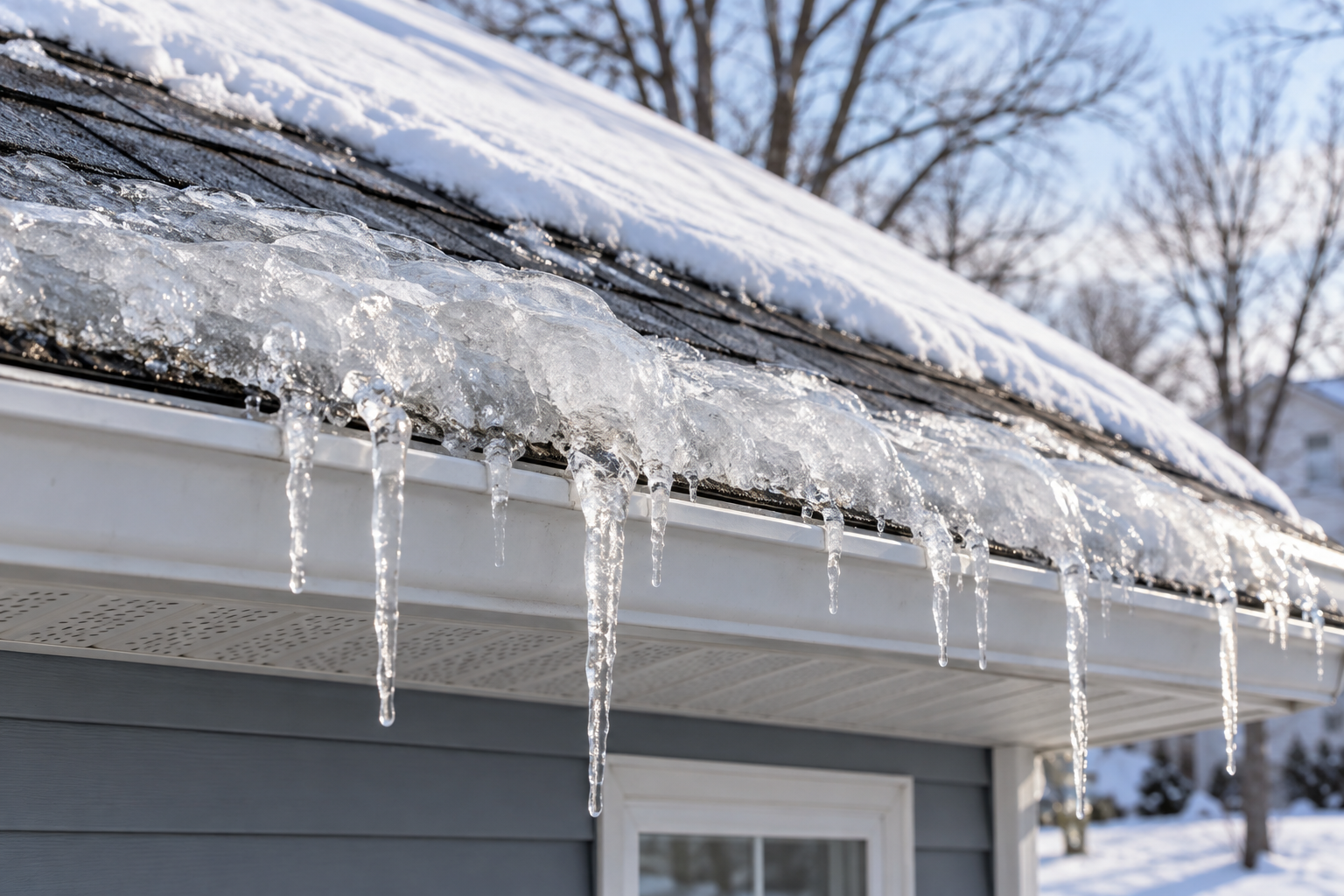
Snow melts where a roof surface becomes warm enough. The meltwater runs downhill until it reaches a colder area, often the eave extending beyond the heated portion of the house. There, it refreezes.
As that ridge of ice grows, additional meltwater can collect behind it. Water may work beneath the roof covering and enter the attic, walls, or ceilings. An ice dam can develop even when gutters are clear—or when a home has no gutters.
Why gutter cleaning may not be enough
Removing leaves and debris is useful maintenance. It does not stop indoor heat from reaching the underside of the roof.
An ice dam can be a reason to investigate heat escaping through the ceiling, inadequate insulation, or heat sources in the roof space. Sun exposure and differences in snow coverage can also contribute. The presence of ice alone does not establish which condition is responsible.
What may be warming the roof
Warm air can escape around attic access covers, plumbing and wiring openings, recessed lights, and gaps above walls. These pathways can bypass insulation and carry both heat and moisture into the attic.
Insulation that is missing, compressed, or uneven can allow additional heat loss. Ductwork or other heat sources in the roof space may also contribute. That is why a recurring ice dam deserves an assessment of the whole roof and attic assembly.
This connects to our previous post on attic frost: indoor air leaking upward can contribute to frost under cold conditions and snowmelt under other conditions. Both problems may warrant investigation of air leakage.
Why more vents are not a complete fix
Ventilation can help a properly designed vented attic manage residual heat and moisture, but it cannot reliably compensate for substantial air leakage or inadequate insulation. Adding vents without identifying the cause may leave the problem unresolved.
The right repair depends on the home’s construction. Cathedral ceilings and deliberately unvented roof assemblies need an approach suited to their design.
Warning signs to watch for
From a safe location on the ground or inside the home, watch for:
- A thick ridge of ice at the roof edge or ice returning in the same locations.
- Large icicles above doors, walkways, or other occupied areas.
- New stains, peeling paint, or dampness near ceilings and exterior walls.
- Water appearing during snowmelt or changing winter temperatures.
Icicles alone do not prove an active roof leak. Similarly, a ceiling stain may have another source, including plumbing or thawing attic frost. Record when the symptom appears and photograph it safely; that history can help guide the evaluation.
What to do when water is entering
Contact a qualified professional promptly if water is entering the home. Ice dam removal may provide immediate relief, while the underlying heat-loss problem requires separate attention. Minnesota’s Department of Commerce recommends professional steam removal when an ice dam is causing interior water damage.
Keep people away from falling ice and avoid climbing onto an icy roof. Chipping or hammering ice can damage shingles and gutters. Ask the contractor how the removal method will protect the roof.
A sagging ceiling or water near electrical fixtures needs urgent attention. Keep clear of the affected area and arrange appropriate repair assistance. Wet building materials also need timely assessment and drying.
Questions to ask before approving repairs
- What evidence explains why this roof area is warming?
- Where are the air leaks between the living space and attic?
- Is insulation adequate and continuous, including near the eaves?
- Are ducts or other attic heat sources contributing?
- Is the ventilation appropriate for this roof assembly?
- Does any wet insulation, damaged wood, or roofing need repair?
- How will we check the results during future winter weather?
Plan beyond this winter’s ice removal
A home energy assessment can help locate heat-loss pathways and guide lasting improvements. An inspection can document accessible conditions and identify where specialized evaluation is appropriate. Snow cover and limited access may restrict what can be seen during a winter visit.
Have recurring ice dams, winter ceiling stains, or other moisture concerns? Contact Inspecta-Homes to discuss the appropriate inspection service and next steps.
Call 651-641-0641 or visit inspectahomes.com.