Questions to Ask After a Sewer Scope Reveals a Concern
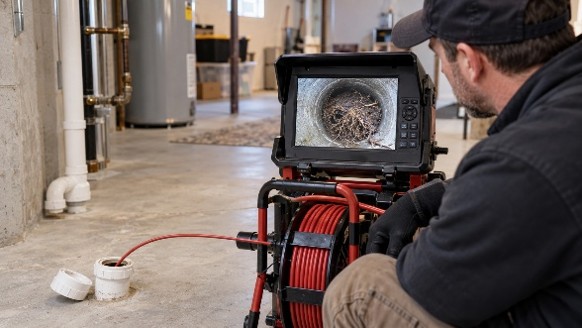
A sewer scope has revealed roots, standing water, an offset connection, deterioration, debris, a damaged section, or another unexpected condition. What should the buyer do next?
The first step is not to assume the worst. A sewer-scope finding does not automatically mean the entire line must be replaced, and it does not make the purchase decision for the buyer.
It provides information about a concealed system. The buyer’s task is to understand what was observed, what remains unknown, and whether additional evaluation is needed before making a decision.
The following questions can help turn an unfamiliar camera image into a more organized next step.
- What exactly was observed?
Begin with the language in the inspection report and the corresponding portion of the recorded video.
Terms such as root intrusion, crack, offset, standing water, deterioration, obstruction, or deformation describe different visible conditions. Even within one category, severity can vary considerably. A small amount of roots at one joint is different from dense growth restricting much of the pipe. A shallow area of water is different from a long section that submerges the camera and prevents observation.
Ask the inspector to clarify:
- What condition is visible?
- How extensive does it appear in the accessible view?
- Did it affect drainage, camera movement, or visibility?
- Were other related conditions visible nearby?
- Does the report recommend cleaning, locating, reinspection, or specialist evaluation?
For additional help with inspection terminology, read Understanding Your Sewer Scope Results: What Common Findings Mean. Verify the final Series 5 URL before publishing if its WordPress slug differs.
- Where is the concern located?
Location can affect repair planning, responsibility, access, disruption, and cost.
The video or report may include an approximate camera distance. In some cases, the inspector or a sewer contractor may be able to locate the camera head from the surface using specialized equipment.
Ask:
- At approximately what distance was the condition observed?
- From which access point was that distance measured?
- Was the camera head located from the surface?
- Is the area beneath the yard, driveway, sidewalk, street, landscaping, foundation, or another improvement?
- Is the location approximate or confirmed?
Camera-distance readings and surface locating can be helpful, but they should not be treated as a substitute for excavation or other verification when exact placement is required.
- How much of the line was inspected?
A concern in the visible portion of the pipe is only part of the inspection story. Buyers should also determine whether the camera reached the intended endpoint.
Ask whether the camera reached the municipal connection, the end of private responsibility, a septic component, or another identifiable termination point. If it did not, find out where and why the inspection stopped.
The camera may be limited by roots, debris, standing water, damaged piping, tight turns, unsuitable access, or equipment distance. An incomplete inspection does not prove that the unseen portion is defective. It means its condition remains unknown.
Read What Happens When the Sewer Camera Cannot Reach the End of the Line? for a closer look at incomplete inspections. Verify the final Series 6 URL before publishing if its WordPress slug differs.
- Would cleaning provide better information?
Roots, waste, scale, grease, construction debris, or other material can obstruct the camera or conceal the pipe surface. Professional cleaning may improve camera travel and visibility.
Ask:
- Is cleaning recommended?
- What appears to be limiting the inspection?
- Should the line be reinspected after cleaning?
- Could cleaning itself be affected by the pipe’s condition?
- Is a qualified sewer contractor needed before cleaning proceeds?
Cleaning can restore access or improve drainage, but it does not necessarily correct the opening, damaged connection, low area, or deterioration associated with the buildup. A follow-up scope may be needed to inspect the cleaned section.
- Is evaluation by a sewer contractor recommended?
The sewer-scope inspector documents visible interior conditions. A qualified sewer contractor may be needed to determine the extent of a concern, evaluate repair options, locate a section, or prepare an estimate.
When speaking with a contractor, consider asking:
- What additional evaluation is needed?
- Does the available video provide enough information?
- Should the line be cleaned or located first?
- Is a spot repair, lining, partial replacement, or full replacement being proposed?
- What area of pipe would the work address?
- What assumptions are included in the estimate?
- Could excavation reveal conditions that change the scope or price?
- Are permits, street work, traffic control, restoration, or municipal fees included?
- What warranty is offered, and is it transferable?
The purpose of asking these questions is not to favor one repair method. It is to understand what is being proposed and which observed condition the work is intended to address.
- Are prior records available?
The property’s sewer history may add important context. Ask the seller for available:
- Previous sewer-scope reports and videos
- Cleaning and maintenance invoices
- Repair or replacement contracts
- Permits and inspection records
- Liner documentation
- Warranties
- Photographs or diagrams showing completed work
- Contractor names and dates of service
If the line was described as “replaced,” clarify whether the work covered the entire private service line or only one section. Determine where the work began and ended, which materials were used, and whether older piping remains.
A prior repair can be positive information. It can also create a transition between different materials or installation periods that deserves attention.
- Who is responsible for the affected section?
Buyers should not assume that the city is responsible for every section beyond the house—or that the homeowner is responsible for every buried component.
Responsibility can depend on the municipality, utility, type of system, property boundaries, easements, association documents, and location of the concern. Rules and programs can change.
Ask:
- Is the condition within the private sewer service line?
- Where does private responsibility end for this address?
- Does a city, utility, or association maintain any portion?
- Are there applicable inspection, repair, or assessment programs?
- Who can provide current written information?
The applicable municipality, utility, homeowner association, or other responsible entity should confirm current requirements for the specific property.
- Are permits or approvals likely to be required?
Repair work may require permits, inspections, utility coordination, right-of-way approval, street-opening permission, or other authorization. Requirements depend on the location and proposed work.
Ask the contractor and municipality:
- Which permits or approvals apply?
- Who obtains them?
- Are permit and inspection fees included in the estimate?
- Will work affect a public sidewalk, boulevard, street, or neighboring property?
- Is restoration included?
- Are there seasonal or scheduling limitations?
The answers can influence both the project timeline and the total cost.
- What does the estimate include?
A repair number is most useful when the scope is clear.
Ask for a written estimate that identifies:
- The section of line being addressed
- The proposed repair method
- Labor and materials
- Excavation or trenchless work
- Permits and inspections
- Utility locating or coordination
- Street, sidewalk, driveway, yard, or landscaping restoration
- Cleanup and disposal
- Reinspection or post-repair video
- Warranty terms
- Conditions that could change the price
Comparing estimates can be difficult when contractors propose different scopes. A lower number may cover a smaller section or exclude restoration, permitting, or unexpected conditions. Buyers should compare what is included, not only the total.
- Does the finding require immediate action?
Some conditions may warrant prompt attention. Others may involve maintenance, monitoring, or further evaluation rather than immediate replacement.
Ask the inspector or qualified contractor:
- Is drainage currently restricted?
- Is there evidence of an active break, collapse, or significant obstruction?
- Could normal use increase the risk of a backup?
- Is cleaning recommended before additional use or evaluation?
- Is the recommendation urgent, or can the condition be monitored?
- What signs should the future owner watch for?
No inspection can guarantee when a sewer problem will occur. The purpose of the question is to understand the professional’s recommendation and the basis for its urgency.
- How does the inspection contingency affect the timeline?
Real estate contracts and inspection contingencies have deadlines. Buyers should communicate promptly with their real estate professional when additional cleaning, reinspection, contractor evaluation, records, or estimates are needed.
The sewer inspector does not interpret the purchase agreement or advise the buyer on negotiation strategy. Buyers should rely on their real estate professional or attorney for contract and legal guidance.
Useful timing questions include:
- When does the inspection contingency expire?
- How quickly can cleaning or contractor evaluation be scheduled?
- Is an extension available or appropriate?
- Which reports, videos, estimates, or records should be provided?
- Who will coordinate access?
Scheduling the sewer scope alongside the General Home Inspection may leave more time for these follow-up steps.
- What choices does the buyer have?
The inspection does not decide whether a buyer should proceed with the purchase. It provides information the buyer can consider with their advisers.
Depending on the contract, findings, and professional recommendations, the buyer may explore options with their real estate professional or attorney. Those options vary by transaction and may involve additional evaluation, documentation, repair discussions, estimates, or other contract-based decisions.
The buyer should avoid making a decision based on one video frame or an unfamiliar term. Review the full report, recorded video, inspection limitations, relevant property history, contractor input, responsibility, cost, and timing together.
Keep the finding in context
Sewer-line concerns can occur in properties of different ages.
Older homes may have aging materials, mature landscaping, previous repairs, and incomplete records. Learn more in Buying an Older Twin Cities Home? Here’s Why You Should Consider a Sewer Scope.
Newer homes may present construction debris, settlement, installation questions, or limited use history. Read Do Newer Twin Cities Homes Need a Sewer Scope?.
A seller may also choose to investigate the line before listing. Sewer Scope Inspections for Home Sellers: Should You Inspect Before Listing? explains the potential planning benefits. Verify the final Series 7 URL before publishing if its WordPress slug differs.
Information turns concern into a next step
A concerning sewer-scope finding deserves attention, but it should also be interpreted carefully.
Start with what was observed. Determine where it is located, how much of the line was inspected, and which limitations apply. Gather the property’s history. Follow recommendations for cleaning, reinspection, locating, or contractor evaluation. Confirm responsibility and obtain clearly defined estimates when repair planning is appropriate.
The goal is not to eliminate every uncertainty. It is to replace an unexpected finding with enough reliable information to make a thoughtful decision.
Schedule a Twin Cities sewer scope with Inspecta-Homes
Inspecta-Homes has served Minnesota and Western Wisconsin homebuyers, homeowners, sellers, and real estate professionals since 1981. Our sewer-scope service provides a recorded view of accessible portions of the sewer line and a report documenting visible conditions and inspection limitations.
What you can’t see matters—and knowing what to ask next matters too. Explore our Sewer Inspection Service, Schedule Now, or call 651-641-0641 to add a sewer scope to your General Home Inspection.