
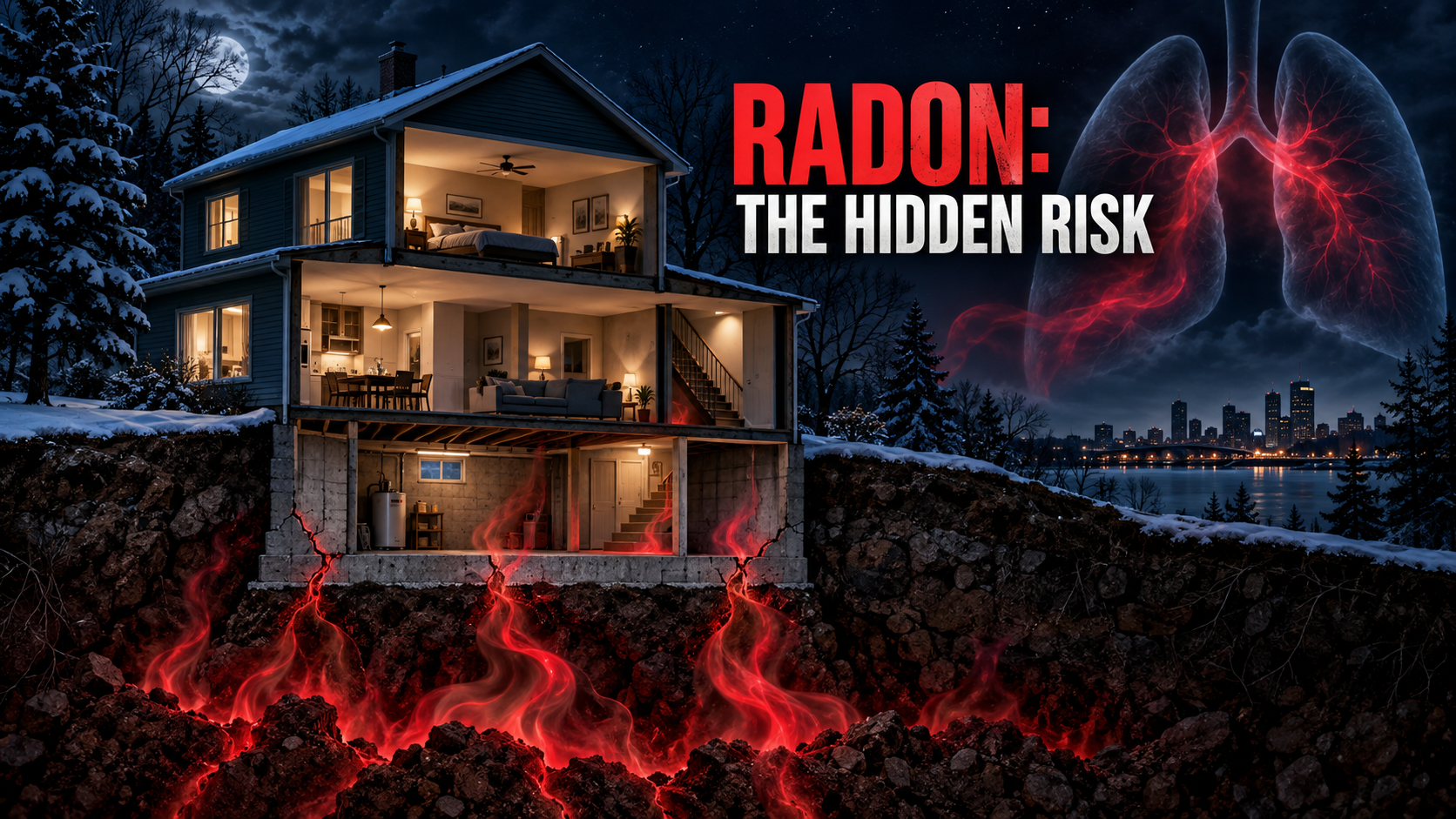
What is the second leading cause of lung cancer in the United States after smoking? Radon. It is a radioactive gas you cannot see, smell, or taste, and testing is the only way to know how much is in your home. The U.S. Environmental Protection Agency (EPA) estimates that nearly one in 15 U.S. homes has a radon level that should be reduced.
Radon forms naturally in soil and rock. It can enter a home through openings around the foundation and accumulate indoors. Breathing radon over a long period increases the risk of lung cancer. The risk is higher for people who also smoke. Minnesota Department of Health (MDH)
Why does this matter so much in Minnesota?
MDH reports that more than two in five Minnesota homes have radon levels that pose a significant health risk. It says the state’s average radon level is more than three times the U.S. average, due to Minnesota’s geology and the way homes are heated and closed up for much of the year. A home’s age or appearance cannot tell you its radon level. MDH
A January 2024 article from Boreal Community Media highlighted another concern: at the time, MDH estimated that only 1–2% of Minnesota homes were tested each year. That figure describes annual testing; it does not mean only 1–2% of homes have ever been tested.
What should you do?
If you have never tested your home or cannot find your last result schedule a radon test. MDH recommends retesting every two to five years and testing before and after certain home improvements. If follow-up testing confirms a level of 4 pCi/L or higher, MDH recommends installing a radon mitigation system. That number is an action level, not a guarantee that lower levels carry no risk. MDH testing guidance
Inspecta-Homes has served Minnesota and Western Wisconsin homeowners since 1981. To schedule a radon test in the Twin Cities, call 612-788-9608 or visit InspectaHomes.com.


