
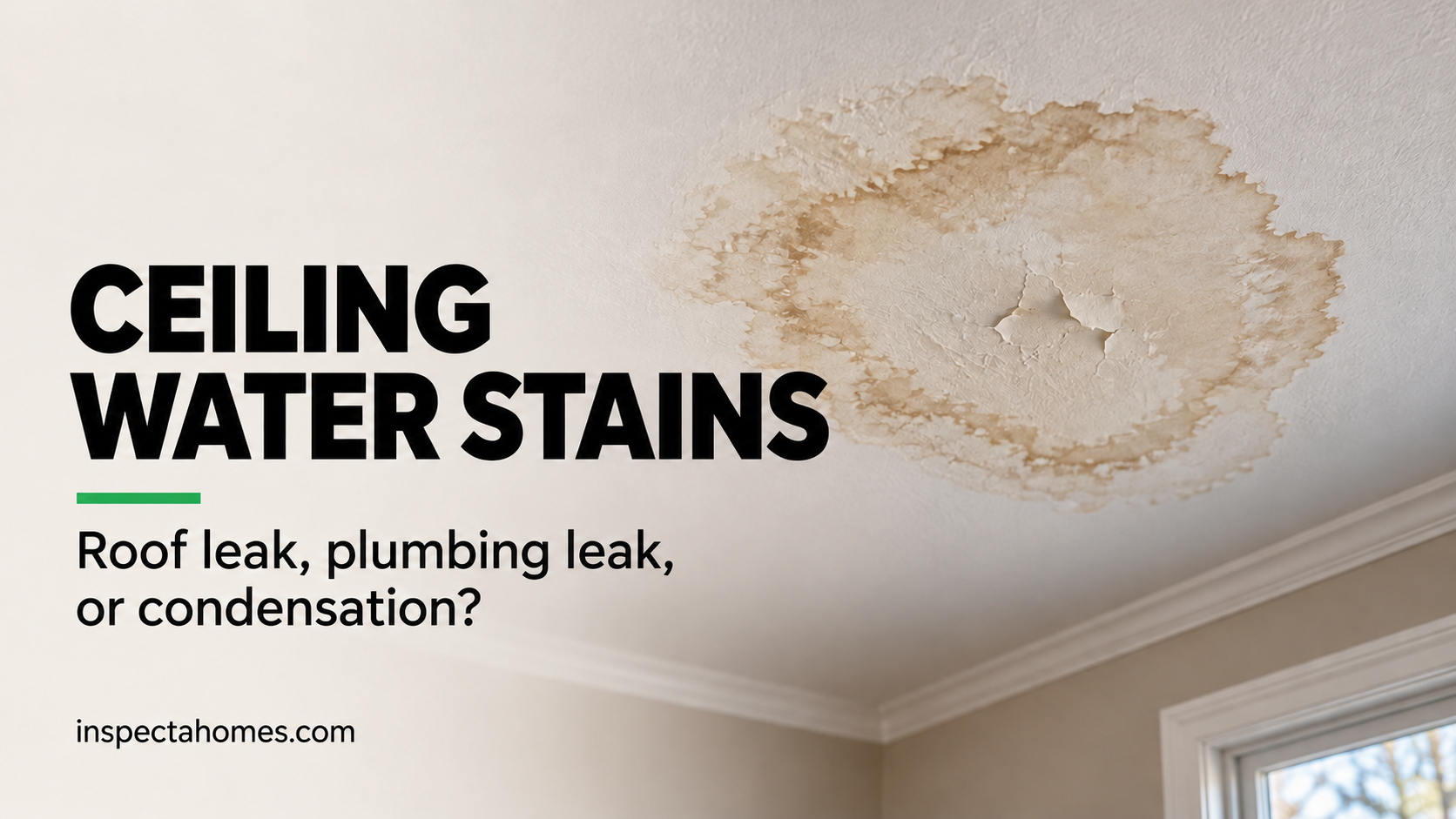
Roof Leaks Plumbing Leaks and Condensation
A brown ring on the ceiling can raise an immediate question: Is the roof leaking? It might be, but plumbing leaks and condensation can leave similar marks. The stain shows where moisture reached the finish; it does not necessarily reveal where the water started.
Before reaching for a paintbrush, document what you see and arrange evaluation of the source. Timing, location, and repair history can help guide that investigation.
When the roof may be involved
A stain that appears or changes after rain or snowmelt warrants investigation of roof-related water entry. Roofing materials, flashing around chimneys and roof penetrations, and roof transitions are possible areas to evaluate. Water can travel along framing before reaching the ceiling, so the entry point may be some distance from the visible stain.
Minnesota winters add another possibility: ice dams. When ice at a roof edge blocks drainage, melting snow can back up and enter the house. University of Minnesota Extension explains that this water can reach walls and ceiling insulation and stain interior finishes. A stain following a winter thaw deserves attention even when no rain occurred.
The timing is a clue, not a diagnosis. Have a qualified roofing professional investigate suspected roof leakage or ice dam damage rather than assuming the shingles directly above the stain are responsible.
When plumbing may be involved
A ceiling stain beneath a bathroom, laundry area, or plumbing route can point toward a supply leak, drain leak, or water escaping around a fixture. Note whether dripping or staining changes after a shower, bath, toilet flush, or laundry cycle. A supply leak may continue even when fixtures are not being used.
An upstairs bathroom above the stain does not prove the cause. A plumber may need to evaluate accessible connections and perform targeted testing. If you observe active leakage associated with a fixture, stop using it and arrange prompt service. Avoid repeatedly running water simply to reproduce a leak.
When condensation may be involved
Condensation forms when water vapor meets a surface cold enough for it to turn into liquid. As we explained in our first article on window condensation, the location of moisture matters. In a cold attic, warm indoor air escaping through ceiling openings can contribute to moisture accumulation on cold surfaces.
In freezing conditions, that moisture may collect as frost and later melt. Water can then wet insulation or ceiling materials. Bathroom exhaust discharged into an attic can also introduce moisture where it should not be.
A qualified professional should assess the contributing conditions, which may include indoor humidity, air leakage, exhaust duct routing, insulation, and ventilation. Adding roof vents alone should not be assumed to resolve the problem. University of Minnesota Extension recommends controlling moisture sources and sealing openings that let warm, moist indoor air enter ceilings and attics.
What homeowners should document
A few observations can help the professional investigating the stain:
Take a wide photo showing the room and a close-up showing the stain. Date both images and photograph changes from the same position.
Record when the stain first appeared and whether it changes after rain, snowmelt, cold weather, or use of nearby plumbing fixtures.
Note peeling paint, bubbling finishes, musty odors, dripping, or changes in the ceiling shape. Observe from a safe distance; do not press on a wet or sagging ceiling.
Gather invoices, photos, and reports from earlier roof, plumbing, or moisture repairs. Record whether the stain has returned since those repairs.
Signs that need prompt attention
Active dripping, a spreading stain, or a sagging or bulging ceiling calls for prompt professional attention. Keep people away from the affected area. If water is near a light fixture or other electrical equipment, avoid using or touching it and obtain qualified help. Do not puncture a bulging ceiling yourself.
Wet materials also need timely assessment and drying. The EPA recommends drying water-damaged areas and items within 24 to 48 hours to help prevent mold growth. The source of the water must be addressed along with the damage; drying the visible surface alone may leave moisture in concealed materials.
Why painting over a stain leaves questions unanswered
A stain may remain after a successful repair. It may also become dry between episodes of leakage. Its appearance alone cannot establish whether the problem is old, active, or resolved.
Repainting can improve the finish while leaving the source untouched. Before cosmetic work, identify and address the cause, confirm appropriate drying, and repair damaged materials as needed. Keep documentation of the work so future buyers can understand what happened and how it was handled.
Questions homebuyers should ask
If you notice a ceiling stain during a showing or inspection, ask:
When did it first appear, and has it changed or returned?
Was the source identified, and who completed the repair?
Are repair invoices, photos, or follow-up findings available?
Were wet insulation or other affected materials evaluated and addressed?
Does the inspector recommend further evaluation before closing?
Fresh paint is a reason to ask about repair history, not evidence of a concealed problem. Similarly, a dry moisture reading on inspection day does not prove that a leak will not recur during a storm, thaw, or later fixture use.
How a home inspection can help
A general home inspection can document visible staining and accessible related conditions and recommend further evaluation. It is a snapshot of conditions at the time of the inspection. Concealed piping, covered framing, inaccessible areas, and intermittent leaks may require a separate investigation.
Discuss the inspection scope with your inspector and follow through on recommended roof, plumbing, or moisture evaluations. Understanding the source and repair history helps you make a more informed decision about the property.
Get help understanding visible moisture concerns
If you are buying or selling a home, or have questions about ceiling stains, contact Inspecta-Homes to discuss the appropriate inspection and any additional evaluation your property may need.
Call 651-641-0641 or visit inspectahomes.com to discuss your inspection needs.


