
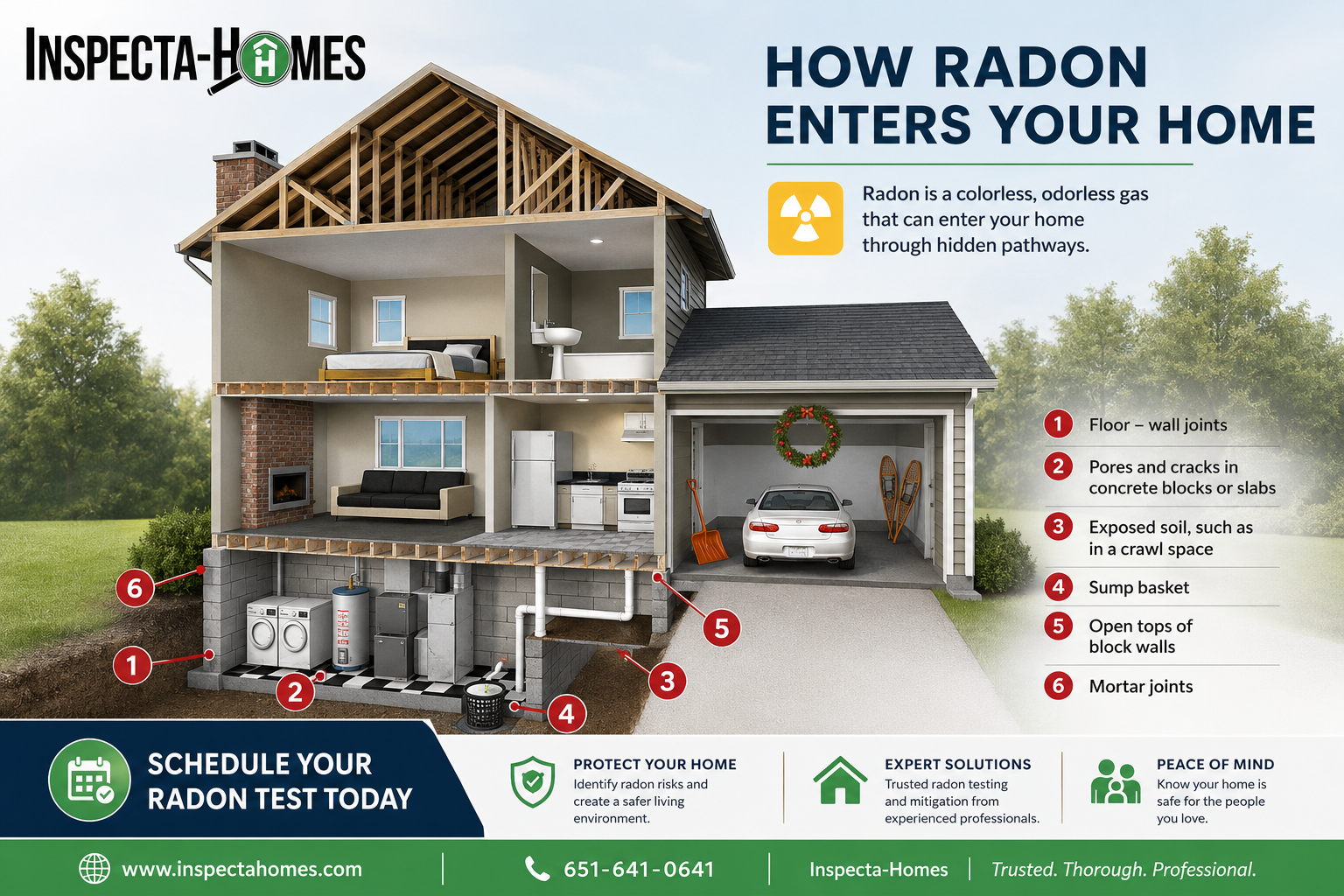
Radon is an invisible, odorless gas that comes from the soil. It can enter a home through openings in and around the foundation and build up indoors. You cannot tell whether a home has elevated radon by looking at it the only way to know is to test.
Minnesota has a particular reason to pay attention. According to the Minnesota Department of Health (MDH), more than two in five Minnesota homes have radon levels that pose a significant health risk. Our geology is part of the reason. The way homes are heated and closed up for much of the year can also affect indoor radon levels.
When should you test for radon?
MDH recommends testing every Minnesota home, then retesting every two to five years. It also recommends testing before and after changes that could affect how air moves through the home, including:
- Finishing a basement or building an addition
- Replacing windows or adding insulation
- Installing a kitchen vent hood
- Adding or changing a central heating or air-conditioning system
A previous low result does not tell you what the level will be after a renovation. If you have a radon mitigation system, retest to confirm it is working properly. MDH radon testing guidance
What if the result is high?
MDH recommends a radon mitigation system when follow-up testing confirms a level of 4 picocuries per liter (pCi/L) or higher. It says homeowners may also consider mitigation at levels between 2 and 3.9 pCi/L. Follow-up testing matters because radon levels can vary. MDH radon testing guidance
Whether you are buying a home, planning a renovation, or simply cannot remember the last time you tested, a radon test gives you information you can act on. Learn more in this MDH article about radon in Minnesota homes.
Need a radon test in the Twin Cities? Contact Inspecta-Homes at 612-788-9608 or visit InspectaHomes.co


