
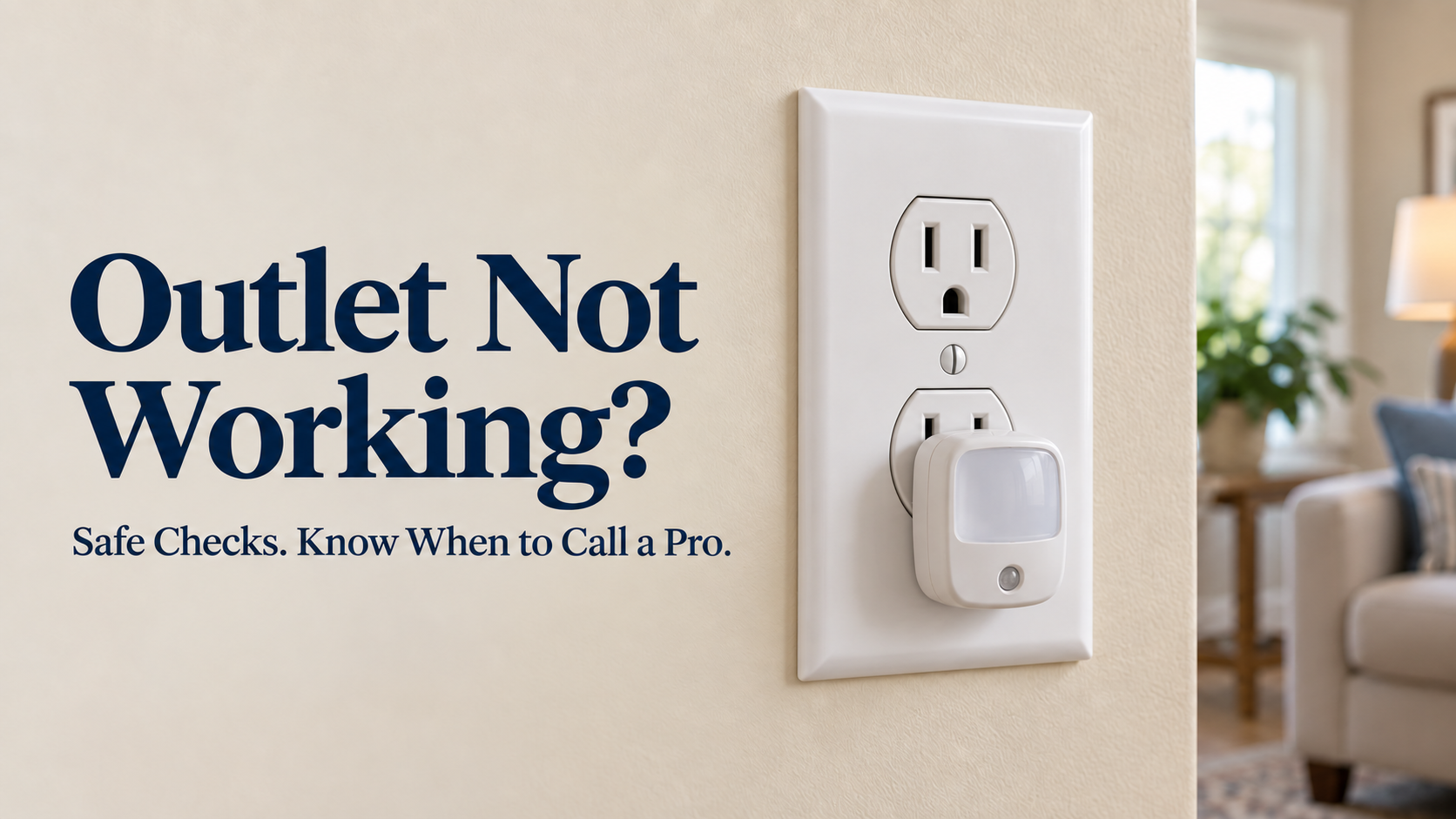
An electrical outlet that stops working doesn’t always need replacement. A tripped breaker, a tripped GFCI, or a wall switch could be responsible. However, damaged wiring or worn components can also cause problems.
Here’s how to approach a nonworking outlet safely.
Check for warning signs first
Stop using the outlet if you notice burning odors, discoloration, unusual warmth, buzzing, sparks, or melting. If safe, turn off the affected circuit breaker and contact a licensed electrician. If there is smoke or an active fire, leave the home and call 911.
The Electrical Safety Foundation recommends professional evaluation of outlets that malfunction, become unusually warm, or make unusual noises.
Rule out the simple causes
If there are no warning signs and everything is dry:
Check the device. Try a small lamp that you know works in the outlet. The original appliance or charger may be the problem.
Check nearby wall switches. Some outlets or just one half of an outlet—are controlled by a switch.
See whether other outlets have lost power. Several dead outlets may share a circuit or protective device.
Look for a tripped GFCI
GFCI outlets have TEST and RESET buttons and help protect against electrical shock. One GFCI may protect several outlets, including outlets in another room.
Unplug devices from the affected outlets, then press RESET on the GFCI if the area is dry and there are no signs of damage. If it won’t reset or trips again, stop troubleshooting and contact an electrician. A GFCI that won’t reset may lack incoming power or have another problem; it does not automatically need replacement. Leviton’s GFCI guidance explains these possibilities.
Check the circuit breaker
If the panel is dry, undamaged, and safely accessible, look for a tripped breaker. Unplug devices on the affected circuit before resetting it. Move the breaker fully to OFF, then back to ON once.
If it trips again, leave it off and call an electrician. Do not repeatedly reset it or remove the panel cover.
If your home uses fuses, never install a higher-rated fuse or bypass one. Have an electrician help if you’re unsure of the correct replacement or why it blew.
Leave wiring repairs to a professional
Do not remove the outlet to inspect or tighten wires yourself. Loose connections, damaged wiring, and worn receptacles require proper diagnosis. Replacing the outlet alone may not correct the underlying problem.
Have questions about your home’s condition? Contact Inspecta-Homes at 612-788-9608 or visit inspectahomes.com to schedule a home inspection.


