
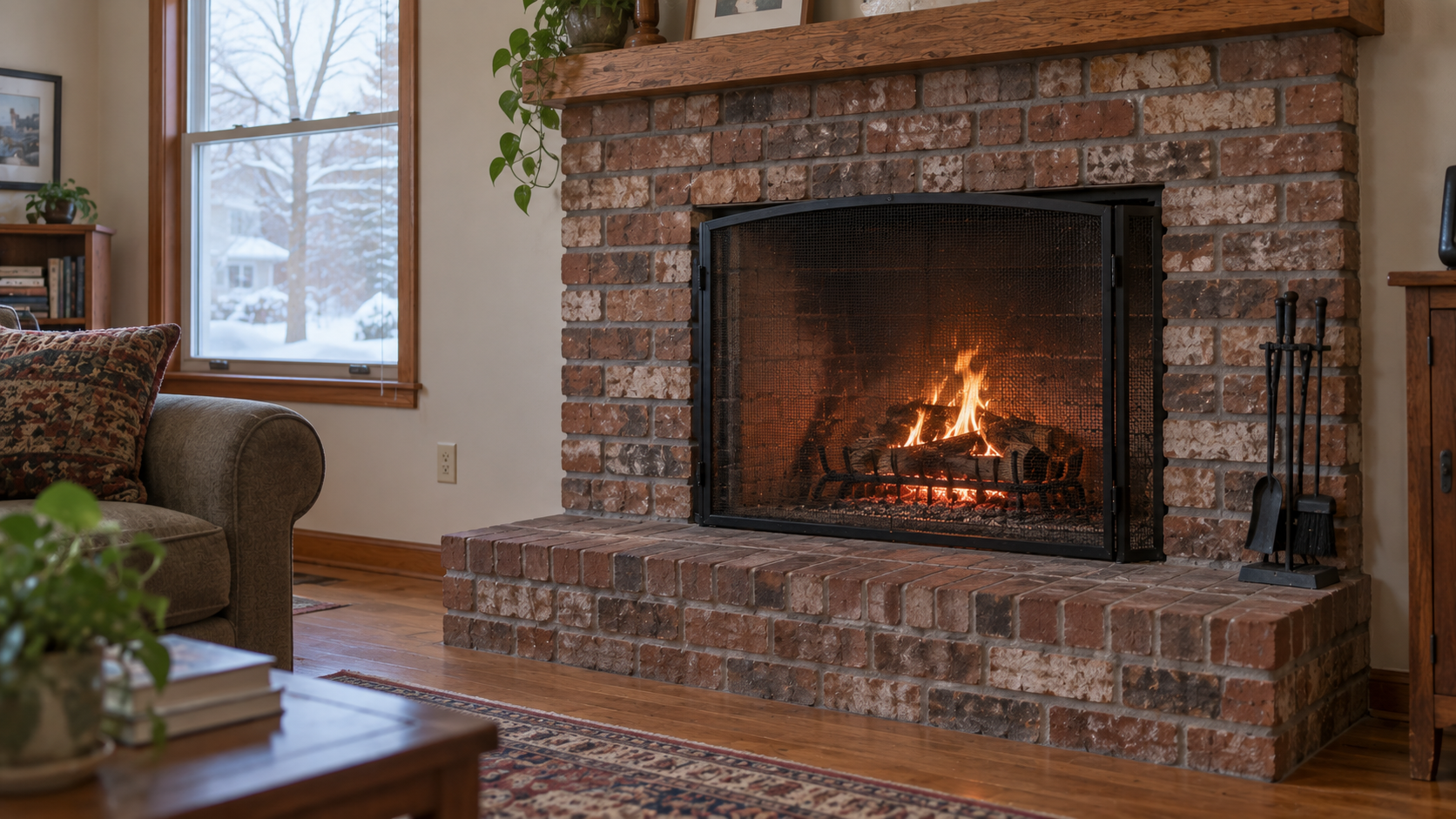
A wood-burning fireplace can make a Minnesota home feel warm and inviting, but it must be operated correctly. Successful fires require three things: dry fuel, sufficient airflow, and a safe, properly functioning chimney.
Before using your fireplace, confirm that it and the chimney are in safe operating condition. If the fireplace is new to you, has not been used recently, or has an unknown maintenance history, have it professionally inspected before lighting a fire.
Before Starting a Fire
1. Check the Fireplace and Chimney
Look for visible damage, excessive soot, loose masonry, animal nesting materials, or other obstructions. Chimneys and fireplaces should be professionally inspected annually and cleaned or repaired when necessary, according to guidance referenced by the Chimney Safety Institute of America. CSIA
Make sure your home also has working smoke alarms and carbon monoxide alarms.
2. Clear the Area
Keep furniture, curtains, rugs, decorations, firewood, and other combustible materials at least three feet away from the fireplace. Place a metal or glass screen in front of the opening to help contain sparks and embers.
3. Open the Damper Completely
The damper controls airflow through the chimney. It must be fully open before lighting the fire so smoke and combustion gases can escape.
Use a flashlight to verify its position before building the fire. Never assume the damper is open.
If smoke enters the room after lighting the fire, extinguish it safely and investigate the cause. A closed damper, chimney obstruction, cold flue, negative air pressure, or damaged chimney may be responsible.
Choose the Right Firewood
Use only clean, dry, properly seasoned firewood. Wood with a moisture content below approximately 20% generally burns more efficiently and produces less smoke.
Avoid burning:
- Wet or green wood
- Painted, stained, or pressure-treated lumber
- Plywood or particleboard
- Cardboard and household trash
- Plastics, foam, or packaging
- Large amounts of paper
- Gasoline, kerosene, or charcoal lighter fluid
Wet or improper materials can create excessive smoke, harmful fumes, and additional creosote buildup. EPA wood-burning guidance
How to Build and Light the Fire
Place two or three small, dry logs on the fireplace grate. Add dry kindling and an approved natural fire starter, arranging the materials loosely enough for air to circulate.
Light the fire starter and allow the kindling to ignite the larger pieces gradually. Avoid overloading the fireplace a smaller, hotter-burning fire is generally better than a large, smoky, smoldering one.
Once the fire is established:
- Add one or two logs at a time.
- Maintain space between the logs for airflow.
- Keep the fireplace screen closed.
- Never leave the fire unattended.
- Keep children and pets a safe distance away.
- Never leave the home or go to sleep while a fire is still burning.
How to Keep the Fire Burning
If the fire repeatedly goes out, the wood may be damp or the fire may not be receiving enough air. Avoid smothering the flames with too many logs.
Persistent smoke, poor draft, unusual odors, or difficulty maintaining a fire may indicate a chimney or ventilation problem. Stop using the fireplace until it can be evaluated by a qualified professional.
After the Fire
Allow the fire and embers to go out completely. Do not close the damper while embers are still hot or smoldering because carbon monoxide and smoke could enter the home.
Once the ashes are completely cool:
- Use a metal shovel to remove them.
- Place them in a metal container with a tight-fitting lid.
- Store the container outdoors on a noncombustible surface.
- Keep it at least 10 feet away from the house and other structures.
Ashes can retain enough heat to start a fire long after they appear to be extinguished. The U.S. Fire Administration recommends professional annual chimney inspection and careful outdoor ash storage. U.S. Fire Administration
When Should You Schedule a Chimney Inspection?
Consider scheduling an inspection if:
- You recently purchased the home.
- The chimney’s service history is unknown.
- Smoke enters the room.
- You notice strong or unusual odors.
- The damper does not operate correctly.
- The fireplace or chimney shows visible damage.
- You have experienced a chimney fire.
- The fireplace or heating appliance has been changed.
A Level 2 chimney inspection may be appropriate following a property transfer, system modification, chimney fire, weather-related event, or when a more detailed examination is needed.
For professional home inspection and Level 2 chimney inspection services in the Twin Cities, contact Inspecta-Homes.
Inspecta-Homes
www.inspectahomes.com
612-788-9608


