
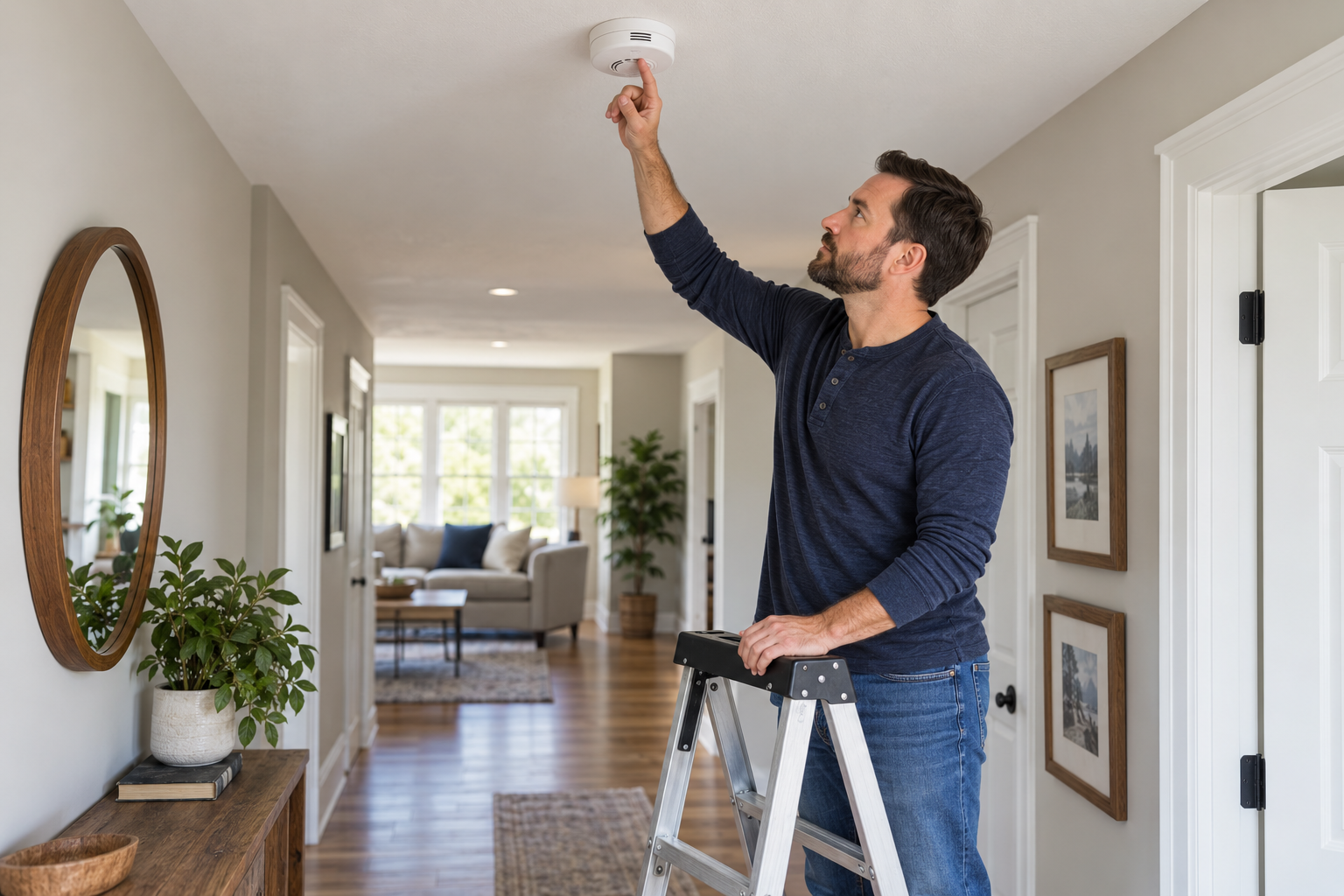
A beeping smoke detector is trying to tell you something. It may need a new battery, require cleaning, have reached the end of its useful life, or be warning you about smoke or another emergency.
Before troubleshooting, listen carefully to the sound. A single chirp every 30 to 60 seconds generally indicates a maintenance issue. A loud, repeating alarm pattern may indicate smoke or fire and should never be ignored.
Common Reasons a Smoke Detector Is Beeping
1. The Battery Is Low
A low battery is one of the most common reasons a smoke detector chirps. Replace the battery with the type recommended by the manufacturer, make sure it is installed correctly, and fully close the battery compartment.
Hardwired smoke alarms often contain backup batteries, so they may chirp even though they are connected to your home’s electrical system.
2. The Smoke Alarm Has Reached the End of Its Life
Most smoke alarms should be replaced 10 years after their manufacture date not 10 years after you purchased the home.
Check the date printed on the back or side of the alarm. If the unit is approximately 10 years old, replace the entire alarm. Some models use a special chirping pattern to signal that the unit has reached the end of its service life.
Combination smoke and carbon monoxide alarms may have different replacement schedules, so follow the instructions printed on the alarm or in the manufacturer’s manual.
3. The Alarm Is Dirty
Dust, pet hair, insects, and other debris can enter the alarm and interfere with its sensors.
Follow the manufacturer’s cleaning instructions. In many cases, you can carefully vacuum around the alarm’s exterior openings using a soft-brush attachment. Do not spray household cleaners, paint, or water into the alarm.
4. The Battery Is Loose or the Compartment Is Open
A battery that is loose, installed incorrectly, or not making proper contact can cause intermittent chirping. The alarm may also chirp if the battery drawer is not completely closed.
Make sure:
- The correct battery is installed.
- The positive and negative terminals are properly aligned.
- The battery is securely connected.
- The battery compartment is completely closed.
- Any activation tab has been removed according to the manufacturer’s instructions.
5. A Sealed-Battery Alarm Needs Replacement
Many newer smoke alarms contain a sealed 10-year battery that is not designed to be replaced. If one of these alarms begins giving an end-of-life warning, the entire unit usually needs to be replaced.
Never attempt to open or remove the sealed battery.
6. The Alarm Needs to Be Reset
A smoke detector may continue chirping after its battery has been replaced because a warning remains stored in the unit.
The reset procedure varies by manufacturer. It may involve removing the battery, disconnecting power to a hardwired unit, and holding down the test button for a specified time. Always consult the instructions for your specific model.
Only a qualified electrician should service wiring or electrical connections to a hardwired smoke alarm.
7. Steam, Humidity, Temperature, or Airflow Is Affecting It
Steam from a bathroom, cooking vapors, condensation, extreme temperatures, or air blowing from a nearby heating register or ceiling fan can sometimes affect a smoke alarm.
Do not disable the alarm or permanently remove its battery. Use the alarm’s hush feature when appropriate and check the manufacturer’s placement requirements before relocating it.
What Should You Do When a Smoke Detector Beeps?
Try these steps:
- Confirm that there is no smoke or fire.
- Identify which alarm is making the sound.
- Replace the battery if the model has a replaceable battery.
- Make sure the battery compartment is fully closed.
- Clean the alarm according to the manufacturer’s instructions.
- Check the manufacture date.
- Test the alarm after completing the work.
- Replace the entire unit if it is damaged, expired, or continues to chirp.
Never Ignore a Full Alarm
An occasional chirp is different from a loud, repeating alarm. If the alarm is sounding continuously or in an emergency pattern, leave the home and call 911 from a safe location.
If the device is a combination smoke and carbon monoxide alarm, check its label or manual to understand the warning pattern. Carbon monoxide cannot be seen or smelled and can be deadly.
How Often Should Smoke Alarms Be Tested?
The U.S. Fire Administration recommends testing smoke alarms monthly and replacing most alarms every 10 years. Alarms should be installed inside and outside sleeping areas and on every level of the home, including the basement.
Never remove a smoke alarm battery simply to stop nuisance alarms. A smoke alarm without working power cannot protect your household.
A professional home inspection can identify visible concerns involving smoke-alarm placement, condition, and age. However, homeowners should continue testing and maintaining their alarms regularly.
Have questions about your home’s safety or maintenance needs? Contact Inspecta-Homes at 612-788-9608 or visit InspectaHomes.com. We have proudly served homeowners throughout the Twin Cities and surrounding communities since 1981.


