
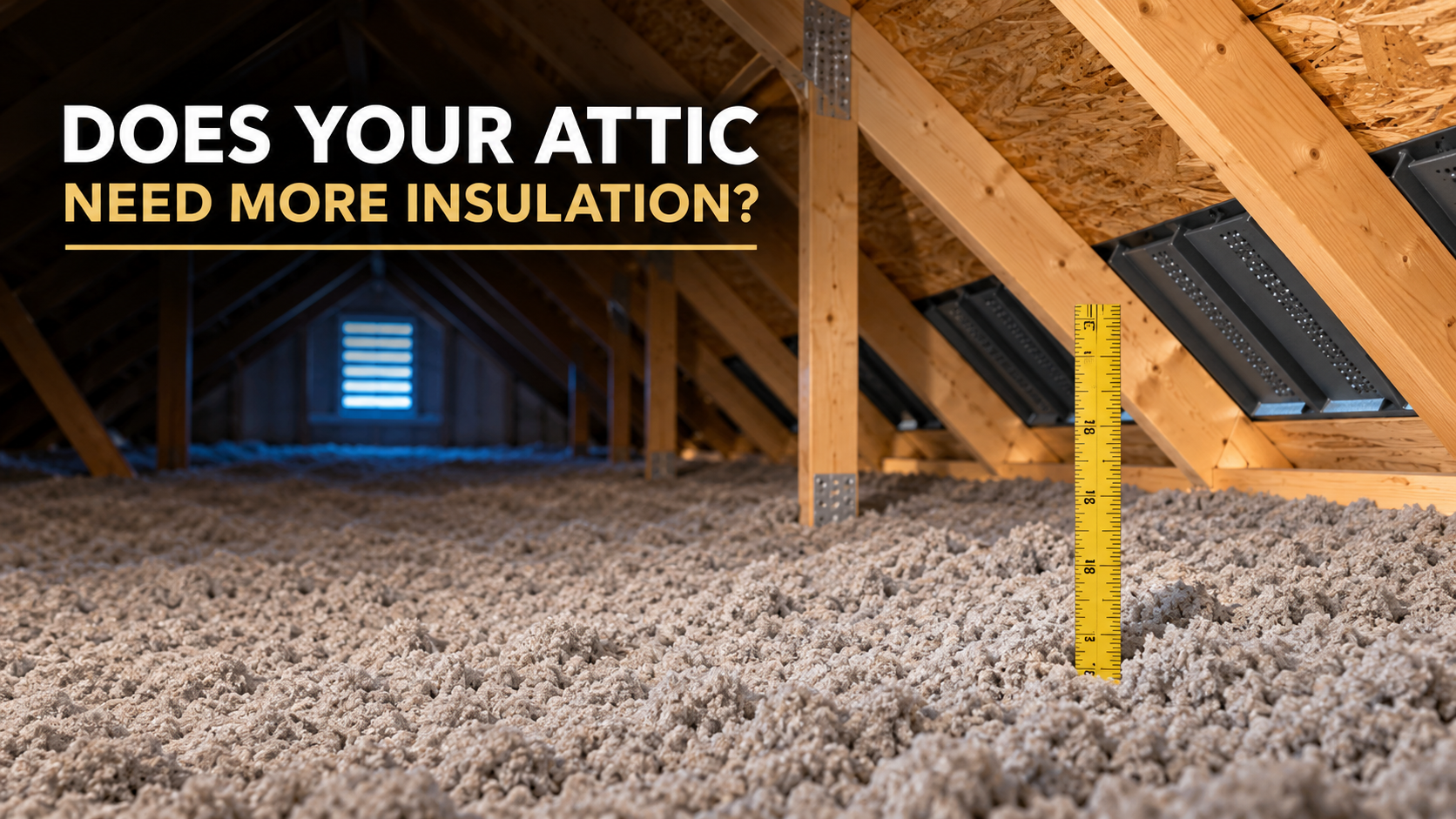
Attic insulation plays an important role in keeping a Minnesota home comfortable and energy efficient. However, higher heating bills, cold rooms and ice dams do not always mean you simply need more insulation. Air leaks, moisture, ventilation and insulation levels should be evaluated together.
Here are some common signs that your attic may need attention.
High Energy Bills
Insufficient or uneven attic insulation may allow heat to escape during winter and enter during summer, forcing your heating and cooling systems to operate longer.
Before assuming insulation is the cause, consider other factors such as energy-rate increases, severe weather, furnace performance, dirty filters and thermostat settings.
Uneven Indoor Temperatures
Rooms directly below the attic may feel noticeably colder in winter or warmer in summer when insulation is missing, compressed or uneven.
Temperature differences can also result from ductwork, windows or HVAC balancing. Attic insulation is one possible cause—not necessarily the only one.
Visible or Uneven Insulation
Look across the attic from a safe location. According to ENERGY STAR, additional insulation may be beneficial when the existing material is level with or below the attic floor joists.
Insulation should be evenly distributed without large gaps, compressed areas or low spots near the eaves.
If the floor joists are completely covered by an even layer of insulation, adding more may not provide enough benefit to justify the cost.
Drafts Around the Ceiling
Drafts near attic access panels, recessed lights, plumbing penetrations or ceiling fixtures may indicate air leakage.
Insulation slows heat transfer, but it does not necessarily stop moving air. Air leaks should generally be identified and properly sealed before additional insulation is installed.
Ice Dams or Uneven Roof Snow
Recurring ice dams can indicate that warm indoor air is escaping into the attic and heating the roof.
Snow melts over the warmer section of the roof, runs toward the colder eaves and freezes again. This process can eventually allow water to back up beneath roofing materials.
The Minnesota Department of Commerce recommends addressing attic air leakage and insulation together. Cleaning gutters is important for drainage, but gutters are not usually the primary cause of ice dams.
Moisture or Frost in the Attic
Watch for:
- Frost on roofing nails or sheathing
- Wet or matted insulation
- Water stains
- Rusted fasteners
- Musty odors
- Mold-like growth
- Bathroom exhaust ducts terminating in the attic
These conditions do not automatically mean you need more insulation. Moisture may come from a roof leak, indoor air entering the attic, poor ventilation, excessive indoor humidity or improperly vented exhaust fans.
Find and correct the moisture source before adding insulation.
How Much Insulation Does a Minnesota Attic Need?
Insulation is measured by its R-value, which indicates resistance to heat flow.
ENERGY STAR generally recommends attic insulation levels between R-49 and R-60 for colder climate zones, depending on the home and existing insulation. The Minnesota Department of Commerce recommends at least R-50 as space allows when addressing attic heat loss associated with ice dams.
The appropriate amount for your home depends on:
- Insulation type and condition
- Existing R-value
- Attic construction
- Available space
- Air leakage
- Local building requirements
Can Thermal Imaging Help?
Thermal imaging can identify surface-temperature differences that may be consistent with missing insulation or air leakage.
However, a thermal camera does not see directly through walls or ceilings. Temperature patterns can have several causes and should be interpreted with visual observations and, when necessary, moisture testing.
Learn more about thermal imaging inspections from Inspecta-Homes.
Use Caution When Entering an Attic
Only step on framing or properly installed walk boards—never on insulation or ceiling drywall. Watch for exposed wiring, sharp roofing nails and low clearances.
Older homes may contain vermiculite insulation, which can be associated with asbestos. Do not disturb suspected vermiculite without professional guidance.
Get Better Information Before Adding Insulation
More insulation is not always the complete answer. The best results usually come from addressing air leakage, moisture, ventilation and insulation together.
A professional evaluation can help identify visible conditions and determine whether an insulation, roofing, HVAC or energy specialist should be consulted.
Schedule an inspection with Inspecta-Homes and get a clearer understanding of the conditions affecting your Minnesota home.


