
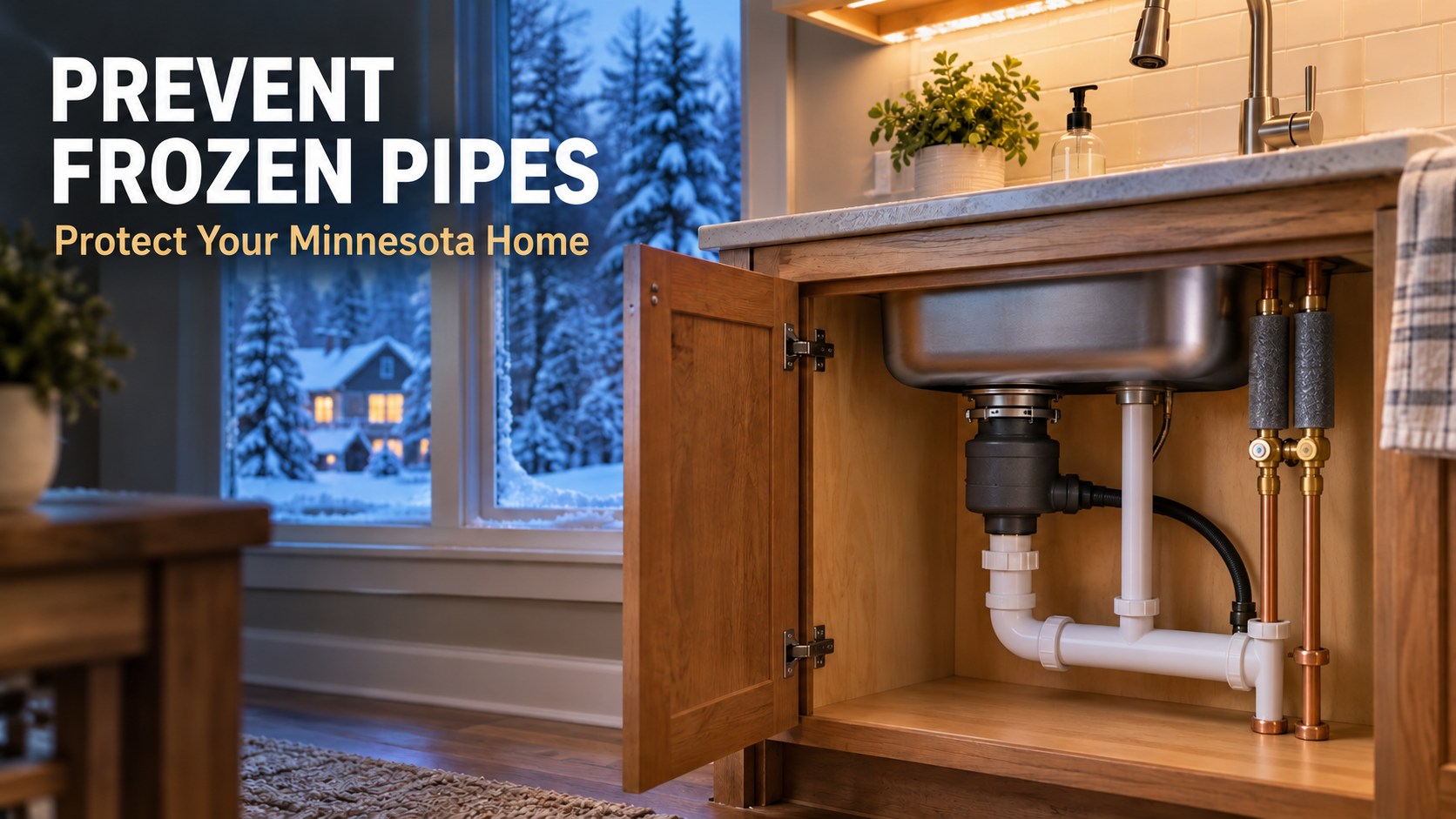
Frozen pipes are a serious concern for Minnesota homeowners. When water freezes, it expands and creates pressure inside the plumbing system. This can crack or burst a pipe, potentially causing extensive water damage once the ice begins to thaw.
Fortunately, a few preventive steps can significantly reduce the risk.
1. Insulate Vulnerable Water Pipes
Insulate hot and cold-water lines in areas that receive little heat, including:
- Basements and crawl spaces
- Attics
- Garages
- Utility rooms
- Cabinets located against exterior walls
Foam pipe sleeves are an affordable option for exposed plumbing. For especially vulnerable areas, a licensed professional may recommend approved heat cable or additional insulation.
2. Maintain a Consistent Indoor Temperature
Keep your thermostat at a consistent temperature during extremely cold weather. Avoid dramatically lowering the temperature overnight, especially when outdoor temperatures fall below zero.
If you are leaving home for an extended period, keep the heat running and set the thermostat no lower than 55°F.
For more seasonal preparation advice, read our guide on how to prepare your house for a Minnesota winter.
3. Open Cabinet Doors
Open kitchen and bathroom cabinet doors when temperatures become dangerously cold. This allows heated indoor air to circulate around plumbing located beneath sinks particularly pipes installed along exterior walls.
Remember to move household cleaners and other potentially harmful products out of the reach of children and pets.
4. Allow a Vulnerable Faucet to Drip
During periods of extreme cold, allow a small trickle of cold water to run from a faucet supplied by pipes that are especially vulnerable to freezing.
The goal is not simply to keep the water moving. An open faucet can also help relieve pressure within the plumbing system if ice begins forming.
5. Protect Exterior Faucets
Before freezing weather arrives:
- Disconnect and drain garden hoses.
- Shut off the indoor water supply to exterior faucets when possible.
- Open the outdoor faucet and allow the line to drain.
- Install an insulated outdoor faucet cover.
- Winterize irrigation and sprinkler systems according to the manufacturer’s instructions.
Follow our step-by-step instructions for draining exterior faucets before winter. Homeowners with irrigation systems should also understand what can happen when a sprinkler system is not properly winterized.
6. Seal Air Leaks Near Plumbing
Cold air entering through openings around windows, doors, utility penetrations, sill plates, and foundations can quickly freeze nearby pipes.
Seal appropriate gaps with caulk or insulation and inspect the areas where plumbing, electrical wiring, and utility lines enter the home. Our Minnesota winter window and door checklist can help you identify additional sources of cold air.
7. Keep Garage Doors Closed
If water lines run through or near your garage, keep the garage door closed as much as possible during cold weather. Even short periods of exposure to subzero air can place poorly insulated plumbing at risk.
8. Locate Your Main Water Shutoff
Every homeowner should know where the main water shutoff valve is located and how to operate it. If a pipe bursts, shutting off the water quickly can help limit damage while you contact a licensed plumber.
Make sure the valve is accessible and clearly identified. Everyone in the household should know its location.
What Should You Do If a Pipe Freezes?
A weak trickle or no water coming from a faucet may indicate a frozen pipe.
- Keep the affected faucet open.
- Shut off the main water supply if you notice leaking or a damaged pipe.
- Apply gentle heat using a hair dryer, heating pad, or warm towels.
- Never use a torch, open flame, or other high-heat device.
- Contact a licensed plumber if the frozen section is inaccessible, damaged, or cannot be safely thawed.
Check other faucets as well. If one pipe has frozen, other vulnerable water lines may also be affected. The American Red Cross frozen-pipe guide provides additional prevention and thawing guidance.
Prepare Your Minnesota Home Before Temperatures Drop
Frozen-pipe prevention begins before the first stretch of severe winter weather. Insulating vulnerable plumbing, protecting exterior faucets, sealing cold-air leaks, and knowing how to shut off your water can help prevent a small problem from becoming an expensive emergency.
A professional home inspection can also identify visible plumbing concerns, insufficient insulation, moisture damage, and other conditions that may deserve further evaluation. Schedule an inspection with Inspecta-Homes and work with a trusted local inspection company serving Minnesota and Western Wisconsin.


