
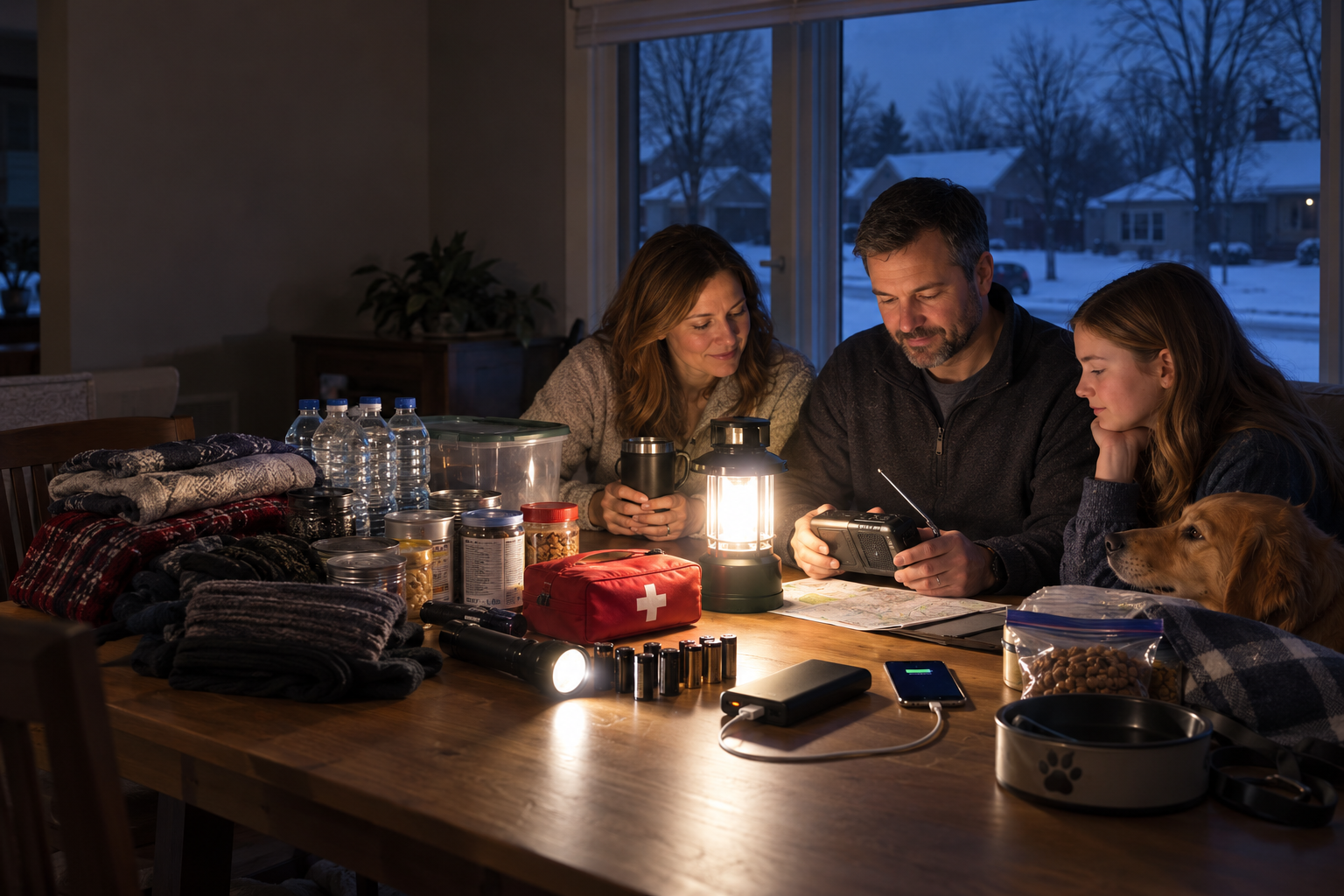
Power outages can happen at any time, but Minnesota homeowners face additional concerns during winter storms, extreme cold, heavy snow, and high winds.
Creating a home power outage plan before an emergency can help protect your family, prevent property damage, and make the experience far less stressful.
Build a Power Outage Emergency Kit
Prepare an emergency kit and keep it in an accessible location. Consider including:
- Flashlights and extra batteries
- Battery-powered lanterns
- Portable phone chargers
- Battery-powered or hand-crank radio
- Bottled water
- Nonperishable food
- Manual can opener
- Necessary medications
- First-aid supplies
- Blankets and warm clothing
- Cash in small denominations
- Pet food and supplies
Use flashlights or battery-powered lanterns instead of candles whenever possible to reduce the risk of fire.
The federal government provides a more complete emergency supply kit checklist through Ready.gov.
Plan for Essential Home Systems
Identify which systems will create the greatest concern if your home loses power.
These may include:
- Heating equipment
- Refrigerators and freezers
- Well pumps
- Sump pumps
- Medical equipment
- Security systems
- Garage-door openers
- Internet and communication equipment
Homes with sump pumps may benefit from a battery-backup pump or properly installed secondary system. If someone in your household relies on powered medical equipment, create a backup plan with the equipment provider before an outage occurs.
Use Generators Safely
A portable generator can provide temporary power, but improper operation can expose occupants to deadly carbon monoxide.
Always operate a portable generator outdoors and at least 20 feet from doors, windows, and vents. Never run one inside a home, basement, attached garage, detached garage, or partially enclosed space even if the garage door is open.
Additional generator precautions include:
- Follow the manufacturer’s operating instructions.
- Keep the generator dry and properly protected from precipitation.
- Use outdoor-rated extension cords in good condition.
- Never connect a generator directly to household wiring without approved transfer equipment installed by a qualified electrician.
- Maintain working carbon-monoxide alarms with battery backup.
Review the CDC’s generator and carbon-monoxide guidance before operating backup equipment.
Prepare for Cold Weather
A winter power outage can cause indoor temperatures to fall quickly.
Keep extra blankets, sleeping bags, warm clothing, hats, and gloves available. Close blinds and curtains, block unnecessary drafts, and gather everyone into a smaller area of the home to conserve warmth.
Never use a gas oven, charcoal grill, camp stove, or outdoor heating appliance to heat your home. These devices can cause fires or dangerous carbon-monoxide accumulation.
If your home becomes dangerously cold, relocate to a safe heated location. Do not wait until conditions become an emergency.
Protect Food and Medication
Keep refrigerator and freezer doors closed during an outage.
According to the CDC, an unopened refrigerator generally keeps food cold for approximately four hours. A full freezer may maintain a safe temperature for approximately 48 hours, or about 24 hours when half full.
Use an appliance thermometer rather than relying only on appearance or smell. When in doubt, throw questionable food away.
Ask your pharmacist how to protect any medication that requires refrigeration.
Create a Communication Plan
Make sure every household member knows:
- How to report an outage
- Where emergency supplies are stored
- How to contact one another
- Where to meet if the home must be evacuated
- Which neighbors or family members may need assistance
Keep phones and portable battery banks charged when severe weather is expected. Save your utility company’s outage-reporting number and sign up for outage alerts when available.
Protect Electronics and Appliances
Sensitive electronics can be damaged by electrical surges when power is restored.
Use appropriate surge protection and consider unplugging computers, televisions, and other sensitive equipment during an extended outage. Leave one light switched on so you know when electrical service returns.
If you notice damaged wiring, burning odors, sparks, or unusual electrical behavior, contact a qualified electrician.
Stay Away From Downed Power Lines
Never touch or approach a fallen power line. Always assume that it is energized.
Keep people and pets away from the area and report the line to the utility company or emergency services. Do not drive through standing water when a downed line may be nearby.
Maintain Trees Around Your Property
Dead, damaged, or overhanging branches can fall during storms and damage roofs, siding, vehicles, or utility lines.
Have hazardous branches evaluated by a qualified tree professional before severe weather arrives. Never attempt to trim branches that are touching or close to electrical lines. Contact the utility company for guidance.
Is Your Home Prepared?
A professional home inspection cannot prevent a power outage, but it may identify visible concerns involving electrical systems, heating equipment, insulation, sump pumps, roofing, drainage, and other components that can affect how a home handles severe weather.
Inspecta-Homes has served Twin Cities homeowners and homebuyers since 1981. Call 651-641-0641 to schedule your home inspection.


