
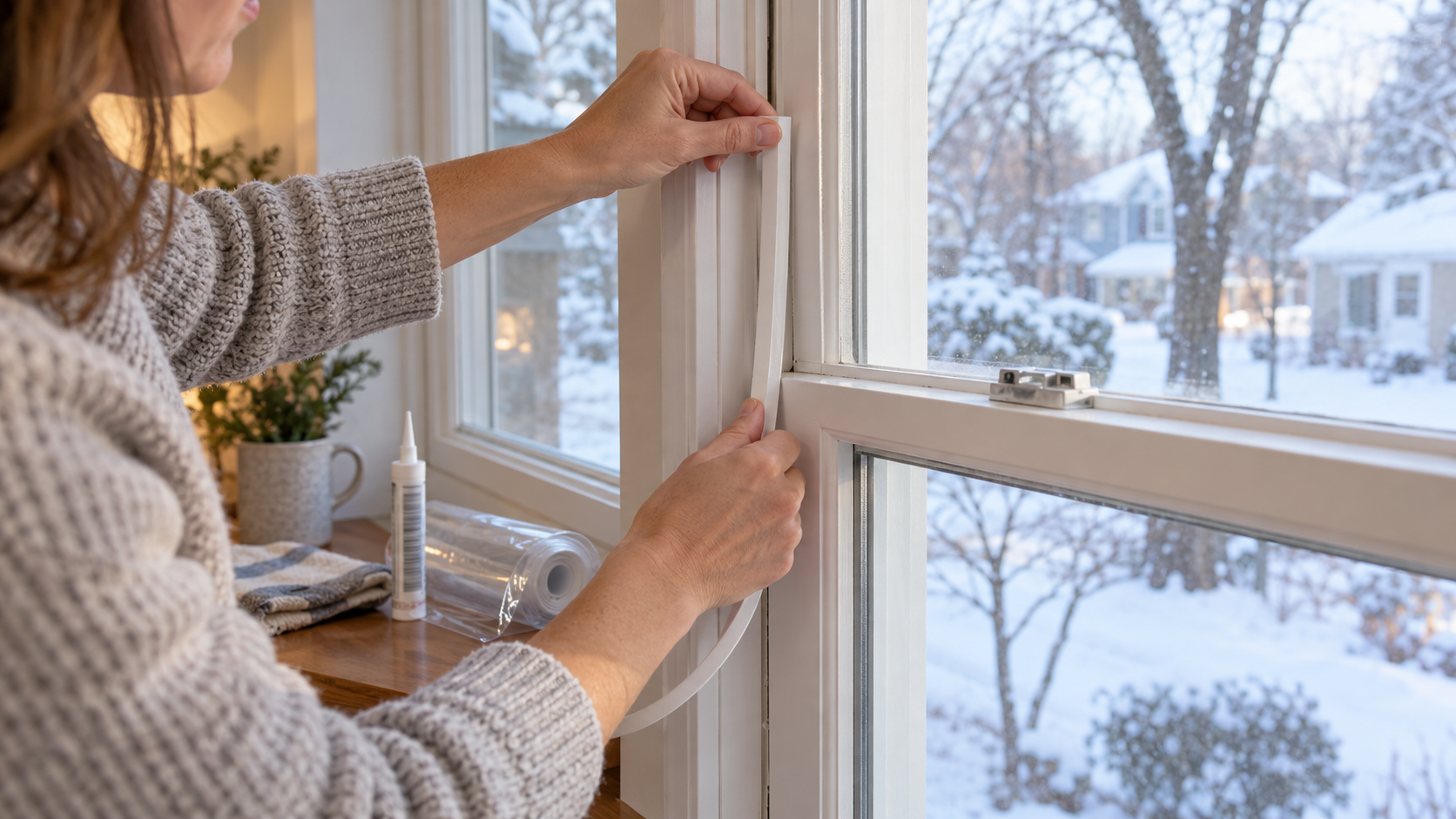
Weatherstripping is one of the easiest and most affordable ways to insulate drafty windows. It seals gaps around movable window components, helping prevent cold air from entering and heated air from escaping.
Before adding insulation, determine where the air leak is coming from. Some gaps can be handled with a simple DIY solution, while damaged windows or improper installation may require professional repair.
Affordable Ways to Insulate Drafty Windows
Apply Weatherstripping
Install weatherstripping around the parts of the window that open and close. It is inexpensive, easy to apply, and available at most hardware stores.
Seal Gaps With Caulk
Use window-rated caulk to seal stationary cracks around the window frame and trim. Avoid caulking over drainage openings or areas designed to allow the window to operate.
Install Window Insulation Film
Clear plastic window film creates an additional barrier over the interior of the window. When installed correctly and tightened with a hair dryer, it can reduce drafts while still allowing natural light into the room.
Hang Thermal Curtains
Insulated curtains can help reduce heat loss through the glass. Open them during sunny winter days to benefit from natural warmth, then close them at night to retain heat.
Use a Draft Stopper
A draft stopper placed along the bottom of a drafty window can provide a quick temporary solution. However, it will not correct air leaks around the sides or top of the frame.
Consider Bubble Wrap as a Temporary Fix
Bubble wrap can add a small insulating layer to the glass, but it blocks visibility and may trap moisture. It is best used only as a short-term solution in areas where appearance is not important.
Watch for Moisture and Condensation
Window condensation may be caused by high indoor humidity, cold glass, poor ventilation, or an issue with the window itself. Moisture collecting around the frame can eventually damage paint, drywall, or wood.
Insulation products can improve comfort, but they should not be used to conceal ongoing water intrusion, rot, or significant window damage.
When Should You Consider Window Replacement?
Replacement may be worth considering if you notice:
- Cracked glass or damaged frames
- Rotting or deteriorated wood
- Failed seals or fogging between glass panes
- Windows that no longer open, close, or lock properly
- Persistent drafts after weatherstripping and caulking
- Water entering around the window
For many homeowners, weatherstripping and caulk are the best places to start. These affordable improvements can reduce drafts and make your home more comfortable during a Minnesota winter. If drafts or moisture problems continue, a professional evaluation can help identify whether the problem involves the window, its installation, or the surrounding wall.
Inspecta-Homes has served homeowners throughout the Twin Cities since 1981. A professional home inspection can help identify window concerns, moisture problems, and other conditions that may affect your home’s comfort and performance.


