
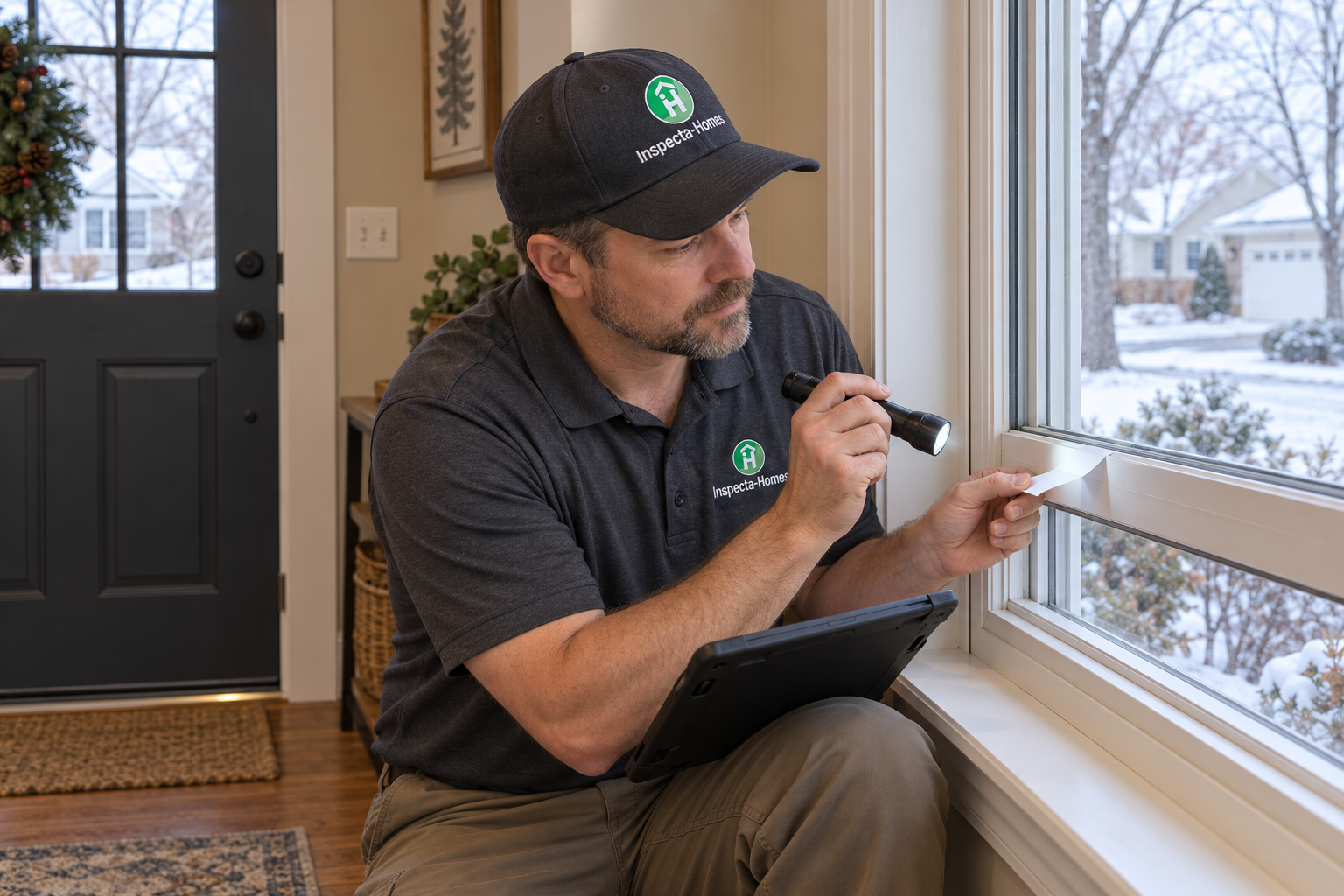
Minnesota winters can expose small problems around windows and exterior doors. Damaged weatherstripping, deteriorated caulking, and gaps around frames may allow drafts or moisture to enter your home.
A simple fall inspection can help you identify concerns before temperatures drop.
Check for Drafts
On a cool or windy day, slowly move your hand around the edges of each closed window and exterior door. Noticeable air movement may indicate worn weatherstripping, a loose fit, or a gap around the frame.
You can also close a window or door on a piece of paper. If the paper pulls out easily, the seal may need adjustment or replacement.
Inspect Windows
Look for:
- Cracked or damaged glass
- Fogging between insulated panes
- Loose or damaged frames
- Rot, warping, or peeling finishes
- Missing or deteriorated caulking
- Damaged weatherstripping
- Windows that stick or do not lock properly
- Water stains around the frame or sill
Fogging between panes may indicate a failed insulated-glass seal. Condensation on the room-facing surface can instead be related to high indoor humidity, especially during cold weather.
Inspect Exterior Doors
Open and close each exterior door and make sure it latches and locks properly.
Check for:
- Light or drafts around the edges
- Worn weatherstripping
- A damaged or missing door sweep
- Gaps at the threshold
- Loose handles, locks, or hinges
- Rot, rust, cracks, or warping
- Water stains or damaged flooring nearby
Pay particular attention to the lower corners of the door, where weatherstripping and thresholds meet.
Check Exterior Caulking and Drainage
From the ground, inspect the sealant around window and door frames. Look for cracks, gaps, separation, or missing material.
Keep exterior sills, drainage channels, and window weep holes clear. Do not seal manufacturer-designed drainage openings, because they allow water to escape.
Exterior sealants may have temperature requirements, so follow the product manufacturer’s instructions before completing repairs in cold weather.
Watch for Moisture Problems
Water stains, peeling paint, softened wood, musty odors, and mold-like growth may indicate excess condensation or water intrusion.
Winter window condensation does not always mean the window is leaking. It may be caused by elevated indoor humidity. Persistent condensation should still be addressed because repeated moisture can damage trim, finishes, and nearby materials.
When Should You Call a Professional?
Consider professional evaluation when you find:
- Significant rot or structural deterioration
- Cracked glass
- Persistent water intrusion
- Large or unexplained air leaks
- Windows or doors that no longer operate properly
- Recurring condensation or moisture damage
- Damage that requires removing trim or replacing components
A professional can help determine whether the issue involves weatherstripping, caulking, installation, flashing, indoor humidity, or the window or door itself.
Prepare Before Temperatures Drop
Checking your windows and doors before a Minnesota winter can improve comfort, reduce drafts, and help protect surrounding materials from moisture damage.
Inspecta-Homes has helped Twin Cities homeowners understand and maintain their properties since 1981. Call 651-641-0641 to schedule your professional home inspection.


