
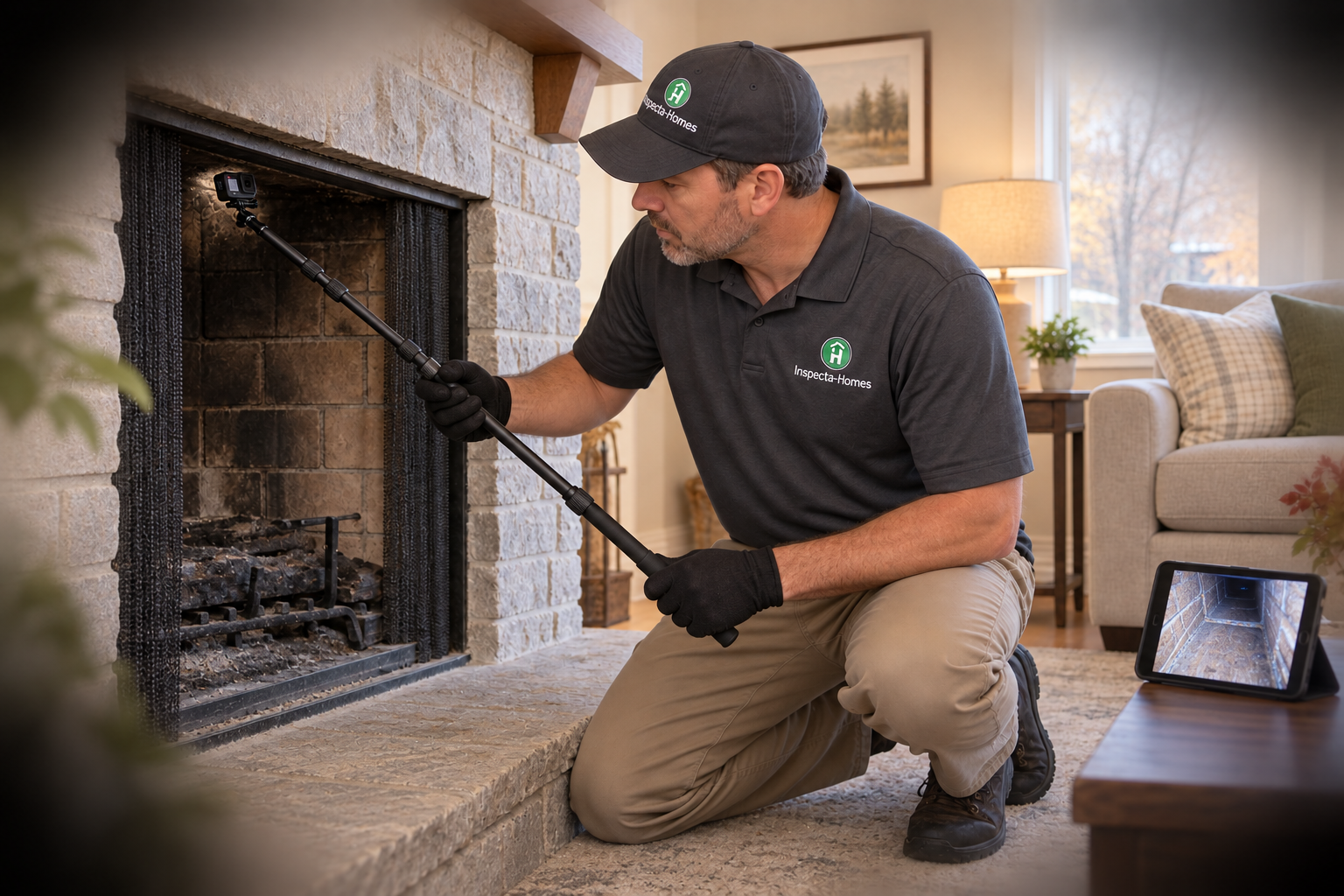
A fireplace can make a Minnesota home feel warm and inviting, but the chimney should be evaluated before regular use. Although homeowners can watch for visible warning signs, a basic visual check cannot determine the condition of the entire chimney or flue liner.
Here are several conditions worth watching for.
Chimney Cap Damage
Look from the ground to see whether the chimney has a cap and whether it appears damaged or displaced. A properly installed cap helps keep rain, snow, debris, and animals from entering the chimney.
Do not climb onto the roof to examine it yourself.
Damaged Masonry
Cracked bricks, missing mortar, leaning sections, and loose or deteriorated masonry may allow water to enter the chimney. Minnesota’s freeze-and-thaw cycles can make masonry damage worse over time.
Firebox Damage
Look for visible cracks, loose or missing materials, unusual gaps, or significant deterioration inside the firebox. These conditions should be evaluated before the fireplace is used.
Damper Problems
When accessible, the damper should move without excessive resistance and remain in its intended position. A damper that is damaged, heavily rusted, or difficult to operate may require repair.
Water Stains
Water stains, discoloration, dampness, or deteriorated materials around the fireplace may indicate moisture intrusion. The source could involve the chimney cap, flashing, masonry, or another nearby component.
Creosote or Other Deposits
Creosote is a combustible residue that can accumulate inside chimneys serving wood-burning fireplaces and stoves. It may appear flaky, crusty, shiny, or tar-like.
A qualified chimney professional should determine whether cleaning is needed. Do not rely on a quick flashlight check to evaluate the entire flue.
Blockages and Animal Activity
Nesting materials, leaves, debris, or animal activity may obstruct the chimney. Stop using the fireplace if you suspect a blockage or notice smoke entering the home.
What Does a General Home Inspection Cover?
Under the ASHI Standard of Practice, a general home inspection includes a visual evaluation of readily accessible fireplace and chimney components. However, it is not a complete internal inspection of the flue and does not include chimney cleaning.
Conditions inside the flue liner may not be visible during a general home inspection.
When Is a Level 2 Chimney Inspection Recommended?
A Level 2 chimney inspection provides a more detailed evaluation and includes internal video scanning of accessible portions of the flue liner.
It may be appropriate:
- When a property is sold or transferred
- After a chimney fire or damaging weather event
- When the heating appliance or fuel type changes
- When a significant defect is suspected
- When additional information about the flue is needed
No inspection can reveal every concealed condition, but a Level 2 inspection provides substantially more information than a basic visual evaluation.
Have Your Chimney Evaluated Before Use
If you notice cracks, water stains, damaged masonry, heavy deposits, unusual odors, smoke entering the home, or other concerns, do not use the fireplace until it has been professionally evaluated.
Inspecta-Homes offers Level 2 chimney inspections using specialized camera equipment to examine accessible portions of the flue from the inside. Call 651-641-0641 to schedule an inspection.


