
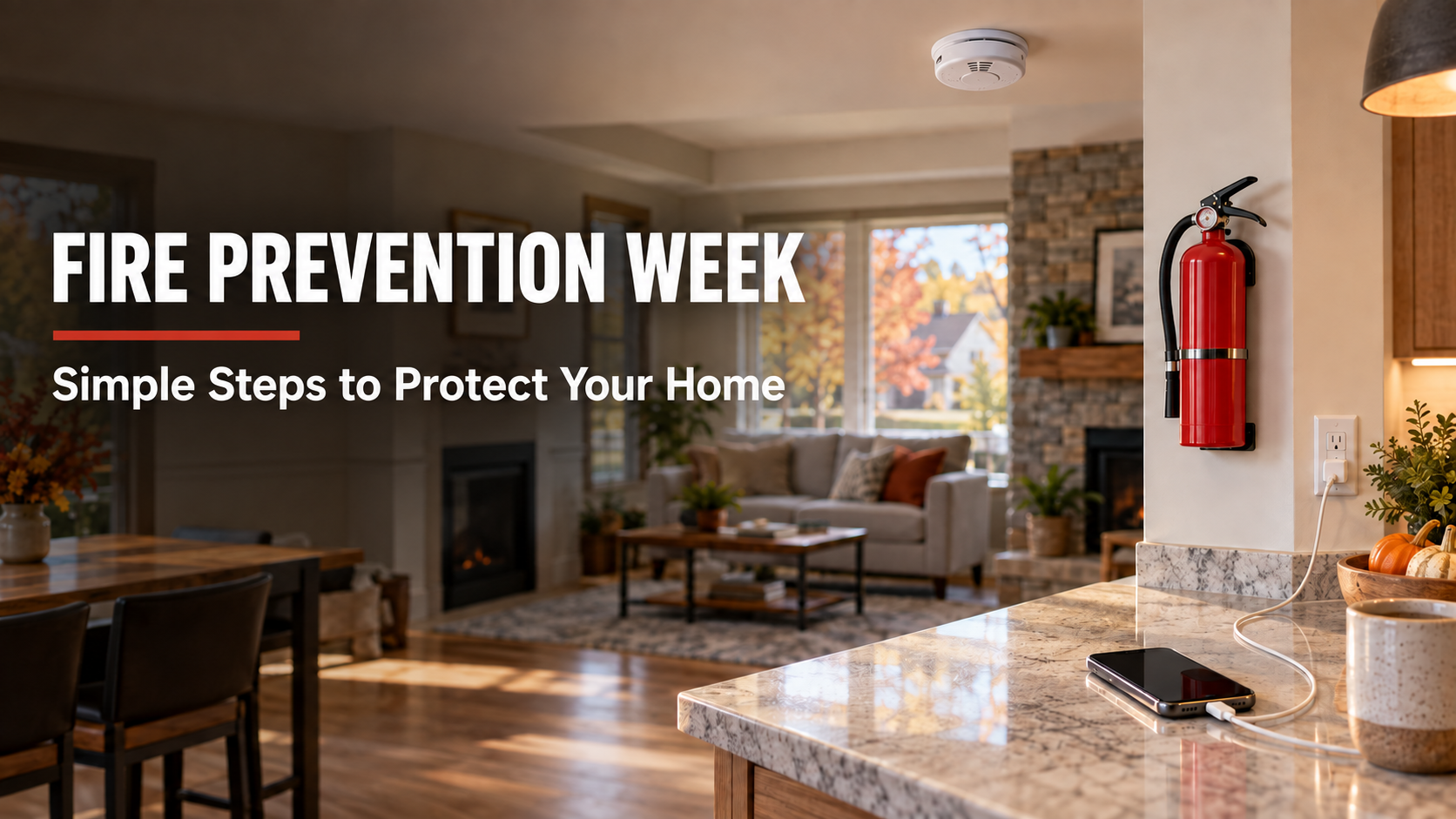
Fire Prevention Week is October 4–10, 2026. It is a timely reminder to inspect your home, review your family’s emergency plan and correct potential fire hazards before they become dangerous.
This year’s Fire Prevention Week theme, “Charge into Fire Safety: Safe Charging Is a Superpower,” also calls attention to the lithium-ion batteries found in phones, laptops, tools, e-bikes and many other everyday products.
Here are several practical ways to help protect your home and family.
Test Your Smoke Alarms
Install smoke alarms on every level of your home, inside every bedroom and outside each sleeping area. Test them monthly and replace alarms that are 10 years old or older.
Make sure everyone in your household can hear and respond to the alarms. Specialized alarms and alert devices are available for people who are deaf or hard of hearing.
Practice Safe Charging
Use the charging cord supplied with your device or one approved by its manufacturer. Charge devices on a hard, flat surface where heat can escape not on a bed, couch or underneath a pillow.
Stop using a battery or device if it becomes unusually hot, starts swelling, produces an unusual odor or begins smoking. Larger devices such as e-bikes, scooters and power tools should be charged away from exits and combustible materials.
Check Electrical Cords and Outlets
Inspect electrical cords for fraying, cracking or exposed wiring. Damaged cords should be replaced rather than repaired with tape.
Avoid overloading outlets and power strips. Extension cords should only be used temporarily, and heat-producing appliances should be plugged directly into a wall outlet. If an outlet feels warm, becomes discolored or produces a burning smell, discontinue use and contact a qualified electrician.
Stay Alert While Cooking
Unattended cooking is one of the leading causes of residential fires. Remain in the kitchen when frying, grilling, broiling or boiling food.
Keep towels, paper products, packaging and other combustible materials away from the cooking area. Turn pot handles toward the back of the stove and confirm that burners and small appliances are turned off when you finish using them.
Use Space Heaters Carefully
Place portable heaters on a stable, level surface and keep anything that can burn at least three feet away. Plug the heater directly into a wall outlet never an extension cord or power strip.
Choose a heater with an automatic shutoff feature and turn it off whenever you leave the room or go to bed.
Be Careful with Candles
Flameless candles provide a safer alternative to an open flame. If you use traditional candles, place them in sturdy holders at least 12 inches from anything combustible.
Never leave a burning candle unattended, and keep candles, matches and lighters away from children and pets.
Create and Practice an Escape Plan
Identify two possible exits from every room and select a safe outdoor meeting place. Practice your escape plan with everyone in the household at least twice each year.
Keep hallways, windows and doors clear, and make sure your house number is visible from the street so emergency responders can locate your home quickly.
Know What to Do for a Burn
Immediately cool a thermal burn under clean, cool running water for at least 10 minutes ideally 20 minutes. Do not apply ice, butter, grease or ointment to a fresh burn.
Call 911 for a severe or extensive burn, difficulty breathing, or a burn involving the face, neck, hands, feet, joints or genitals. Seek professional medical guidance whenever you are uncertain about the severity of an injury.
A Safer Home Begins with Awareness
Fire safety is not limited to one week in October. Testing alarms, maintaining electrical systems, using heating equipment properly and practicing an escape plan can make a meaningful difference throughout the year.
A professional home inspection can also help identify visible electrical, heating, chimney and other safety concerns that homeowners may overlook.
To schedule a home inspection with Inspecta-Homes, visit InspectaHomes.com or call 612-788-9608.


