
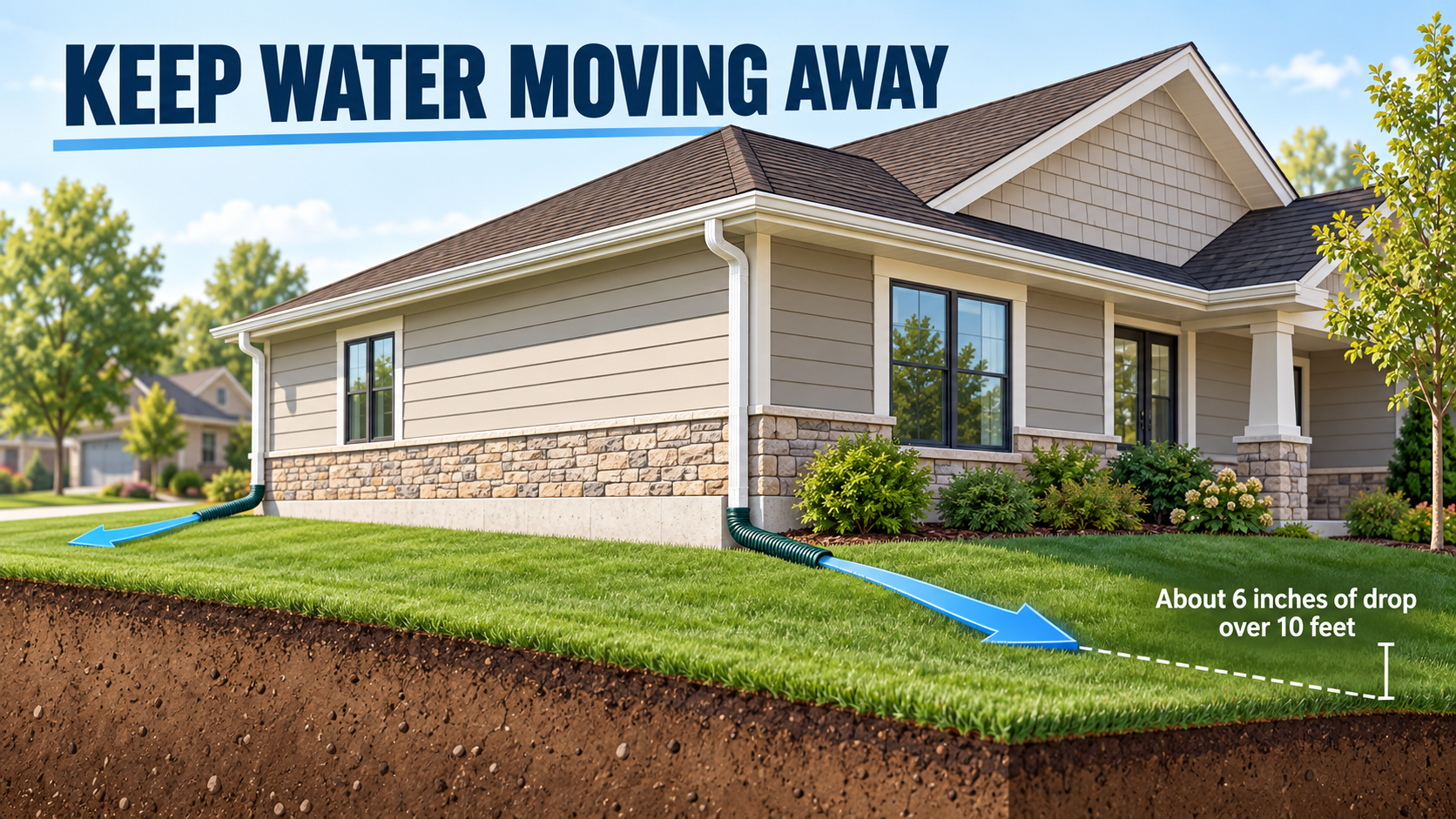
A dry basement starts outside. Rain and melting snow need a clear path away from your home. When water collects beside the foundation, it can contribute to dampness, leaks, and damage over time. Three things are worth checking: the slope of the yard, where downspouts end, and where the sump pump sends water. University of Minnesota Extension
1. Check the grading around your home
Grading is the slope of the ground. The soil immediately beside your house should slope away from the foundation so rain and snowmelt keep moving into the yard. Watch for low spots where water pools against the house, especially after soil settles or landscaping changes.
A common drainage guideline is about 6 inches of drop over the first 10 feet. If your yard does not have that much space, a properly designed swale or drain may help direct water away. Keep enough clearance between soil and siding when making grading changes. U.S. Department of Energy
2. Follow the water from your gutters
Gutters collect water from the roof; downspouts need to carry it away from the foundation. Clear leaves and debris, check for overflowing sections during rain, and make sure downspout extensions have not been moved or disconnected.
The U.S. Department of Energy describes downspouts that discharge at least 5 feet from the foundation as one approach to managing roof runoff. The important check is where the water actually goes: it should continue away from the home, not run back toward it or onto a neighbor’s property.
3. Check the sump pump discharge
A sump pump removes water collected in its basin and sends it through a discharge line. Follow that line outside. Its outlet should direct water to an appropriate location where it will not flow back toward the foundation. There is no universal 20-foot discharge rule for every property; the right location depends on the lot and local requirements.
If your pump rarely runs, check the manufacturer’s instructions for testing it before a heavy-rain season. Some systems can be tested by adding water to the basin until the float activates. Confirm that the pump starts, moves water through the discharge line, and shuts off afterward. If the pump runs frequently or a power outage would put your basement at risk, consider asking a qualified contractor about a backup system.
Make water drainage part of your home maintenance routine
Walk around your home during or shortly after a heavy rain. Look for overflowing gutters, disconnected extensions, standing water, and sump discharge that returns toward the house. Catching a drainage problem early is often much simpler than dealing with water in a finished basement.
Concerned about drainage around a Twin Cities home? Contact Inspecta-Homes at 612-788-9608 or visit InspectaHomes.com to schedule a home inspection.


