
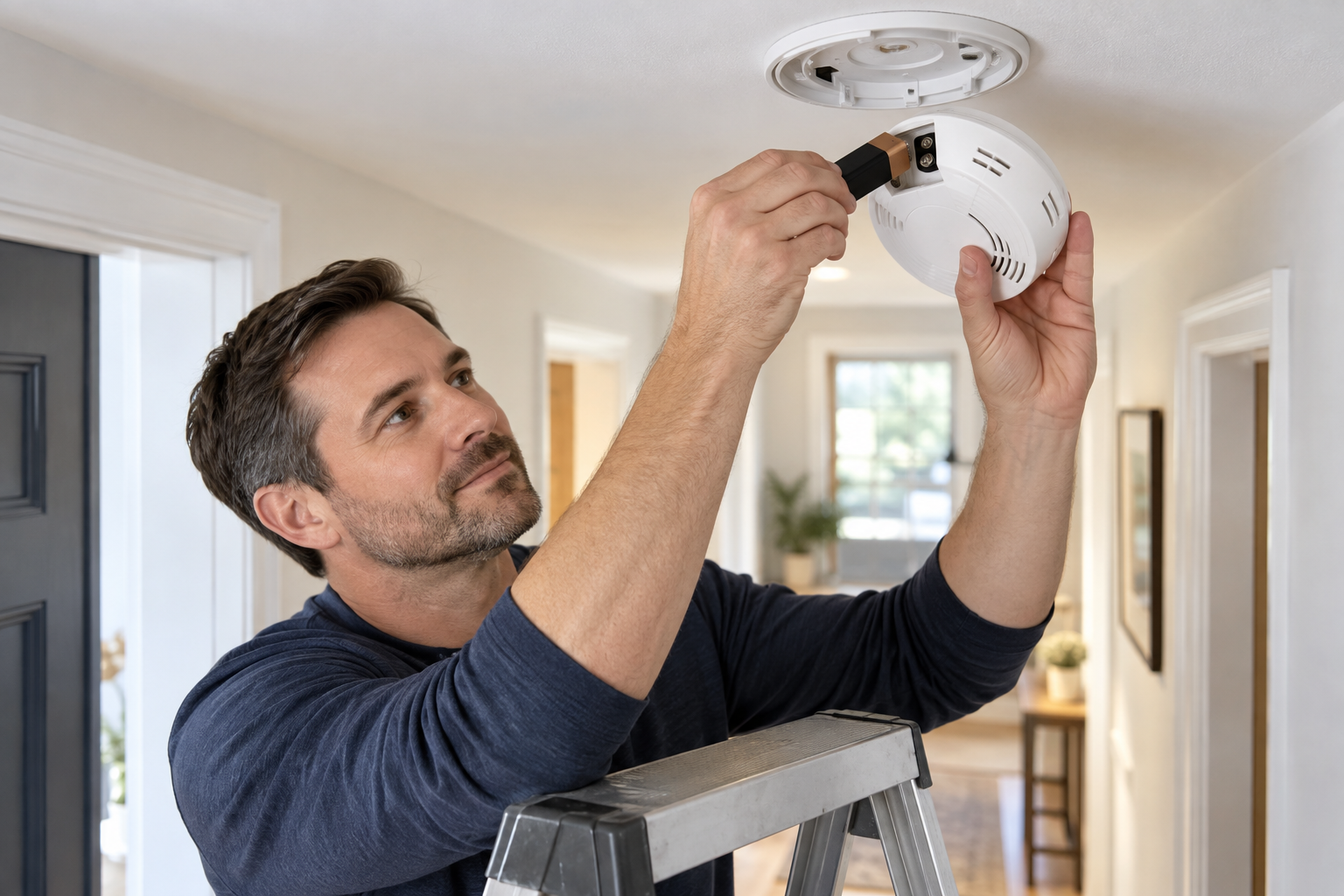
Changing a smoke detector battery is a simple but important home-safety task. If your alarm begins chirping, the battery may be low and should be replaced promptly.
The exact process can vary by manufacturer, so always check the instructions printed on the alarm or in the owner’s manual.
What You Will Need
Before getting started, gather:
- A sturdy step stool or ladder
- The correct replacement battery
- A small screwdriver, if required
- A vacuum with a soft-brush attachment for light cleaning
Never stand on furniture or an unstable chair to reach a smoke detector.
Step 1: Identify the Type of Smoke Alarm
Smoke alarms generally fall into one of three categories:
- Battery-powered alarms with replaceable batteries
- Hardwired alarms with backup batteries
- Sealed 10-year battery alarms
If your alarm has a sealed 10-year battery, the battery cannot normally be replaced. When the unit signals the end of its life, replace the entire smoke alarm.
Step 2: Remove the Smoke Alarm
Most smoke alarms can be removed from their mounting brackets by gently twisting them counterclockwise.
Some models may have a locking pin, security tab, or small screw. Do not force the alarm open. Check the manufacturer’s instructions if it does not release easily.
A hardwired alarm will have an electrical connector behind it. Turn off the circuit at the electrical panel before disconnecting any wiring, and contact a qualified electrician if you are uncomfortable working around electrical connections.
Step 3: Open the Battery Compartment
Depending on the model, the battery compartment may be located on the back, side, or front of the alarm.
Open the battery drawer or cover carefully. Some compartments slide open, while others use a small latch.
Step 4: Remove the Old Battery
Remove the existing battery and note how the positive and negative terminals are positioned.
If the alarm uses more than one replaceable battery, replace all of them at the same time. Do not mix old and new batteries or different battery types.
Step 5: Install the New Battery
Install the battery type recommended by the smoke-alarm manufacturer. Match the positive and negative terminals to the markings inside the battery compartment.
Make sure the battery is firmly seated and the compartment closes completely. An incorrectly installed battery or partially open drawer may cause the alarm to continue chirping.
Step 6: Reinstall the Smoke Alarm
Return the alarm to its mounting bracket and twist it into place. If it is hardwired, reconnect the electrical plug before securing the alarm and restoring power at the circuit breaker.
Some alarms may chirp once when power is restored. This can be normal.
Step 7: Test the Alarm
Press and hold the test button until the alarm sounds. The noise will be loud, so let others in the home know before testing it.
If the alarm does not sound:
- Confirm that the battery is installed correctly.
- Try a fresh battery of the recommended type.
- Make sure the battery drawer is completely closed.
- Check that power has been restored to a hardwired alarm.
- Replace the alarm if it is damaged or expired.
What If the Smoke Detector Still Beeps?
If the alarm continues chirping after the battery has been replaced, it may need to be cleaned, reset, or replaced.
Check the manufacture date printed on the back or side of the unit. Most smoke alarms should be replaced 10 years after their manufacture date. Combination smoke and carbon monoxide alarms may follow a different replacement schedule, so consult the manufacturer’s instructions.
Dust, insects, humidity, temperature changes, electrical interruptions, or an improperly closed battery compartment may also cause chirping.
How Often Should You Test Smoke Alarms?
The U.S. Fire Administration recommends testing smoke alarms every month. Smoke alarms should be installed inside and outside sleeping areas and on every level of the home, including the basement.
Replace disposable batteries according to the manufacturer’s instructions or when the alarm produces a low-battery warning. Never remove a battery simply to silence an alarm.
A working smoke alarm is one of the most important safety devices in your home.
Have questions about your home’s condition or safety systems? Contact Inspecta-Homes at 612-788-9608 or visit InspectaHomes.com. We have served homeowners throughout the Twin Cities and surrounding communities since 1981.


