
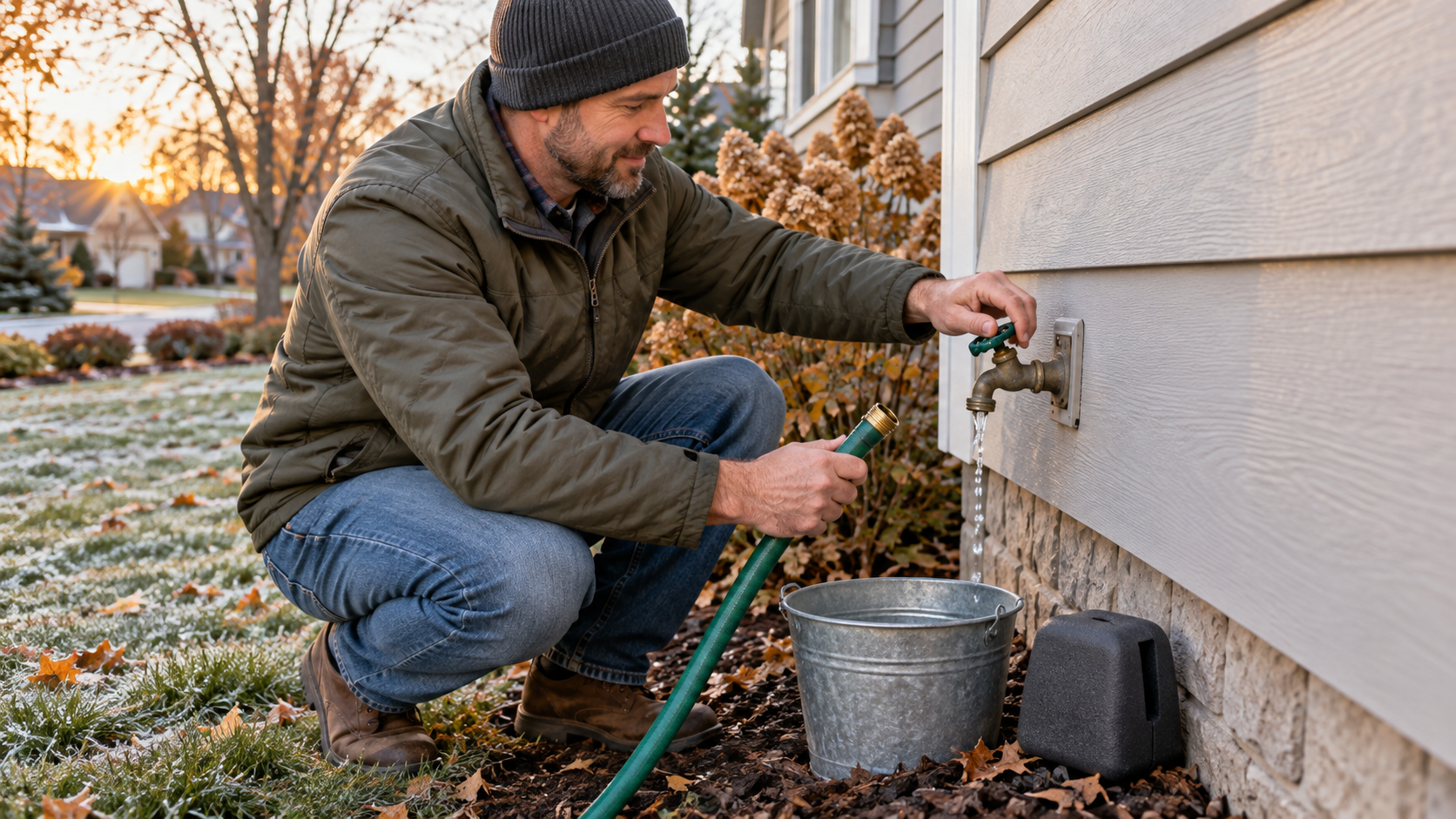
Draining exterior faucets before freezing temperatures arrive can help prevent trapped water from freezing, expanding, and damaging your plumbing. This is an important fall maintenance task for Minnesota homeowners.
1. Disconnect Garden Hoses and Accessories
Remove all garden hoses, splitters, timers, and spray nozzles from the faucet. A connected hose can trap water inside the faucet—even if it is designed to be frost-free.
Drain the hoses completely and store them indoors or in a protected location.
2. Locate the Interior Shutoff Valve
If your exterior faucet has a dedicated interior shutoff valve, it is usually located along the pipe leading to the faucet. Look in the basement, utility room, crawlspace, or near the exterior wall where the faucet is installed.
Turn the valve clockwise until it is closed. Do not force or overtighten it.
3. Open the Exterior Faucet
After closing the interior valve, open the outside faucet completely. This allows the remaining water between the shutoff valve and exterior faucet to drain.
It may take several minutes for the water to stop dripping.
4. Open the Bleeder Cap
Some interior shutoff valves have a small bleeder cap on the side. Place a bucket or towel beneath the valve and slowly loosen the cap to drain any remaining water.
Once the water has drained, reinstall the cap without overtightening it.
5. Leave the Traditional Faucet Open
If you have a traditional exterior faucet with a dedicated interior shutoff, leave the outside faucet open during the winter. This gives any remaining moisture room to expand.
For a frost-free faucet, disconnect the hose and close the faucet normally. Frost-free faucets are designed to drain when shut off, but they cannot drain properly when a hose or accessory remains attached.
6. Add an Insulated Faucet Cover
Install a foam faucet cover for additional protection, particularly when the faucet or supply piping is exposed to extreme cold or located near an unheated area.
Government winter-plumbing guidance also recommends disconnecting hoses, insulating exterior faucets, and draining outdoor lines when a separate shutoff is available. Portland Water Bureau
How Can I Tell if the Faucet Drained Properly?
After closing the interior shutoff and opening the exterior faucet, the water should eventually stop flowing. Continued dripping or a steady stream may indicate that the shutoff valve is not closing completely.
Contact a qualified plumber if:
- The interior valve will not close
- Water continues flowing from the faucet
- The faucet or piping is leaking
- The shutoff valve is corroded or damaged
- You cannot locate a dedicated shutoff
- You are uncertain whether the faucet is frost-free
Protect Your Home Before Temperatures Drop
Winterizing exterior faucets is a simple preventive measure that may help avoid frozen pipes, water damage, and costly repairs. Complete this task before nighttime temperatures begin falling below freezing.
During a professional home inspection, Inspecta-Homes evaluates the visible and accessible plumbing components to help Minnesota homeowners and buyers identify potential concerns.


