
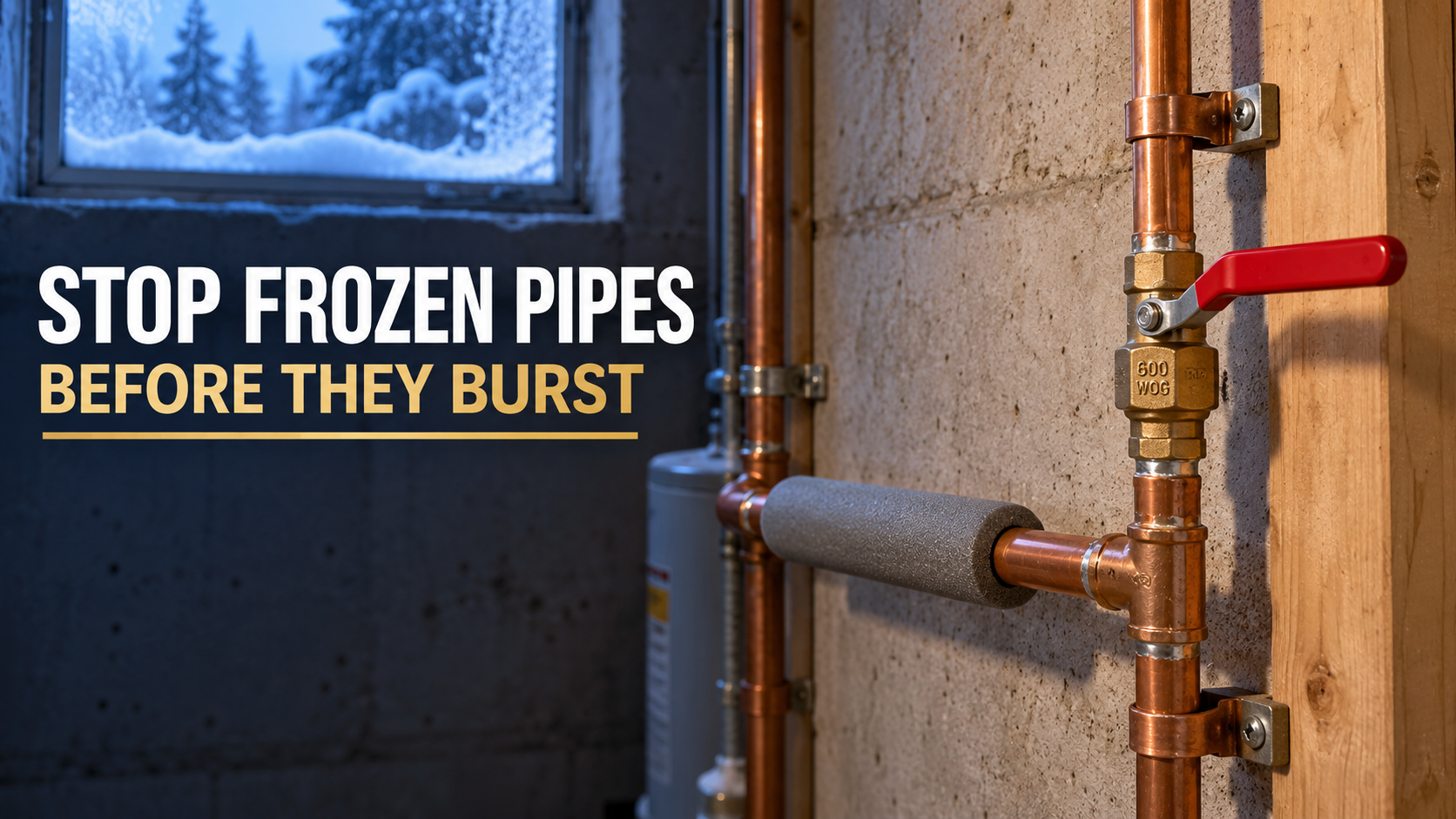
When water freezes inside a pipe, it expands and places pressure on the plumbing system. The pipe does not always break at the exact location of the ice blockage. Pressure can build between the frozen section and a closed faucet until the pipe or fitting eventually fails.
The safest approach is to prevent plumbing from freezing in the first place. If a pipe is already vulnerable, keeping it warm, relieving pressure and knowing how to shut off the water can help prevent extensive damage.
Which Pipes Are Most Likely to Freeze?
Water-supply pipes are most vulnerable when they are located in or near areas that receive little heat, including:
- Exterior walls
- Unheated basements
- Crawl spaces
- Attics
- Garages
- Kitchen and bathroom cabinets
- Areas near foundation openings
- Outdoor faucets and hose connections
- Sprinkler and irrigation systems
Both hot and cold water lines can freeze. Pipes near air leaks may be at risk even when the surrounding room feels reasonably warm.
Open Cabinet Doors During Extreme Cold
Open kitchen and bathroom cabinet doors to allow heated indoor air to circulate around plumbing beneath sinks especially when the plumbing is located along an exterior wall.
Move cleaners, chemicals and other potentially harmful products out of the reach of children and pets before leaving cabinets open.
Keep the Heat Consistent
Avoid dramatically lowering the thermostat overnight during periods of extreme cold. A steady indoor temperature helps maintain warmth in exterior walls, cabinets and other vulnerable areas.
If you leave home during cold weather, keep the heating system operating and set the thermostat no lower than 55°F. Homes with plumbing in poorly insulated areas may require a higher setting.
Allow a Vulnerable Faucet to Trickle
During periods of severe cold, allowing a small trickle of cold water to flow from a faucet supplied by an exposed or vulnerable pipe may help prevent freezing.
An open faucet also gives pressure somewhere to escape if ice begins forming in the line. This may reduce the chance that pressure between the blockage and faucet will cause the pipe to rupture.
You do not need to run every faucet. Focus on fixtures served by plumbing located in exterior walls, crawl spaces or other areas that have frozen before.
Insulate Vulnerable Water-Supply Pipes
Pipe insulation slows heat loss and can provide useful protection for plumbing in cooler areas of the home.
Common options include:
- Foam pipe sleeves
- Rubber pipe insulation
- Fiberglass pipe insulation designed for plumbing
- Listed thermostatically controlled pipe-heating cable
Foam or rubber sleeves are often the easiest homeowner-friendly option. Select insulation with the correct inside diameter so it fits snugly around the pipe. Seal joints according to the product instructions and avoid leaving unnecessary gaps.
Insulation helps pipes retain available heat, but it does not produce heat. A poorly heated area can still become cold enough for insulated plumbing to freeze during an extended Minnesota cold snap.
Is Fiberglass the Best Material for Wrapping Pipes?
There is no single best insulation material for every situation.
Fiberglass pipe insulation can be effective, particularly around higher-temperature piping. However, it should be a product specifically designed for plumbing and installed with the appropriate protective jacket or vapor barrier.
For ordinary residential water-supply lines, pre-slit foam or rubber sleeves are generally easier to measure, cut and install. The best choice depends on:
- Pipe material and diameter
- Pipe temperature
- Location and available space
- Moisture exposure
- Manufacturer requirements
- Local building and fire-safety considerations
Do not wrap plumbing with loose household fiberglass batts as an improvised substitute for properly fitted pipe insulation.
Should Spray Foam Be Applied Directly to Pipes?
Expanding spray foam is generally better suited for sealing air gaps around plumbing penetrations than for serving as the primary insulation directly surrounding a water pipe.
For example, spray foam may help seal an opening where a pipe passes through a wall or floor and cold air is entering. A properly sized pipe sleeve is usually a cleaner and more serviceable option for insulating the pipe itself.
Before using spray foam, confirm that the product is appropriate for the location, nearby materials and size of the opening. Avoid sealing areas in a way that traps moisture, blocks required access or interferes with plumbing repairs.
Is Heat Tape Safe to Use on Water Pipes?
Listed pipe-heating cable may be appropriate in certain locations, but it must be selected and installed carefully.
- Use only a product approved for your pipe material and application.
- Follow the manufacturer’s installation instructions exactly.
- Do not overlap or cross the cable unless specifically permitted.
- Never use a cable with cracks, exposed wiring, scorching or other damage.
- Do not cover heating cable with insulation unless the manufacturer allows it.
- Keep connections dry and inspect the product before each winter.
The U.S. Consumer Product Safety Commission warns that damaged, incorrectly installed or excessively insulated heat tape can create a fire hazard. When installation requirements are unclear, consult a licensed plumber or electrician.
Protect Outdoor Faucets
Disconnect garden hoses before freezing weather arrives. A connected hose can prevent water from draining and leave the faucet or supply line vulnerable to freezing.
If your plumbing system has an interior shutoff valve for an exterior faucet:
- Close the interior shutoff valve.
- Disconnect the garden hose.
- Open the outside faucet.
- Allow the remaining water to drain.
- Leave the exterior faucet open when appropriate for the system’s design.
Keeping the outside faucet open allows remaining water to expand without placing the same pressure on a closed section of pipe. An insulated faucet cover may provide additional protection, but it does not replace properly draining a vulnerable line.
Will Shutting Off the Water Keep Pipes From Freezing?
Shutting off the main water supply does not automatically prevent water remaining inside the pipes from freezing.
However, shutting off the water may significantly reduce damage if a frozen pipe cracks or bursts. Without an active water supply, the broken pipe cannot continue releasing water at normal system pressure.
If a home will be vacant for an extended period during winter, simply closing the main valve may not be enough. Proper winterization may require draining portions of the plumbing system and protecting fixtures and appliances. Consult a qualified plumber when preparing a seasonal, vacant or unheated property.
Locate the Main Water Shutoff Before an Emergency
Every household member should know where the main water shutoff valve is located.
The valve is commonly found:
- Near the water meter
- Where the water service enters the foundation
- In a mechanical or utility room
- Near the water heater
- In a basement or crawl space
Keep the valve accessible and clearly identified. Do not wait until water is entering the home to begin looking for it.
If the valve is corroded, difficult to operate or leaking, have it evaluated before an emergency occurs.
What Should You Do If a Pipe Is Already Frozen?
A faucet that produces only a trickle or no water at all may indicate a frozen pipe.
Take the following precautions:
- Keep the faucet open. This helps relieve pressure and allows water to flow as the blockage melts.
- Locate the suspected frozen area. Check exterior walls, cabinets, crawl spaces and other cold locations.
- Look for cracks or leaks. Shut off the main water supply if damage is visible or suspected.
- Apply gentle heat. Use an electric heating pad, hair dryer or towels soaked in warm water.
- Work gradually. Begin near the open faucet and move toward the frozen area when possible.
- Check other fixtures. One frozen pipe may indicate that other lines are also vulnerable.
- Call a licensed plumber when the pipe is inaccessible, damaged or cannot be safely thawed.
Never use a torch, open flame, charcoal stove, propane heater or other combustion device to thaw a pipe. The American Red Cross frozen-pipe guidance recommends controlled heat and professional assistance when the frozen area cannot be safely reached.
Warning Signs That a Pipe May Have Burst
A frozen pipe may not begin leaking until it thaws. Watch for:
- Unexplained water sounds
- Water staining on a ceiling or wall
- Damp flooring or carpeting
- Reduced water pressure
- An unusually high water-meter reading
- Bulging drywall
- Water collecting in a cabinet, basement or crawl space
If you suspect a break, shut off the main water supply and contact a licensed plumber. Avoid electrical equipment in wet areas and contact an electrician or emergency professional if water is near wiring, outlets or the electrical panel.
Preventing Frozen Pipes Before the Next Cold Snap
Before temperatures fall:
- Insulate vulnerable hot and cold water lines.
- Seal cold-air openings around plumbing penetrations.
- Disconnect garden hoses.
- Drain exterior faucets and irrigation systems.
- Keep garage doors closed when plumbing runs through the garage.
- Maintain a consistent indoor temperature.
- Locate the main water shutoff valve.
- Have damaged or exposed plumbing evaluated.
- Replace unsafe or deteriorated heating cable.
For a broader prevention checklist, read How to Prevent Frozen Pipes in Minnesota. You can also review our complete guide to preparing your house for a Minnesota winter.
Prepare Before the Temperature Drops
A burst pipe can release a significant amount of water and cause damage that extends well beyond the plumbing itself. Insulation, air sealing, consistent heat and a working shutoff valve can make a meaningful difference during a Minnesota cold snap.
A home inspection cannot guarantee that plumbing will never freeze, but it can identify visible conditions that may deserve maintenance or further evaluation. Schedule an inspection with Inspecta-Homes and work with a trusted local inspection company serving Minnesota and Western Wisconsin


