
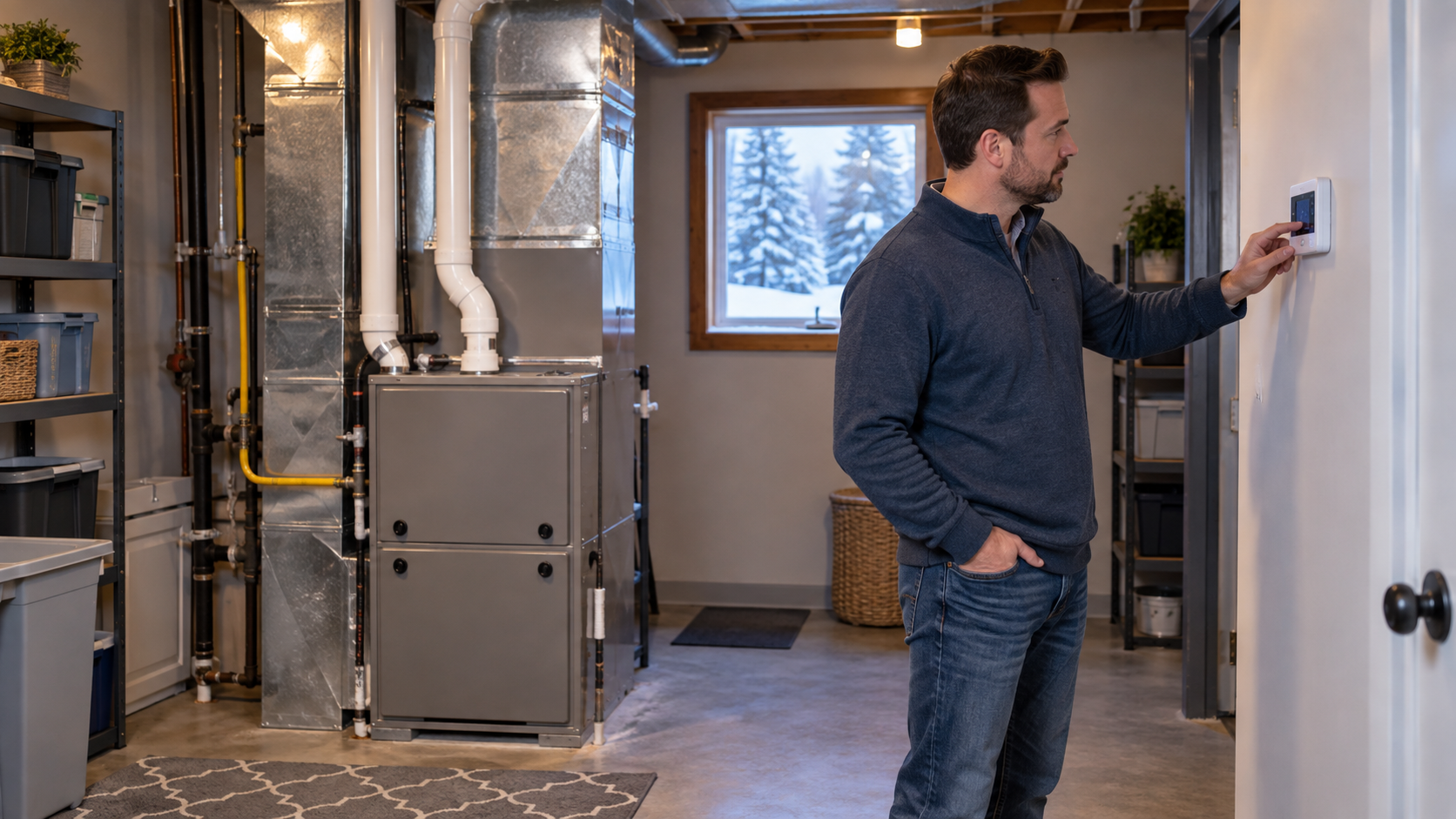
Testing your furnace before Minnesota’s cold weather arrives can help identify problems before you truly need the heat. You can perform a basic heating-system check by following these steps.
1. Test the Thermostat
Set the thermostat to Heat and raise the temperature several degrees above the current room temperature. The furnace should start within a few minutes.
If it does not:
- Check the thermostat batteries.
- Confirm that the furnace switch and circuit breaker are on.
- Make sure the furnace access panel is securely closed.
- Verify that the thermostat is set to “Heat,” not “Cool” or “Fan.”
2. Listen for Unusual Noises
As the system starts, listen for banging, rattling, grinding, squealing, or repeated clicking. Some sounds during startup may be normal, but loud or persistent noises should be evaluated by a qualified HVAC professional.
3. Check the Airflow
Allow the furnace to run for several minutes, then check the supply vents throughout the home. You should feel warm air with reasonably consistent airflow.
Weak airflow could be caused by:
- A dirty furnace filter
- Closed or blocked vents
- Problems with the blower motor
- Leaking or obstructed ductwork
Avoid closing too many vents because it may interfere with the system’s airflow and efficiency.
4. Look for Uneven Heating
Walk through the home and compare the temperature in different rooms. Significant hot and cold spots may indicate airflow problems, inadequate insulation, ductwork issues, or an improperly balanced heating system.
Homes with boilers or radiators should also be checked for radiators that do not warm properly, visible leaks, or unusual noises.
5. Pay Attention to Odors
A slight dusty smell can occur when a furnace is first used after sitting idle. This odor should disappear relatively quickly.
Turn the system off and contact a professional if you notice:
- A persistent burning odor
- An electrical or melting-plastic smell
- A chemical odor
- Smoke or soot
- A natural-gas odor
If you suspect a gas leak, leave the home immediately and contact your gas utility or emergency services from a safe location.
6. Inspect the Furnace Filter
Check the filter and replace it if it appears dirty or clogged. A restricted filter can reduce airflow, increase energy use, and place additional strain on the furnace. The U.S. Department of Energy notes that clogged filters can increase furnace runtime and wear on the system. U.S. Department of Energy
Install the replacement filter in the correct direction by following the airflow arrow printed on its frame.
7. Check Vents and Exhaust Openings
Make sure indoor supply and return vents are open and not blocked by furniture, rugs, or curtains. From the ground, visually check exterior intake and exhaust openings for leaves, snow, ice, animal nests, or other obstructions.
Do not disassemble the furnace or attempt to inspect the internal heat exchanger yourself.
8. Test Your Carbon Monoxide Alarms
Test every carbon monoxide alarm and replace batteries or expired units when needed. Minnesota requires an operational CO alarm within 10 feet of every room legally used for sleeping. Minnesota Department of Commerce
If a carbon monoxide alarm sounds, move everyone outside immediately and call 911. Carbon monoxide is colorless and odorless and can be produced when fuel-burning equipment is improperly vented or maintained. Minnesota Department of Health
When Should You Call an HVAC Professional?
Schedule professional service if your heating system:
- Does not start or stay running
- Produces unusual odors or loud noises
- Heats the home unevenly
- Has weak airflow
- Causes the circuit breaker to trip
- Shows signs of rust, soot, leaking, or damaged venting
- Has not been professionally serviced recently
A basic homeowner test can confirm that the system operates, but it cannot determine its complete condition or rule out hidden safety concerns.
Get Ready for a Minnesota Winter
Testing your heating system before temperatures drop gives you time to address potential concerns before they become an emergency. During a professional home inspection, Inspecta-Homes evaluates the visible and accessible components of the heating system to help buyers and homeowners better understand its condition.
Schedule your inspection with Inspecta-Homes and enter the heating season with greater confidence.


