
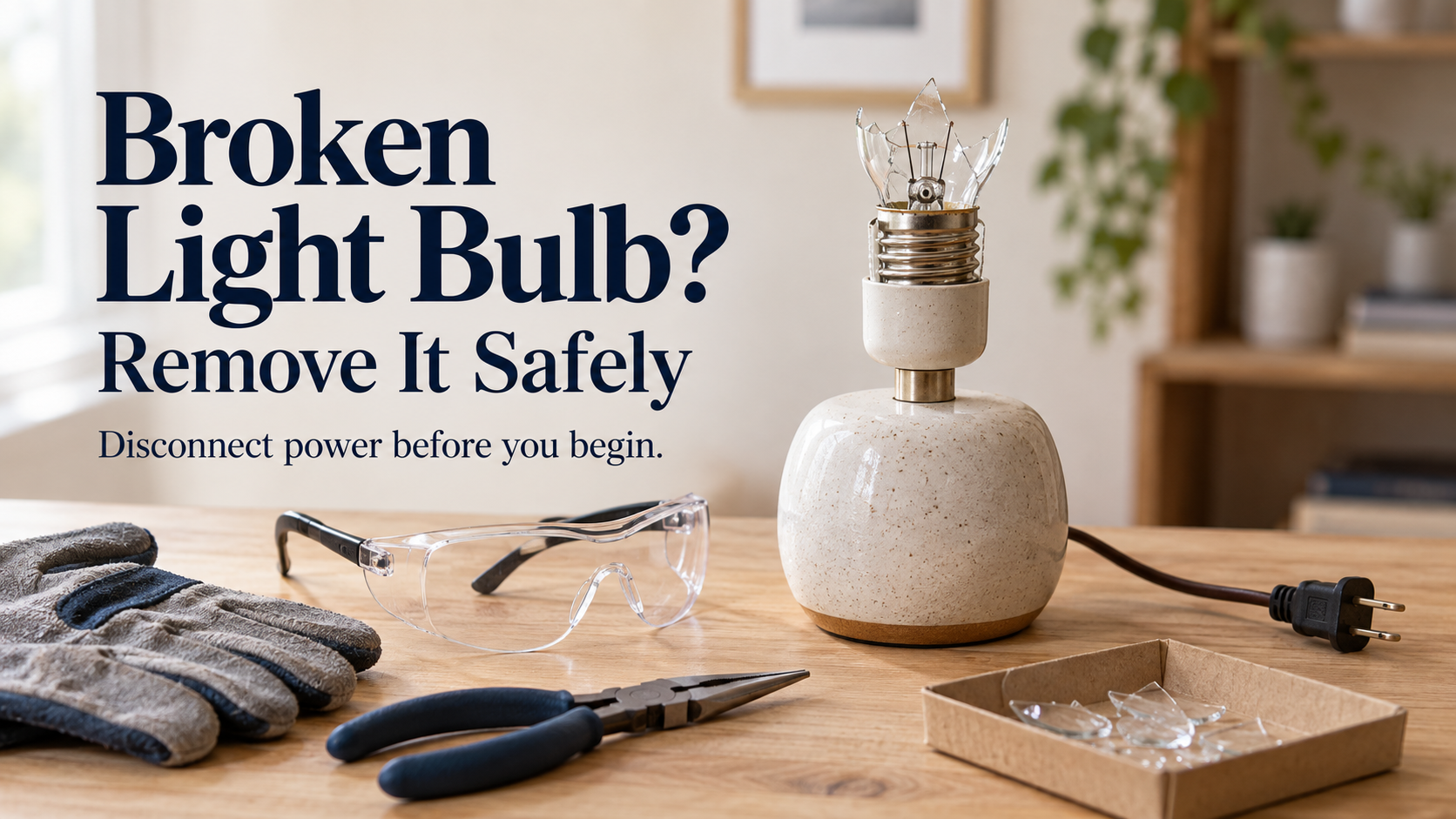
When a light bulb breaks and leaves its metal base stuck in the socket, sharp glass and electricity can make removal hazardous. Before reaching for tools, disconnect the power and protect yourself.
1. Disconnect the power
For a plug-in lamp, unplug it. For a hardwired fixture, turn off the correct circuit breaker—don’t rely on the wall switch alone. Keep others from restoring power while you work.
Verify that the socket is de-energized with an appropriate voltage tester before inserting any tools. If you’re unsure how to do this safely, contact a qualified electrician.
2. Protect yourself and the surrounding area
Let the bulb cool completely. Wear safety glasses and cut-resistant gloves, keep children and pets away, and use a stable stepladder if needed. Avoid standing directly beneath broken glass.
3. Gently remove the remaining bulb base
For a standard screw-in bulb, use a purpose-built broken-bulb extractor according to its instructions. If the metal rim is accessible, needle-nose pliers may help grip the bulb’s metal base and gently turn it counterclockwise.
Avoid gripping remaining glass, forcing the base, or twisting the socket itself. If it won’t turn easily, stop and call an electrician.
4. Avoid methods that can damage the fixture
Do not apply heat, spray lubricants into the socket, or pry between the bulb base and socket with a screwdriver. These methods can damage electrical components. Tape is also not a dependable way to grip a broken bulb.
5. Clean up and check the socket
Carefully collect glass fragments and package them securely for disposal according to local guidance. With power still disconnected, look for cracks, scorching, corrosion, or loose socket parts. Have a damaged socket repaired before using the fixture again.
Install a compatible replacement bulb within the fixture’s wattage rating, tightening only until snug.
What if the broken bulb is a CFL?
CFLs contain a small amount of mercury and require special cleanup. Keep people and pets out, ventilate the room for 5–10 minutes, and shut off forced-air heating or cooling. Don’t vacuum during the initial cleanup. Follow the EPA’s broken CFL cleanup instructions and your local disposal requirements.
Have questions about your home’s condition? Contact Inspecta-Homes at 612-788-9608 or visit inspectahomes.com.


