
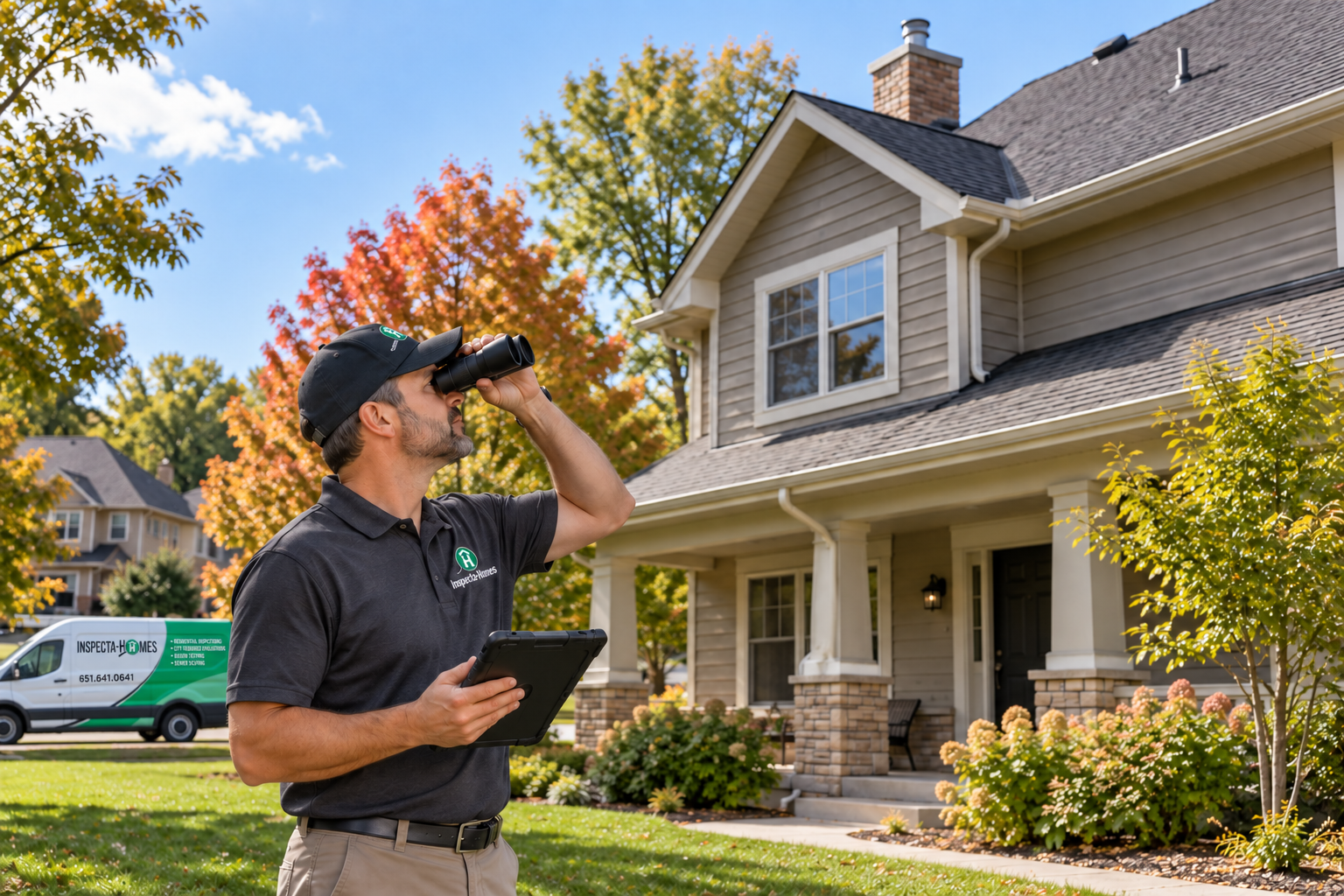
The safest way for a homeowner to check a roof is from the ground. Binoculars or a camera with a zoom lens can help you identify visible changes without climbing a ladder or walking on the roof.
You can also check the underside of the roof from a safely accessible attic. If you notice damage, leakage, or other concerns, schedule an evaluation with a professional home inspector or qualified roofing contractor.
Inspect the Roof From the Ground
Walk around the property and view the roof from several angles. Look for:
- Missing, lifted, or damaged shingles
- Curling or cracking roofing materials
- Uneven or sagging areas
- Damaged flashing around chimneys and roof penetrations
- Debris collecting in valleys
- Damaged or disconnected gutters
- Tree branches touching the roof
- Moss or other unusual growth
- Visible storm damage
Dark streaks or discoloration do not always indicate a leak, but a noticeable change may deserve further investigation.
Never stand beneath a roof where materials appear loose or unstable.
Check the Attic When Safely Accessible
The attic may provide evidence of a roof problem that is not visible from outside.
Use a flashlight and look for:
- Water stains
- Damp or deteriorated wood
- Wet or compressed insulation
- Mold-like growth
- Rusted fasteners
- Active dripping
- Unplanned openings that allow exterior light through
- Musty odors
Some roof leaks only appear during certain weather conditions. Dry materials at the time of your visit do not guarantee that leakage has never occurred.
Do not enter an attic when access is unsafe, visibility is poor, temperatures are extreme, or there is no suitable walking surface. Never step between ceiling joists.
Should You Climb Onto the Roof?
Homeowners should generally avoid walking on their roofs.
Falls from ladders and roofs can cause serious injuries. Walking on the roof may also damage shingles, tiles, slate, or other roofing materials.
Snow, ice, rain, high winds, steep slopes, roof height, deterioration, and fragile materials can make access especially dangerous. Leave close-up roof evaluation to a professional with appropriate experience and safety equipment.
How Does a Home Inspector Examine the Roof?
A professional home inspector selects an inspection method based on the roof design, materials, weather, accessibility, and safety conditions.
The roof may be evaluated using a combination of:
- Ground-level observations
- Binoculars or a zoom camera
- Views from windows or roof edges
- A ladder placed at the eaves
- Drone photography
- Attic observations
- Walking the roof when conditions safely allow
Under the ASHI Standard of Practice, the inspector reports the method used to inspect the roof. ASHI does not require an inspector to walk on every roof.
A home inspection is a visual evaluation of readily accessible components. It cannot determine the condition of materials concealed beneath the roof covering.
When Should the Roof Be Professionally Evaluated?
Schedule a professional evaluation when you notice:
- Active leakage
- Missing or displaced roofing
- Storm or tree damage
- Sagging or structural movement
- Damaged flashing
- Persistent moisture in the attic
- Roofing materials near the end of their expected service life
- Conditions that cannot be safely viewed from the ground
A roofing contractor may be appropriate when repairs, replacement, pricing, or destructive testing is needed.
How Often Should You Check Your Roof?
View your roof from the ground during the spring and fall and after severe wind, hail, heavy snow, or falling branches. Minnesota weather can affect roofing materials throughout the year.
Regular observation may help you identify visible changes before they lead to more extensive damage.
Inspecta-Homes has served Twin Cities homeowners and homebuyers since 1981. Call 651-641-0641 to schedule a professional home inspection.


