
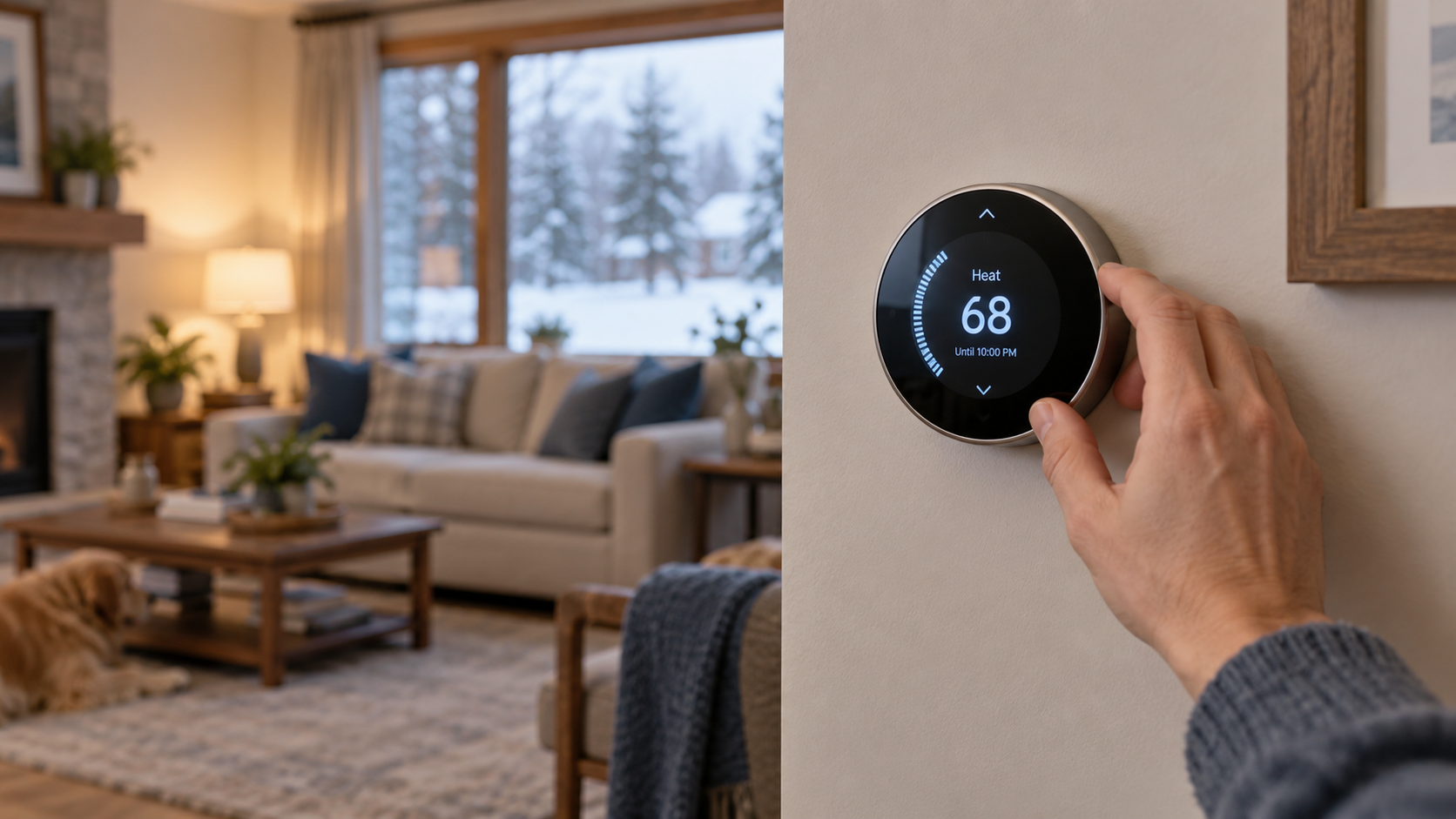
Upgrading from a manual thermostat to a programmable or smart thermostat can improve your home’s comfort, convenience, and energy efficiency. For many Minnesota homeowners, it is a relatively simple upgrade that may help reduce heating and cooling costs throughout the year.
Benefits of a Programmable Thermostat
Potential Energy Savings
A programmable thermostat automatically adjusts your home’s temperature while you are sleeping or away. According to the U.S. Department of Energy, homeowners may save up to 10% annually on heating and cooling by turning the thermostat back 7 – 10 degrees for approximately eight hours per day. Actual savings depend on your HVAC system, home, climate, and temperature settings. U.S. Department of Energy
Consistent Comfort
You can create a schedule based on your daily routine. The thermostat can automatically adjust before you wake up, leave for work, return home, or go to bed helping maintain comfort without constant manual adjustments.
Remote Control and Smart Features
Many smart thermostats connect to Wi-Fi and allow you to control the temperature from your phone. Depending on the model, additional features may include:
- Indoor humidity readings
- HVAC maintenance reminders
- Energy-use reports
- Geofencing or occupancy detection
- Temperature alerts
- Compatibility with voice assistants
ENERGY STAR-certified smart thermostats have been independently verified to deliver energy savings based on actual field data. ENERGY STAR
Can Every Home Use a Smart Thermostat?
Not every thermostat is compatible with every heating and cooling system. Before purchasing one, confirm that it will work with your existing equipment.
Many smart thermostats require a common wire, commonly called a C-wire, to provide continuous power. Older homes may not have one. Some thermostats offer alternative power options, but professional installation may be necessary.
Compatibility can also be more complicated if your home has:
- A heat pump
- Electric baseboard heat
- A boiler or radiant heating system
- Multiple heating and cooling zones
- Communicating or variable-speed HVAC equipment
When in doubt, consult a qualified HVAC contractor before installation.
Programmable vs. Smart Thermostats
A programmable thermostat follows a schedule that you set manually. A smart thermostat may offer additional features such as remote access, learning capabilities, occupancy detection, and energy reports.
If you have a consistent routine, a basic programmable model may be sufficient. If your schedule changes frequently or you want remote control, a smart thermostat may be the better choice.
Is It Worth the Upgrade?
For many homeowners, the answer is yes. A properly installed and programmed thermostat can make your home more comfortable while helping manage energy use. However, a new thermostat cannot correct an inefficient HVAC system, poor insulation, air leakage, or other underlying problems.
During a professional home inspection, the inspector may evaluate the thermostat’s basic operation and the visible condition of the heating and cooling system. An inspection can also identify conditions that may affect your home’s comfort and energy performance.
Schedule your home inspection with Inspecta-Homes today.
Inspecta-Homes
www.inspectahomes.com
612-788-9608


