
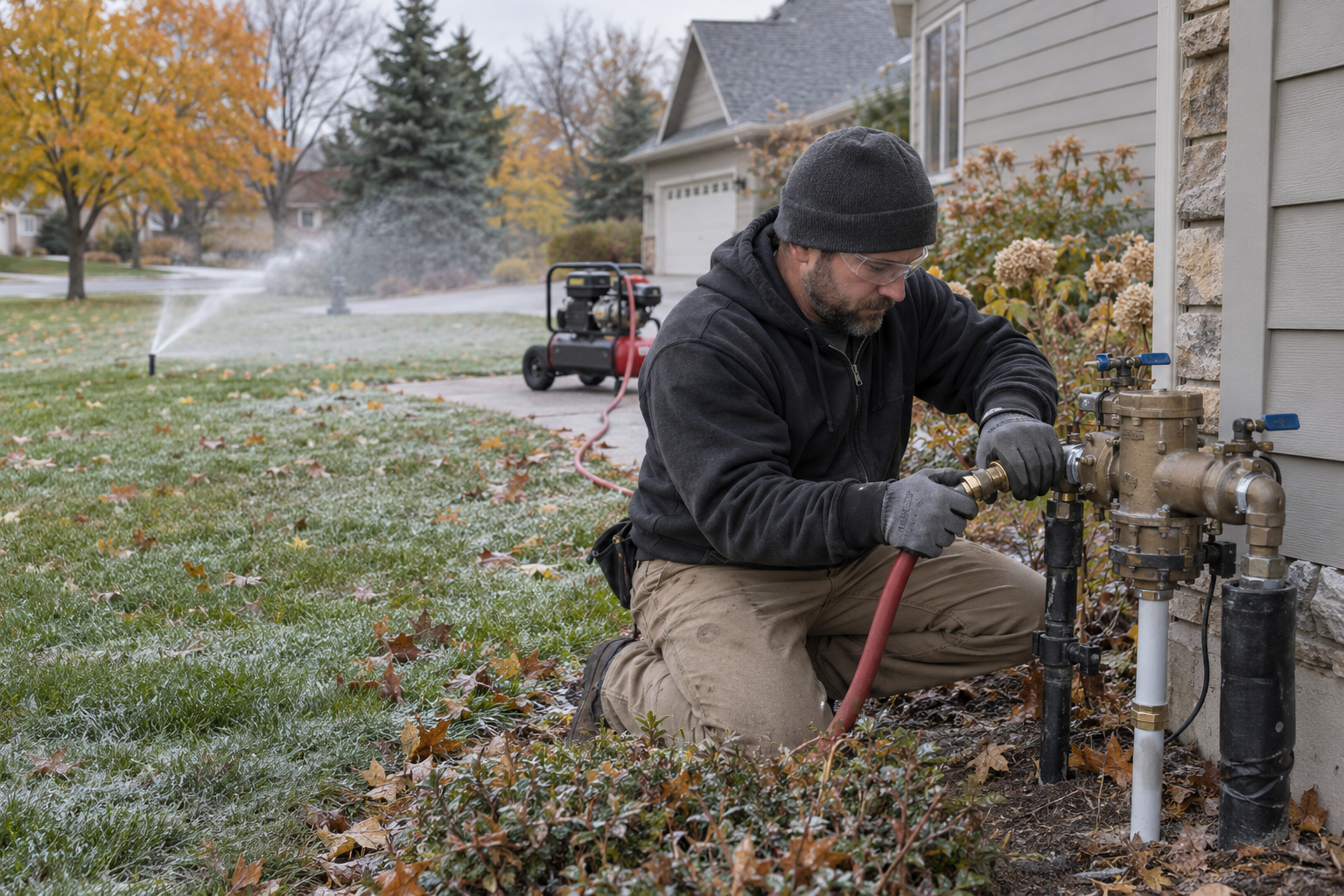
Skipping sprinkler-system winterization in Minnesota can lead to cracked pipes, damaged valves, broken sprinkler heads, and an expensive surprise when the system is turned on again in the spring.
Even though most irrigation lines are underground, they may not be installed below Minnesota’s frost depth. Any water remaining inside the system can freeze, expand, and damage components throughout the property.
What Is the Worst That Could Happen?
Cracked or Burst Irrigation Pipes
Water expands as it freezes. When water is trapped inside an irrigation pipe, that expansion can split PVC or polyethylene piping and damage fittings.
Underground leaks may remain unnoticed until spring. Warning signs can include:
- Low water pressure
- Sprinkler zones that do not operate correctly
- Water pooling in the yard
- Unusually wet or soft areas
- Higher-than-expected water bills
Locating and repairing underground damage may require excavation.
Damaged Sprinkler Heads
Water can remain inside sprinkler bodies and risers after the system is turned off. Freezing may crack the housing, damage internal seals, or cause the sprinkler head to leak or spray incorrectly.
A damaged head typically does not mean the entire system must be replaced, but several damaged heads can make spring repairs costly and time-consuming.
Broken Valves and Manifolds
Your irrigation system contains valves that control water flow to individual zones. Water trapped inside these components can freeze and damage valve bodies, seals, fittings, and manifolds.
Valve damage may prevent a zone from opening, cause it to remain on, or create a hidden leak.
Backflow Preventer Damage
The backflow prevention device helps protect the drinking-water supply from reverse flow. Because these assemblies are often located above ground or in exposed areas, they can be especially vulnerable to freezing.
Freeze damage can crack the assembly or impair its operation. A damaged backflow preventer should be evaluated and repaired by a qualified professional. The concern is not that frozen irrigation water automatically contaminates the household supply; it is that a damaged or improperly functioning backflow device may no longer provide its intended protection.
Damage to Pumps and Other Components
Systems with pumps, filters, pressure regulators, or above-ground piping may experience additional damage when water is left inside them. Controllers can also be affected if they are shut down incorrectly or accidentally activate a pump after the water supply has been turned off.
Expensive Spring Repairs
Freeze damage may not become visible until the system is activated in the spring. Repairs can involve replacing broken components, locating underground leaks, excavating the lawn, and restoring landscaping.
Proper winterization is generally much easier and less expensive than repairing widespread freeze damage.
When Should You Winterize a Sprinkler System in Minnesota?
Schedule winterization before prolonged freezing temperatures arrive. Many Minnesota homeowners winterize their systems during September or October.
Do not wait for the ground to freeze or for winter weather to become consistent. A single cold period may be enough to damage exposed components or water-filled sections of the system.
What Does Sprinkler Winterization Include?
The exact process depends on how the irrigation system was designed. Winterization commonly includes:
- Shutting off the irrigation system’s water supply
- Draining or blowing water from pipes, valves, and sprinkler heads
- Protecting the backflow preventer and exposed components
- Placing the controller in the appropriate off or rain mode
- Disconnecting or protecting pumps, sensors, and monitoring equipment when applicable
- Checking the system for visible damage or maintenance needs
The University of Minnesota recommends draining water-carrying pipes, valves, tanks, pumps, and other components that can hold water. University of Minnesota Extension
Should You Blow Out the System Yourself?
Some irrigation systems are winterized using compressed air, but this process can present safety risks. Excessive air pressure may damage pipes, valves, sprinkler heads, or other components. Sprinkler parts can also become dangerous projectiles.
Rain Bird recommends contacting an irrigation professional because of the potential hazards involved with compressed-air winterization. Rain Bird winterization guidance
Unless you understand your system’s design, pressure limitations, and proper winterization procedure, hiring a qualified irrigation contractor is the safer approach.
Protect Your Home Before Winter Arrives
Winterizing your sprinkler system is an important part of fall home maintenance in Minnesota. A professional home inspection may identify visible concerns involving exterior plumbing, drainage, or landscaping, but irrigation systems are specialized equipment and may require evaluation by a qualified irrigation contractor.
Planning ahead can help prevent damaged components, underground leaks, and costly spring repairs.
Inspecta-Homes
www.inspectahomes.com
612-788-9608


