A fireplace can make a Twin Cities home feel especially inviting during a Minnesota winter. If you plan to use it, take time during the buying process to learn about the entire fireplace and chimney system not just the firebox you can see from the living room.
Here are five practical steps to take while there is still time to review the findings and ask questions.
- Find out what type of system the home has
Is it a masonry wood-burning fireplace, a factory-built fireplace, a wood stove or insert, or a gas appliance? Ask what fuel it uses and whether other appliances vent through the chimney. Different systems have different components, installation requirements, and inspection considerations. A fireplace that has been converted or fitted with an insert deserves particular attention to what was changed and how the appliance is vented.
- Ask for the service history
Ask the seller when the chimney was last inspected and cleaned, and request any available reports, invoices, permits, or repair records. It is also useful to ask about past chimney fires, smoke entering the room, water leaks, staining, and changes to the fireplace or venting system.
Records help tell the story of the system, but an old cleaning receipt does not describe its current condition. If the seller has never used the fireplace, that is useful context too; it does not establish that the system is ready for use.
- Schedule the appropriate inspection during your inspection period
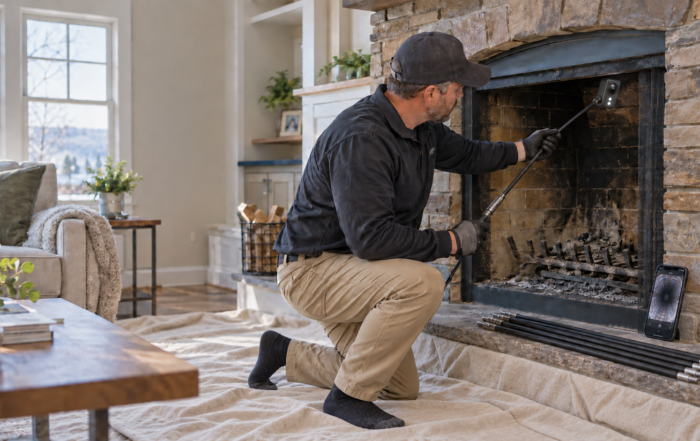
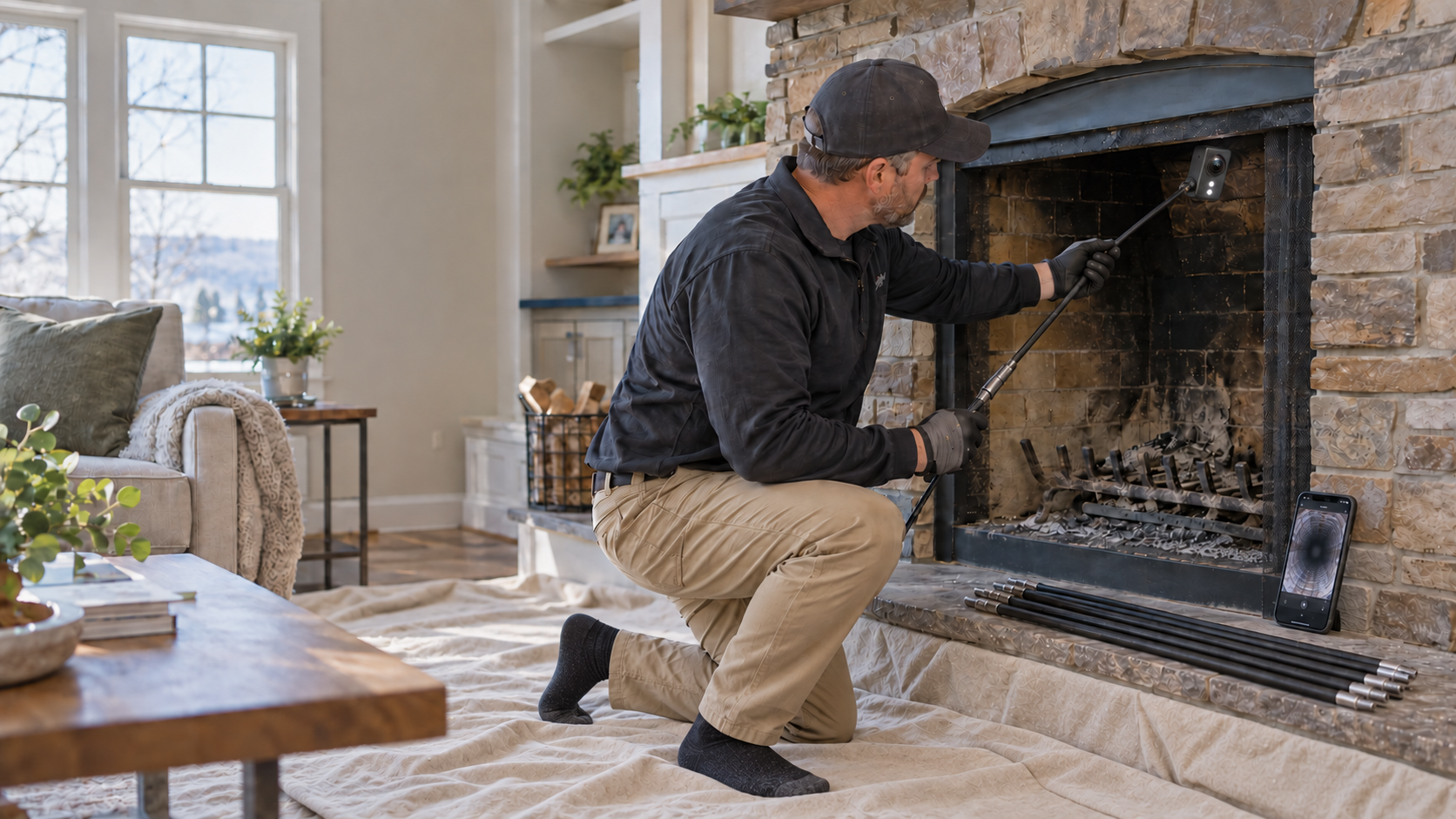
A general home inspection addresses visible, readily accessible fireplace and chimney components, along with the rest of the house. It does not necessarily include a camera examination of the flue interior. A separate Level 2 chimney inspection is recommended in connection with a property sale or transfer under chimney industry guidance. If you intend to use a fireplace or an appliance connected to a chimney, discuss the scope and scheduling when you book your home inspection.
A Level 2 inspection includes the applicable Level 1 scope, an internal video scan or comparable examination of the flue, and evaluation of applicable accessible portions of the chimney and connected system, including accessible attic, basement, crawl-space, and roof areas. Access and conditions can limit the examination; the report should identify those limits. Learn more in our guide to home inspections versus Level 2 chimney inspections.
- Read the findings, not just the summary
An inspection may document a visible liner defect, deposits that obscure the view, an obstruction, moisture-related deterioration, or a condition that needs further evaluation. Review the photos, the areas inspected, any limitations, and the recommendations. Ask the inspector what was actually observed and what remains unknown.
A finding does not automatically mean the entire chimney needs replacement. It may call for cleaning and another look, evaluation by a qualified chimney professional, or a repair proposal. If the system has a significant unresolved concern, avoid using it until a qualified professional has evaluated and addressed that concern.
- Make your decision with enough time for follow-up
If additional work is recommended, request the relevant records or a written evaluation and estimate from a qualified chimney professional. Discuss any transaction decisions with your real estate agent while your inspection period is still open. The inspection gives you information to act on; it does not guarantee future performance or reveal every concealed condition.
A fireplace can be a wonderful part of your next home. Knowing the condition and limitations of its chimney before closing helps you plan for maintenance, repairs, and use with clearer expectations.
For more background, read What Is a Level 2 Chimney Inspection?.
Buying a Twin Cities home with a fireplace? Call Inspecta-Homes at 651-641-0641 or visit inspectahomes.com to ask about a general home inspection and a Level 2 chimney inspection.