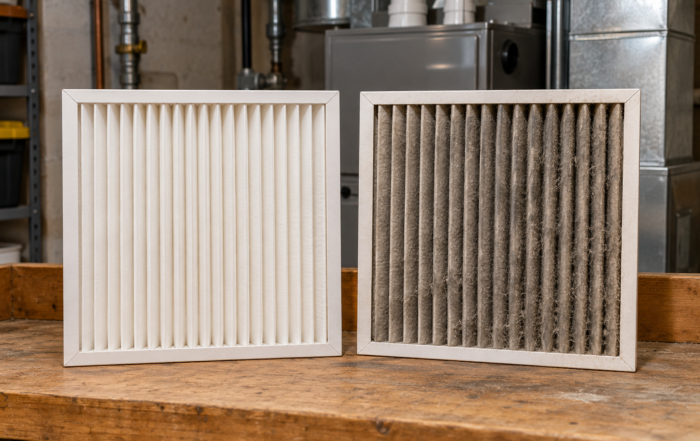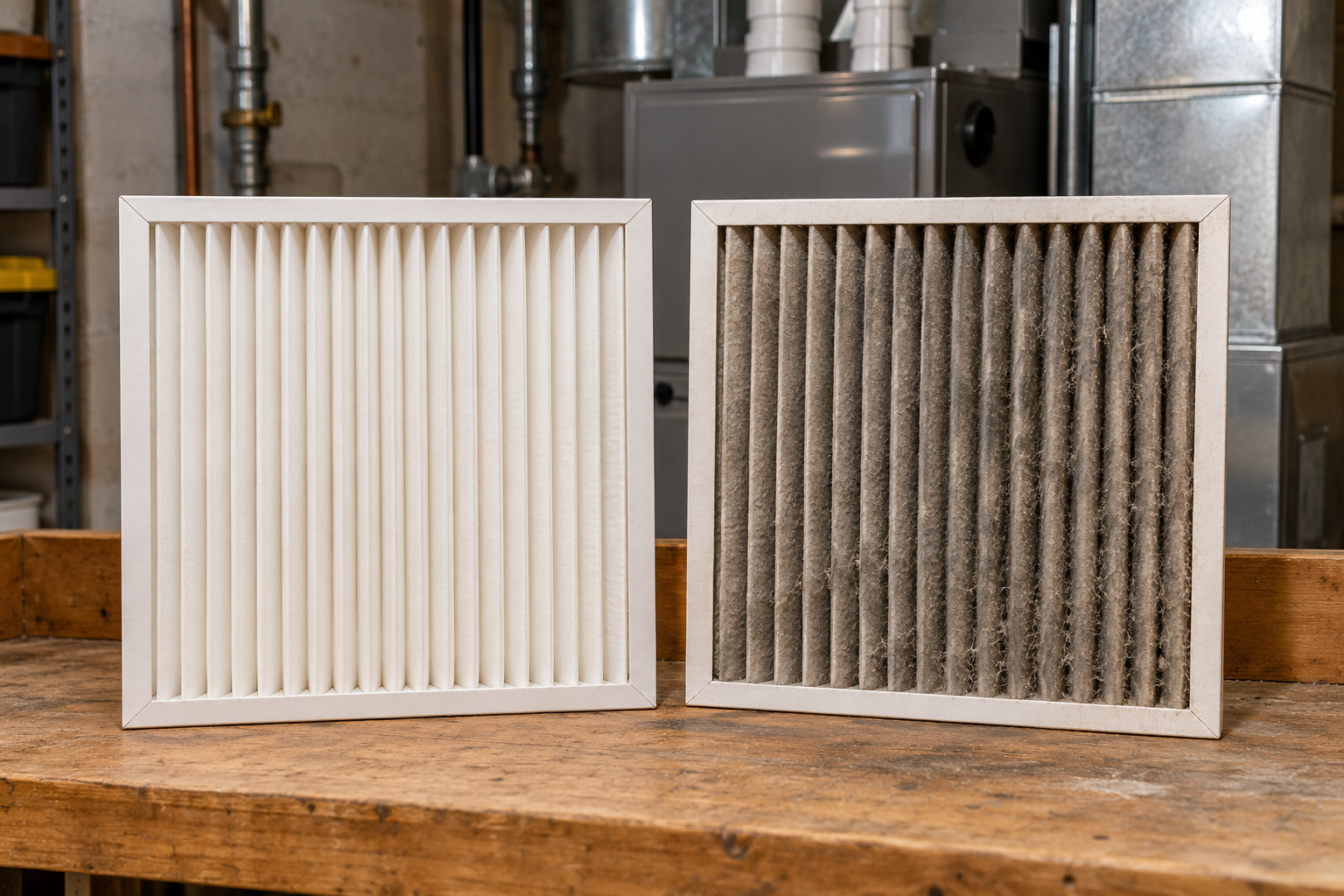
Furnace Filters: Is Yours Helping—or Restricting Airflow?
You replace the furnace filter, slide the cover back into place, and check another winter maintenance task off your list. But did you choose the right filter for your system?
For Minnesota homeowners, filter maintenance matters throughout the heating season. A dirty filter can restrict airflow, while an incorrectly sized or incompatible filter may create problems even when it is brand new.
What your furnace filter does
In a typical forced-air system, the filter captures particles from air returning to the heating equipment. It helps protect system components from dust buildup and, depending on its efficiency, can also reduce airborne particles circulating through the home.
As particles collect, the filter becomes loaded with debris. A dirty filter can slow airflow and make the heating system work harder to maintain comfort.
However, weak airflow or uneven temperatures do not automatically mean the filter is responsible. Duct conditions, equipment problems, and other factors may need evaluation.
A higher rating needs to match your system
Many filters display a MERV rating, which stands for Minimum Efficiency Reporting Value. This rating describes how effectively a filter captures particles of different sizes.
Higher-rated filters capture smaller particles more effectively, but filter selection also needs to account for airflow resistance and the system’s capabilities. MERV alone does not tell you whether a particular filter is compatible with your furnace.
EPA recommends MERV 13 filtration, or the highest efficiency your system can accommodate. Before changing filter types or moving to a higher rating, check the equipment instructions or ask your HVAC professional which options are suitable.
Size and fit matter
Filters can look similar while having different dimensions. The size printed on the packaging may be a nominal size a rounded label rather than the filter’s exact measurements.
Confirm the required dimensions for your filter cabinet. A filter should fit as intended without being crushed, forced into place, or leaving gaps that allow air to bypass it.
Follow the airflow arrow on the filter and the equipment instructions. In a typical furnace filter installation, the arrow points toward the blower.
Do not stack filters to increase filtration unless the equipment is specifically designed for that arrangement.
Check monthly during the heating season
There is no single replacement schedule that fits every home and filter.
Filter thickness, equipment use, pets, renovation dust, and other household conditions can affect how quickly a filter becomes dirty. A replacement interval printed on the package should not replace regular checks.
During Minnesota’s heating season, check the filter monthly and follow the equipment and filter manufacturers’ maintenance instructions. Replace disposable filters when needed. Clean reusable filters only as directed, and do not wash a disposable filter.
Follow the equipment’s shutdown instructions before accessing the filter. If you are unsure where it belongs or how to replace it safely, ask your HVAC provider to demonstrate.
A new filter does not replace furnace service
Replacing a dirty filter is useful maintenance, but it does not establish that the furnace is operating safely or correctly.
If the home remains difficult to heat, airflow seems unusually weak, or the furnace repeatedly starts and stops, arrange an evaluation by a qualified HVAC professional. Avoid repeatedly resetting the equipment or operating it without its required filter.
What a home inspection can identify
During a home inspection, an inspector may note an accessible filter that appears dirty, missing, damaged, or improperly fitted.
That observation reflects conditions at the time of inspection. It does not establish the filter’s service history, measure its airflow resistance, or replace equipment servicing.
Keeping the correct filter properly installed and maintained is a practical step toward dependable winter heating.