Why Is One Room Always Colder Than the Others?
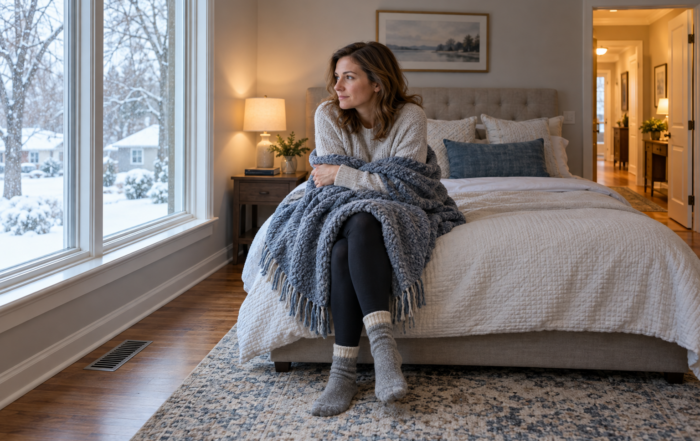
The living room feels comfortable, but the bedroom down the hall needs an extra blanket. You turn up the thermostat, and the rest of the house gets warmer while that one room still feels chilly.
During a Minnesota winter, uneven heating can become hard to ignore. But a cold room does not automatically mean something is wrong with the furnace. The problem may involve how heat reaches the room—or how quickly the room loses it.
Start with the room’s air supply
In a forced-air heating system, supply registers deliver heated air to each room. A register covered by a rug, bed, or couch can interfere with that airflow.
Check that accessible supply registers are open and unobstructed. Keep return-air grilles clear as well. The system needs a path for air to circulate back to the heating equipment.
These simple checks may reveal an obstruction, but feeling air at a register does not establish that the room is receiving enough heat.
The ductwork may need attention
A furnace can produce heat while the duct system struggles to deliver it where needed.
Leaking connections, damaged ducts, or restrictions may reduce the heated air reaching a room. Ducts running through unheated spaces can also lose heat along the way. ENERGY STAR identifies rooms that are difficult to heat or cool as a possible sign of duct problems.
If one room consistently receives noticeably less airflow than others, an HVAC professional can evaluate air delivery and determine whether repairs or balancing are appropriate.
A closed bedroom door can affect circulation
Does the room become less comfortable when the door is closed?
Some rooms rely on a return-air grille elsewhere in the home. Without an adequate return-air pathway, closing the door can interfere with circulation.
Notice whether the temperature changes when the door is open compared with when it is closed. That observation can help an HVAC professional investigate, but it does not establish the cause by itself. Avoid cutting doors or adding transfer grilles without an evaluation.
The room may be losing heat faster
Sometimes warm air reaches the room, but heat escapes faster than it does elsewhere in the house.
Air leakage and inadequate insulation can contribute to cold rooms. Rooms above garages, additions, and spaces with several exterior walls may have different heating needs from rooms closer to the center of the home.
Pay attention to where the discomfort is strongest and when it occurs. A room that becomes especially cold on windy days may warrant an evaluation for air leakage. Cold floors or exterior surfaces may also deserve closer attention.
An energy assessment can help identify air leakage and insulation deficiencies that are difficult to evaluate visually.
Turning up the thermostat may leave the problem unresolved
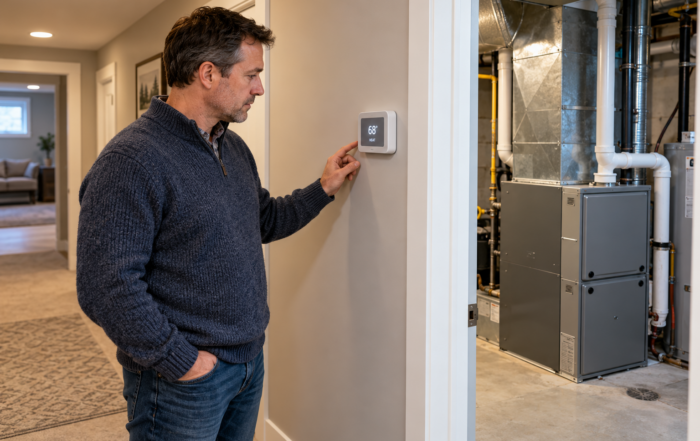
The thermostat responds to the temperature near its location. It does not necessarily reflect conditions in a distant bedroom or an addition.
Raising the setting may make other rooms uncomfortable without resolving the underlying issue. Closing several registers elsewhere to force heat into the cold room can also disrupt system airflow. Have persistent temperature differences evaluated before making those adjustments.
What a home inspection can tell you
A home inspection may identify visible conditions that could contribute to uneven heating, such as obstructed registers, accessible duct damage, or insulation concerns.
It does not measure every room’s heating demand, establish concealed duct conditions, or replace a detailed HVAC evaluation. Share any recurring comfort concerns with your inspector, including when they occur and which rooms are affected.
For Minnesota homeowners, understanding a cold room starts with looking at the heating system and the home together.
Buying or selling a home in the Twin Cities? Learn more about Inspecta-Homes’ inspection services at inspectahomes.com.